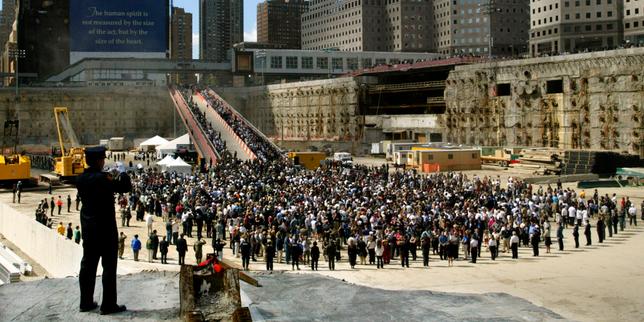
The air in Lower Manhattan tasted like scorched copper and powdered bone for weeks after the towers fell. If you stood near the perimeter, watching the ghostly dance of ash settling over abandoned shoes and pulverized drywall, you realized that some disasters do not end when the smoke clears. They simply mutate. They crawl inward, folding themselves into Manila-paper folders, classified annexes, and diplomatic backchannels, hiding in plain sight behind the barricades of national security.
Years pass. The dust is swept away, replaced by steel memorials and weeping names etched in bronze. Yet beneath the monument's quiet reflection, an entirely different kind of ruin remains untouched: the architecture of blocked justice.
Consider a fictional father named David, whose daughter sat on the eighty-fourth floor of the North Tower on a Tuesday morning that began like any other. For two decades, David has lived in the quiet agony of an unfinished equation. He does not just want a memorial; he wants a ledger. He wants to know why the machinery of accountability sputtered and died before it ever truly began. When he reads about declassified FBI files, foreign state immunity, and bureaucratic paralysis, he is not looking at political science. He is looking at a wall.
That wall was built brick by brick by the doctrine of state reason.
To understand why the pursuit of truth regarding the September 11 attacks feels like chasing smoke, you have to look at how governments protect their alliances. In the immediate aftermath of the tragedy, when the nation was bleeding and desperate for orientation, the imperative was swift narrative consolidation. Nineteen hijackers. Fifteen of them from a single foreign kingdom. Financial conduits, logistical footprints, local handlers—the threads led somewhere very specific. But pulling those threads risked unraveling a foundational pillar of modern geopolitics: the unbreakable, oil-slicked axis between Western security and Riyadh.
Bureaucracy does not always operate through dramatic cover-ups. More often, it works through quiet containment.
Imagine a prosecutor sitting in a fluorescent-lit room in Washington, staring at a thick stack of redacted pages from the infamous 28 pages of the congressional inquiry. Black ink marks out paragraphs like permanent shadow. Names are gone. Financial routing numbers are scrubbed clean. The prosecutor knows what is missing, but knowing and proving are separated by an ocean of executive privilege and state secrets privilege. Whenever victims' families try to pierce the veil through civil litigation, invoking the Foreign Sovereign Immunities Act, the ghost of national security rises to block the courtroom door.
It is a strange paradox. A democracy claims to champion transparency and the rule of law above all else, yet when foreign state complicity or institutional negligence threatens diplomatic stability, the state draws an iron curtain.
The legal battles fought by the 9/11 families have been nothing short of a modern Sisyphus myth. Every time the stone of accountability reaches the top of the judicial mountain—perhaps through the passage of the Justice Against Sponsors of Terrorism Act (JASTA)—it rolls back down, crushed under the weight of diplomatic pressure and judicial hesitation. Files are pried loose, drop by drop, only to reveal heavily censored memos detailing unpursued leads. Agents who spent their careers tracking terrorist financing watch in disbelief as leads pointing toward Saudi officials or state-linked charities are quietly sidelined or classified beyond reach.
Why does this matter now, two decades later? Because an unhealed fracture does not simply disappear; it weakens the entire bone.
When justice is deferred and paralyzed by geopolitical expediency, it sends a corrosive signal to the public. It teaches citizens that crimes of a certain magnitude are too big to prosecute, that alliances outweigh ethics, and that the rule of law is flexible when it bumps against realpolitik. David does not care about the delicate balance of Middle Eastern diplomacy when he looks at his empty dining room chair. He cares about truth. He cares about transparency. He cares about the simple, radical notion that no government—foreign or domestic—should be shielded from the consequences of mass murder.
The tragedy of the eleventh of September is not solely confined to that autumn morning. It lives on in the filing cabinets that remain locked, the depositions that are never taken, and the questions that law enforcement was subtly discouraged from asking.
The smoke may have faded from the Manhattan skyline long ago, but inside the halls of power, the fog machine never stopped running. And until that fog clears, the ghosts of that Tuesday will continue to demand an accounting that the world has not yet had the courage to give.


