The headlines are screaming about the end of the world again.
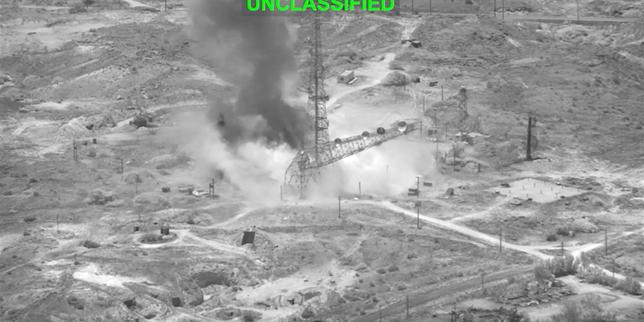
As news breaks of US missiles slamming into Qeshm Island and the Hormozgan province, the foreign policy establishment has slipped effortlessly into its favorite routine. The doom-mongers are predicting an all-out, catastrophic war between the United States and Iran. They point to the smoke rising over the Strait of Hormuz and declare that the red lines have been permanently crossed.
They are fundamentally misreading the board.
What we are witnessing in the Persian Gulf is not the opening salvo of World War III. It is a highly choreographed, intensely synchronized piece of kinetic theater. It is a violent dance where both Washington and Tehran know the steps, the cues, and exactly when to pull their punches.
The lazy consensus wants you to believe that this is an uncontrolled escalation. The reality is far more calculated—and far more cynical.
The Illusion of Total War
Every time a missile crosses the Persian Gulf, the media treats it as an unprecedented shock. But if you have spent any time analyzing Middle Eastern security architectures, you know this playbook by heart.
The assumption that direct strikes on Iranian territory must lead to an immediate regional conflagration ignores forty years of conflict management. Both the US and Iran are operating under a strict set of unwritten rules.
- Rule 1: Keep the strikes localized.
- Rule 2: Target infrastructure and assets, not the core survival of the regime.
- Rule 3: Allow the adversary a path to claim a symbolic victory.
By striking Qeshm Island and the coastal areas of Hormozgan, the US selected targets that are highly visible but strategically isolated. Qeshm is an island. It is home to Islamic Revolutionary Guard Corps (IRGC) fast-attack boats and missile sites, yes, but it is physically separated from the Iranian mainland.
Striking Qeshm allows Washington to say it hit "Iranian soil" without actually threatening the regime's command-and-control centers in Tehran. It is a calibrated message wrapped in high-explosive casing. It says: We can touch you, but we are choosing not to destroy you.
The Media Narrative versus Geopolitical Reality
The gap between what you read in the mainstream press and what is actually happening on the ground is vast. Let us break down the false assumptions dominating the current coverage.
| The Media Narrative | The Cold Geopolitical Reality |
|---|---|
| This is a surprise attack that catches Iran off guard. | Tehran’s early-warning systems and intelligence networks knew these strikes were coming hours, if not days, in advance. |
| The strikes will permanently cripple Iran's maritime capabilities. | You cannot permanently destroy a decentralized, asymmetric navy with a few dozen Tomahawk missiles. The fast-boats are easily replaced. |
| This escalation will completely shut down the Strait of Hormuz. | Neither side can afford a closed Strait. Iran’s own economy relies on the quiet passage of oil to Asian markets. |
| The US is aiming for regime change. | The Biden administration’s primary goal is stabilization and deterrence, not the chaotic vacuum of a collapsed Iranian state. |
Why Qeshm and Hormozgan Were Selected
To understand why this is theater, look at the geography.
The Hormozgan province is the gateway to the Persian Gulf. Qeshm Island sits at the narrowest point of the Strait of Hormuz. Through this choke point passes roughly 20% of the world’s petroleum liquid consumption.
If the US wanted to cripple Iran’s economy, it would strike the oil refineries at Abadan or the export terminals at Kharg Island. If it wanted to decapitate the IRGC, it would strike command bunkers in Isfahan or Tehran.
Instead, the targets were air defense radars, drone launch sites, and naval warehouses on the periphery.
This choice of targets is a masterclass in risk mitigation. The US military planners did not pick these coordinates to win a war; they picked them to manage a crisis. They chose targets that would minimize civilian casualties while providing dramatic footage of secondary explosions. It is warfare designed for prime-time television and congressional briefings.
The Historic Precedent of Calibrated Violence
We have seen this movie before.
In 1988, during the Iran-Iraq War, the US launched Operation Praying Mantis after a US warship struck an Iranian mine. The US Navy destroyed Iranian oil platforms and sank several warships. It was the largest US surface clash since World War II.
Did it lead to an all-out invasion of Iran? No. Both sides bloodied each other’s noses, established a new baseline of pain, and went back to the negotiating table.
More recently, in 2020, after the US assassinated Qasem Soleimani, Iran responded by launching ballistic missiles at US bases in Iraq. They tipped off the Iraqi government beforehand, ensuring the US military had time to seek shelter. The result? Zero US fatalities, a massive show of force for Iran's domestic audience, and an immediate de-escalation.
The strikes on Hormozgan fit perfectly into this historical continuum. They are designed to restore a broken status quo, not to establish a new empire.
The Mutually Assured Survival Pact
The great irony of the US-Iran relationship is that both leaderships actually need this conflict to survive domestically.
For the hardliners in Tehran, an external American threat is the ultimate distraction. It justifies the brutal suppression of internal dissent, the economic hardships caused by sanctions, and the consolidation of power by the clerical elite. Every US missile that lands on Qeshm is a propaganda gift to the regime. It allows them to wrap themselves in the flag of national defense.
For Washington, maintaining a credible threat in the Gulf is essential for reassuring nervous allies in the Gulf Cooperation Council (GCC) and Israel. It shows that the US is still the guarantor of maritime security, even as its strategic focus shifts toward the Indo-Pacific.
[US Domestic Pressure] ---> Calibrated Strike ---> [Iranian Regime Uses Strike for Unity]
        ^                                                            |
        |                                                            v
[Allies Demanding Action] <--- Mutual De-escalation <--- [Calibrated Retaliation]
This loop is self-sustaining. Neither side wants to break it because the alternative—an actual, unconstrained war—is too costly to contemplate.
The Danger of the "Accidental War"
If the current strategy is so controlled, why should we worry?
The danger of this kinetic theater is not that either side wants a major war. The danger is that the margin for error is razor-thin.
When you fly supersonic missiles and armed drones through one of the most congested waterways in the world, things go wrong. A malfunctioning guidance system, a misidentified civilian airliner, or an overeager local commander can turn a controlled theatrical performance into a genuine catastrophe in seconds.
If a US missile misses its military target on Qeshm and hits a civilian ferry terminal, the Iranian leadership will be forced by its own rhetoric to respond with disproportionate force. If an Iranian anti-ship missile accidentally sinks a US destroyer instead of merely buzzing it, no US president can afford to play the game of calibrated diplomacy.
This is the true risk of the current situation. It is not the strategic intent of the players, but the chaotic nature of the medium they are playing in.
The Flawed Premise of "Deterrence"
For years, Washington’s policy experts have argued that "restoring deterrence" is the key to stability in the Middle East. The theory goes that if you hit Iran hard enough, they will stop using proxies to disrupt shipping and target US bases.
This is a fundamental misunderstanding of how asymmetric warfare works.
Iran does not build proxies like the Houthis or Hezbollah to pick fights they can win in a conventional sense. They build them to create a web of deniable, low-cost options that make any direct attack on Iran too expensive to contemplate.
You cannot deter an adversary whose entire strategy is built on absorbing your expensive strikes with cheap, expendable assets. A Tomahawk cruise missile costs upwards of $2 million. The drone it destroys on a Qeshm launchpad might cost $20,000.
This is an economic equation that the United States cannot win over the long term. By engaging in these high-profile missile strikes, the US is playing into Iran’s hands, burning through expensive munitions to achieve temporary tactical pauses while leaving the strategic reality completely unchanged.
The Actions Left Untaken
If the current approach is an expensive, high-risk performance that fails to solve the underlying problem, what is the alternative?
The conventional foreign policy establishment will tell you that the only options are escalation or surrender. This is a false dichotomy.
The real path to stabilizing the region does not run through the missile bays of US destroyers in the Arabian Sea. It runs through quiet, back-channel diplomacy that addresses the core security anxieties of both sides.
But diplomacy is slow, politically unpopular, and does not look good on the evening news. It is far easier to launch missiles, watch the explosions on satellite feeds, and pretend that something has been accomplished.
Stop looking at the smoke over Hormozgan and assuming the world is ending. The actors are simply playing their parts, reading from a script that was written decades ago. The tragedy is not that this theater will lead to a global war, but that we are doomed to watch the same play over and over again, paying for the production with lives and billions of dollars, while the underlying conflict remains completely untouched.