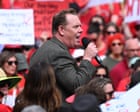
The political press is currently clutching its collective pearls over a union boss throwing a tantrum.
When Victorian union leadership decided to "name and shame" Labor MPs who allegedly had "zero conversations" with working-class voters before passing controversial legislation, the media rushed to its favorite, lazy narrative. They painted the move as an act of childish rage, a toxic breakdown of political norms, and a destructive temper tantrum that harms democratic process.
They are entirely wrong.
What the mainstream commentary labels as "enraged" bullying is actually the most honest, effective, and necessary piece of political accountability we have seen in years. The real threat to democracy is not a union boss publishing a list of MPs. The threat is the polite, behind-closed-doors omertà that allows politicians to ghost the very communities that elected them while maintaining a veneer of public service.
Let's dismantle the cozy consensus and look at how political leverage actually works when the cameras are turned off.
The Myth of the Polite Consultation
The core argument against "naming and shaming" is built on a fantasy. Commentators love to suggest that policy should be hammered out through quiet, respectful dialogue. They argue that public escalation "shuts down communication channels."
I have spent fifteen years managing corporate-government relations and navigating backroom policy negotiations. Let me tell you how "polite consultation" actually plays out in the real world.
When an organization relies solely on quiet meetings, this is the standard timeline:
- Month 1: You request a meeting with an MP's chief of staff.
- Month 3: You get a 15-minute Zoom call with a junior policy advisor who takes notes and promises to "circle back."
- Month 6: The legislation is introduced at 11:00 PM on a Tuesday with zero of your feedback included.
- Month 7: The MP expresses "deep sympathy" for your position but insists their hands are tied by party lines.
Politicians do not ignore stakeholders because they are malicious. They ignore stakeholders because they are busy, terrified of their own party leadership, and highly responsive to friction. If you create zero friction, you get zero attention.
Quiet diplomacy only works when both parties have equal leverage. When a government holds a majority, or when a faction has already decided its direction, quiet dialogue is just a polite way to watch yourself get steamrolled.
Public exposure changes the math. It transforms an abstract policy disagreement into an immediate, localized PR crisis for the individual MP. Suddenly, that junior advisor isn't ignoring your emails anymore.
MPs Are Not Entitled to Privacy in Public Service
The outrage machine claims that listing specific MPs is a violation of professional etiquette. It is treated as a personal attack rather than a policy critique.
This argument fundamentally misunderstands the nature of representative democracy. An MP is not a private corporate employee entitled to a quiet performance review from their HR department. They are a public official drawing a taxpayer-funded salary to represent a specific geographic constituency.
The Breakdown of Representation
| Traditional View of an MP | The Reality of Modern Party Politics |
|---|---|
| Independent advocate for local community needs. | Direct conduit for centralized party executive decisions. |
| Accessible to all local stakeholders and industries. | Screened by layers of communications staff to avoid conflict. |
| Accountable at the ballot box every three to four years. | Immune to local pressure unless their personal seat is threatened. |
When a union or industry body states that an MP had "zero conversations" with relevant voters, they are not committing a character assassination. They are publishing a metric of job performance.
Imagine a scenario where a publicly traded company's regional sales managers completely stopped taking calls from their largest clients. If the CEO published a list of those managers to force them to do their jobs, nobody would call it "bullying." They would call it basic operational oversight.
Why do we hold elected officials to a lower standard of responsiveness than mid-level corporate managers?
The Hypocrisy of the "Tone" Argument
Observe who complains the loudest about "naming and shaming." It is almost always the political class and the lobbyists who possess the capital to buy quiet access anyway.
If you have millions of dollars for political donations, you do not need to name and shame anyone. You can book a table at a private fundraising dinner and whisper directly into a Minister's ear. The demand for "polite, professional dialogue" is a structural trick used to keep outsiders outside. It forces groups without elite financial access to use a toolkit designed to make them invisible.
When a union uses its collective voice to publicly target specific MPs, it is utilizing the only currency it has left: public attention and voter sentiment.
The Cost of Public Escalation
To be fair, this strategy carries severe risks. It is a high-stakes gamble, and anyone copying it needs to understand the downsides:
- Burned Bridges: Once you target an MP publicly, you cannot easily return to quiet negotiations with them. They will remember the slight.
- Party Solidarity: Public attacks can cause a political party to circle the wagons, defending even their weakest members out of tribal spite.
- Media Misdirection: As we saw in Victoria, the media will almost always focus on the tone of the attack rather than the substance of the grievance.
But criticizing the strategy because it is aggressive misses the point. It is aggressive because the alternative—silent compliance—has yielded decades of declining influence for rank-and-file working people.
Stop Asking for a Seat at the Table
The most common question organizations ask when facing regulatory hurdles is: "How do we get the government to sit down and listen to us?"
It is the wrong question. It assumes the government owes you an audience based on the merits of your argument alone. They do not.
Instead of asking how to get a seat at the table, you need to make the cost of ignoring you higher than the cost of dealing with you.
If an MP knows that ignoring your industry or your membership carries no public penalty, they will ignore you every single time. They have bigger fires to put out. "Naming and shaming" is simply the process of lighting a fire on their front porch so your issue moves to the top of their morning agenda.
Do not apologize for the friction. Do not tone down the rhetoric to appease commentators who have never had to fight for a regulatory change in their lives.
Politicians are survivalists. They do not respond to the elegance of your policy brief; they respond to the proximity of danger to their margins. If a public list makes them uncomfortable enough to pick up the phone, the strategy has already succeeded. Let the press complain about the civility of the debate while you dictate its terms.