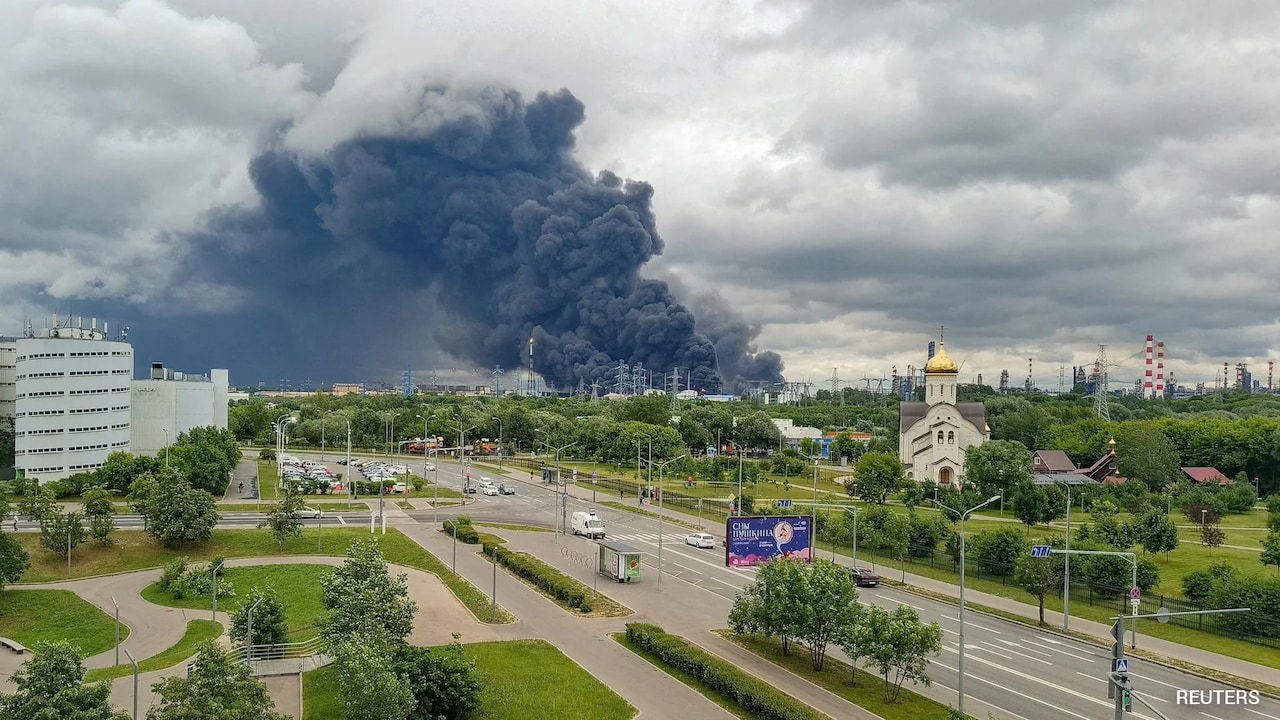
A massive cloud of black smoke rising from an industrial facility is becoming a routine sight deep inside Russia. Moscow can claim it shoots down dozens of incoming drones every night, but the reality on the ground tells a very different story. The war is no longer confined to Ukrainian soil. Kyiv has brought the fight straight to the industrial heartland of Russia, and it is hitting where it hurts the most.
The strategy is simple yet devastating. By targeting fuel depots, refineries, and logistics hubs, Ukraine is effectively implementing its own version of long-range economic sanctions. It is a calculated move to cripple the Russian war machine from the inside out, and the cracks are starting to show.
The Burning Industrial Zones
Over the last few days, Ukrainian drone units systematically dismantled critical nodes of Russian infrastructure. In the southern Stavropol region, Governor Vladimir Vladimirov reluctantly confirmed an overnight strike on an industrial facility in the settlement of Vyazniki, located in the Shpakovsky district. The local LUKOIL-Yugnefteprodukt oil depot caught fire, forcing the evacuation of nearby homes as flames reached volatile storage tanks.
This facility isn't just a random warehouse. It serves as a major distribution hub for petroleum products across central and southern Russia. Simultaneously, hundreds of miles away in the central Tver region north of Moscow, the Tvernefteprodukt oil depot suffered an identical fate.
Look at what happened in the Sea of Azov. Ukraine's General Staff confirmed that drone strikes hit multiple Russian tankers, a cargo ship, and a tugboat. The relentless pressure forced Russian authorities to temporarily suspend shipping in the area altogether.
Recent Strategic Drone Targets inside Russia:
- LUKOIL-Yugnefteprodukt Oil Depot (Stavropol Krai)
- Tvernefteprodukt Fuel Facility (Tver Region)
- Syzran Oil Refinery (Samara Region)
- Sea of Azov Maritime Logistics Fleet
Why the Drone Campaign Works
You might wonder why Ukraine is pouring so many resources into these long-range operations instead of focusing purely on the front lines. The answer lies in asymmetric warfare. A single long-range drone costs a fraction of the price of a traditional cruise missile, yet it can fly hundreds of miles past heavily defended borders to destroy infrastructure worth millions.
This campaign isn't just about causing localized chaos. It is a systematic effort to starve the Russian military of fuel and lubricants. Tanks, transport trucks, and fighter jets cannot move without refined petroleum. By hitting distribution hubs and refineries like the Syzran facility in Samara, Ukraine forces Moscow into a logistical nightmare.
The economic fallout inside Russia is tangible. Motorists in multiple regions now face acute petrol shortages, long queues at filling stations, and rising fuel prices. The Kremlin even resorted to banning diesel exports just to keep domestic supplies stable. When a country that relies entirely on oil exports has to restrict its own supply to keep local cars running, you know the strategy is working.
Overcoming Air Defenses
Russian officials frequently boast about their electronic warfare capabilities and Pantsir air defense systems. Yet, Ukrainian drones continue to slip through the net. Kyiv has rapidly innovated its drone technology, utilizing low-altitude flight paths, composite materials that evade radar, and sophisticated autonomous routing.
When Russia claims it downed 73 drones overnight, it usually means the drones were intercepted by the physical structure of the oil tanks they were targeting. The wreckage alone is enough to spark catastrophic fires that take days for emergency crews to contain.
The Psychological Shift
For the first few years of the conflict, the average resident in cities like Tver, Kaluga, or Stavropol felt completely insulated from the violence. That illusion of safety has shattered. The sight of burning industrial zones and the sound of air raid sirens have brought the reality of the war directly to the Russian public.
President Volodymyr Zelenskyy made it clear that these strikes are direct retaliation for Moscow's continuous bombardiers against Ukrainian civilian infrastructure. If Russia intends to keep knocking out the Ukrainian power grid, Kyiv will ensure that Russian industrial hubs burn in return. It is a grim mathematical equation, but it is one that Ukraine feels compelled to play out.
To mitigate risks during these intensifying aerial campaigns, industrial operators and regional safety teams must implement immediate defensive protocols:
- Establish hardened physical netting and sloped mesh barriers over vulnerable fuel storage valves to prematurely detonate incoming loitering munitions.
- Decentralize regional fuel reserves into smaller, distributed underground tactical storage units rather than relying on massive, easily targeted central hubs.
- Deploy localized, commercial-grade acoustic monitoring grids to detect low-flying, slow-moving drone motors before they reach perimeter air space.
- Coordinate immediate evacuation zones for civilian populations living within a two-kilometer radius of any high-capacity petroleum transshipment facility.
The conflict has entered a volatile new phase where distance no longer equals safety. As long as the production lines in Ukraine keep churning out long-range drones, the fires in Russia's industrial zones are not going to stop.


