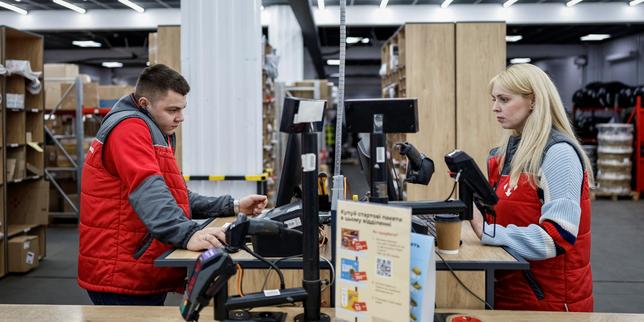
Ukraine faces an existential threat that has nothing to do with missiles or trenches. It is the quiet vanishing of its workforce. Even if the conflict ends tomorrow, the country faces a staggering deficit of millions of workers needed just to keep the economy afloat, let alone rebuild it.
The numbers are brutal. Millions of citizens live abroad as refugees. Hundreds of thousands of men are mobilized in the armed forces. Tens of thousands have been killed or wounded. Combine this with a birth rate that has plummeted to historic lows, and you get a demographic black hole.
The issue is no longer about temporary wartime disruption. It is a structural collapse. Business owners inside the country already struggle to find mechanics, drivers, engineers, and project managers. Kyiv must confront a harsh reality. Rebuilding factories and bridges is useless if there is no one left to run them.
The Millions Missing From the Ukrainian Economy
To understand the scale of this crisis, look at the population shifts since 2022. The United Nations High Commissioner for Refugees (UNHCR) tracks over six million Ukrainian refugees across Europe. Most are women and children. This represents the core of the country's educated, working-age female population.
At the same time, the domestic workforce shrank dramatically. The Center for Economic Strategy in Kyiv estimates that the available labor force inside the country dropped by over 25% compared to pre-war levels.
Estimated Ukrainian Population Changes (2021-2026)
Pre-war Population: ~41 million
Refugees Abroad: ~6.2 million
Internally Displaced: ~3.7 million
Active Workforce Reduction: >25% decrease
This is not a problem you fix with a few recruitment ads. When a factory in Dnipro loses half its welding team to military mobilization, those positions stay vacant. Women are stepping into non-traditional roles, driving heavy cargo trucks and working in underground mines. But it is a drop in the bucket. The sheer volume of missing humans is too high.
The Great Refugee Dilemma
Will they come back? That is the multi-billion-dollar question. Survey data from organizations like the International Organization for Migration (IOM) shows a worrying trend. The longer the hostilities drag on, the deeper refugees put down roots abroad.
Children enroll in Polish, German, or Russian schools. Parents find jobs, learn languages, and sign long-term apartment leases. A survey by the Ukrainian Center for Economic Strategy revealed that while a majority initially expressed a desire to return, the concrete percentage planning an immediate move back drops every single month.
If even half of these refugees choose permanent residency abroad, the economic consequences are permanent. Ukraine will lose not just consumers, but taxpayers, entrepreneurs, and the next generation of workers.
The Math Behind a Five Million Worker Deficit
The Ukrainian Ministry of Economy dropped a bombshell statistic recently. The country needs at least 4.5 million additional workers over the next decade to sustain rapid economic growth during post-war reconstruction.
Where do those people come from?
- The Birth Rate Collapse: Ukraine already had one of the lowest fertility rates in Europe before 2022. Now, it hovers around 0.7 births per woman. A nation needs 2.1 just to keep its population stable. The generation that should enter the workforce in fifteen years simply is not being born.
- The Aging Population: With millions of young people gone, the ratio of retirees to active workers is heavily skewed. A tiny pool of taxed workers must fund the pensions of a massive elderly population. The math does not work.
- The Brain Drain: Highly skilled professionals—IT specialists, scientists, doctors—found remote work or foreign employment early in the conflict. Replacing an experienced structural engineer takes a decade of education and on-the-job training.
Businesses face immediate pain. Go to any major Ukrainian employment portal like Work.ua and you see vacancies skyrocketing while the number of active resumes plummets. In sectors like construction, logistics, and retail, the shortage is critical. Companies bid against each other for basic laborers, driving up nominal wages while productivity stagnates.
Rebuilding Without People Is an Illusion
International allies pledge hundreds of billions for reconstruction. The European Union, the World Bank, and private investors talk about building green energy grids, modern transport corridors, and advanced manufacturing hubs.
They are ignoring the human element.
You cannot build a modern highway without hundreds of heavy equipment operators. You cannot erect new housing blocks without thousands of bricklayers, electricians, and plumbers. If the local labor market is empty, international construction firms will have to bring their own work crews. That means money spent on reconstruction leaves the country immediately rather than circulating in the local economy.
The Migration Policy Fight
This forces an uncomfortable conversation that many in Kyiv prefer to avoid. Ukraine will likely have to become an immigrant-importing nation to survive.
For a country historically accustomed to net emigration, this is a massive cultural and political shift. Importing hundreds of thousands of workers from South Asia, Central Asia, or Africa requires new legal frameworks, integration programs, and a complete overhaul of immigration policy.
It also risks political backlash. Local populations, traumatized by conflict and hyper-nationalistic after years of defending their borders, might resist large-scale foreign labor inflows. Yet economic reality is indifferent to political comfort. Without foreign labor, fields will go unharvested and factories will stay quiet.
How Businesses Adapt to an Empty Labor Market
Ukrainian companies aren't waiting for government policies. They adapt out of pure survival instinct.
Automation is accelerating. Agriculture firms invest heavily in autonomous drones for spraying crops and GPS-guided tractors to maximize the output of a single operator. Factories that used manual assembly lines look for ways to integrate robotics, even with the constant threat of power outages caused by infrastructure damage.
Survival Strategies for Ukrainian Firms
1. Massive investment in automation and drone technology
2. Cross-training female employees for traditionally male-dominated heavy labor
3. Offering flexible remote setups to retain displaced workers
4. Direct partnerships with vocational schools to compress training times
They also redesign roles completely. If a company cannot find an experienced logistics manager, they break the job into three simpler components and hire less-qualified individuals, using software to bridge the skill gap. It is inefficient and expensive, but it keeps the lights on.
What Kyiv Must Do Right Now
The government cannot wait for peace terms to fix the demographic trajectory. Policy changes must happen immediately to prevent total stagnation.
First, rewrite the labor code. Ukraine's current labor laws are a clunky remnant of the Soviet era, filled with rigid regulations that make flexible hiring, part-time shifts, and rapid retraining programs a bureaucratic nightmare. Companies need the freedom to adapt hours and roles instantly.
Second, tie financial incentives to repatriation. The state must offer concrete tax breaks, cheap housing loans, and business grants specifically targeted at refugees who choose to return. A symbolic appeal to patriotism will not convince a mother to move her children back from a stable life in Warsaw or Berlin. They need economic security.
Third, fast-track the integration of veterans. Hundreds of thousands of individuals will eventually transition back into civilian life. Many will have physical or psychological injuries. Developing a world-class network of rehabilitation and vocational retraining centers is a prerequisite for getting these individuals back into the active economic ecosystem.
Forget the physical infrastructure for a second. The ultimate measure of Ukraine's recovery isn't the number of rebuilt apartments or repaved roads. It is the number of people who choose to live, work, and raise families inside its borders. If the state fails to solve the labor equation, the economic future looks incredibly bleak, regardless of how the geopolitical lines are drawn.