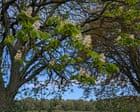
Every autumn, a predictable wave of botanical panic washes across the British press. A horse chestnut drops its leaves in August, pushes out a desperate cluster of white candles in October, and suddenly every headline screams that nature has lost its mind. "Everything is so out of whack," the quotes wail. The narrative is effortless, emotional, and scientifically lazy.
It is also completely missing the point.
When an oak tree in Surrey buds six months early, the plant is not malfunctioning. It is executing a cold, calculated survival protocol honed over millions of years of evolutionary pressure. Calling this phenomenon a "glitch" or "confusion" projects human anxiety onto biological machinery that does not care about our calendar. You are looking at an emergency override system and mistaking it for a breakdown.
The Myth of the Confused Tree
The mainstream consensus relies on a comforting fiction: that nature operates like a Swiss watch, and any deviation from the March-to-October rhythm means the gears are stripped. Journalists love this framing because it turns complex plant physiology into a tidy moral fable. Warm October equals confused tree equals ecological collapse.
Here is what actually happens inside the vascular system of a deciduous tree.
Trees do not read calendars, nor do they casually glance at a thermometer and decide to throw a spring party in November. Phenology—the timing of biological events—is governed by a brutal, two-factor authentication system: photoperiod (day length) and thermal time (accumulated warmth and chilling hours).
Most temperate trees rely heavily on photoperiod to enter dormancy. As days shorten in autumn, specialized proteins called phytochromes detect the shift in red-to-far-red light ratios, triggering the production of abscisic acid. This hormone locks the buds into deep endodormancy—a biological vault designed to prevent the tree from waking up during a freak warm spell in January. To unlock that vault, the tree usually requires a specific quota of "chilling hours" (temperatures roughly between 0°C and 7°C).
So how does a tree bloom in October without getting its chilling hours?
It didn't skip dormancy. It never entered it properly because it was nearly killed in July.
Stress-Induced Phenology Is a Feature, Not a Bug
Spend enough time walking damaged woodlands and commercial orchards, and you learn to spot the difference between a thriving plant and a cornered one. I have watched forestry managers burn through budgets trying to "correct" off-season budding with aggressive fertilization schedules, only to accelerate the decline of their stands. They treated a symptom of severe summer trauma as if it were a simple scheduling error.
When the UK experiences prolonged summer drought, extreme heat, or heavy pathogen pressure—such as Cameraria ohridella (the horse chestnut leaf-miner)—trees face an existential math problem. Maintaining leaves during a severe water deficit is suicidal; transpiration pulls water out of the xylem until air bubbles form, causing cavitation (essentially a fatal heart attack in the tree's plumbing).
To survive, the tree triggers premature senescence. It jettisons its leaves in July or August to seal off water loss.
Then comes September and October. The temperatures drop slightly, the autumn rains arrive, and the soil moisture rebounds. Meanwhile, the tree sits stripped of its solar panels with an empty carbohydrate bank account and six months of winter starvation staring it in the face. If the summer stress prevented the buds from fully locking into deep dormancy, that sudden return of water and mild temperatures triggers an emergency flush. The tree gambles its stored starches to push out new leaves and flowers right now, hoping to photosynthesize just enough sugar to survive until April.
This is not a tree being "tricked" by warm weather. It is an organism bleeding out on the operating table and burning its last reserves to stay conscious.
Why the "Out of Whack" Narrative Is Dangerous
Framing autumn blossoms as a quirky, slightly alarming weather anomaly does real damage. It shifts public and policy focus toward the wrong variables.
- It masks chronic soil and root degradation. Urban and agricultural trees in the UK are hammered by soil compaction, road salt, and declining mycorrhizal networks. A healthy woodland tree with deep, fungal-connected roots buffers summer drought far better than an isolated street tree trapped in a concrete coffin. When the street tree blooms in October, the headlines blame the weather, letting terrible urban forestry off the hook.
- It ignores the true timeline of mortality. Trees operate on decades, not news cycles. An early bloom rarely kills a mature oak that same winter. The real killer is the compounding energy deficit. When that emergency autumn foliage gets torched by the first hard frost in November, the tree loses both the carbon it spent building those leaves and the buds that were supposed to fuel next spring. Repeat that cycle three times in ten years, and the tree dies of slow-motion starvation—a phenomenon foresters call spiral decline.
- It trivializes trophic mismatch. While the media obsesses over pretty pink cherry blossoms in autumn, the silent catastrophe happens in the spring. Research from organizations like the Woodland Trust's Nature's Calendar project and the UK Centre for Ecology & Hydrology (UKCEH) has spent decades tracking phenological shifts. The problem isn't just early blooming; it is asynchrony. Oak leaves emerge earlier, winter moth caterpillars hatch to eat them, and blue tits miss the peak caterpillar buffet needed to feed their chicks. Focusing on freak autumn blooms distracts from the quiet dismantling of the spring food web.
Dismantling the Common Questions
When people see apple blossoms next to fallen autumn leaves, they immediately jump to the wrong conclusions. Let's tear down the most common assumptions.
Does an autumn bloom ruin next year's harvest or spring display?
Usually, yes—at least partially. Deciduous trees form next year's flower and leaf buds during the preceding summer. Those buds are finite. Every bud that breaks open in October is a bud that will not open in April. In commercial fruit production (apples, pears, cherries), a major autumn flush directly translates to yield loss the following year. Worse, because autumn blossoms rarely get pollinated—most native pollinators are already dormant or dead—the tree expends massive reproductive energy for zero genetic return.
Can you stop a tree from budding early by pruning or watering it?
If you prune a tree that is flushing in October, you are actively helping it die. Pruning stimulates auxin production and pushes even more latent buds to break dormancy, draining the exact carbohydrate reserves the tree needs to survive winter. Deep watering in July and August prevents the trigger by stopping premature leaf drop. Watering or pruning in October once the buds have already broken is like putting a bandage on a bullet wound after the patient has left the hospital.
Is this proof that UK native species are failing and need to be replaced?
This is the favorite talking point of aggressive forestry consultants pushing non-native monocultures. It is half-baked logic. Native species like Quercus robur (English oak) and Fagus sylvatica (European beech) possess massive genetic plasticity. While individual stressed specimens will fail, intact native woodlands contain wide genetic variation in bud-burst timing. Replacing diverse, ancient genetic stock with uniform non-native plantations trades short-term drought tolerance for catastrophic vulnerability to novel pests and diseases.
The Uncomfortable Reality of Adaptation
Let's be honest about the flaw in my own argument: pointing out that autumn budding is an evolved stress response does not mean the UK's trees are fine.
Evolution works on populations over centuries, not individual trees over a single decade. While the physiological mechanism of emergency flushing is natural, the frequency at which UK trees are being forced to pull that emergency lever is unprecedented. A survival mechanism designed to be used once every twenty years becomes a death sentence when triggered every third summer.
Furthermore, we have stripped British trees of the surrounding ecosystem buffers they used to rely on. Fragmented woodlands, drained wetlands, and sterilized agricultural soils mean trees face modern climate extremes with one hand tied behind their backs. Even the best soil management cannot save a shallow-rooted beech stand if southern England experiences back-to-back megadroughts.
Stop Watching the Branches and Start Fixing the Ground
If you manage land, own a garden, or influence local council policy, stop gawking at autumn flowers and taking photos for social media. Treat an October blossom as a diagnostic alarm bell signaling severe root-zone failure.
- Abandon tidy landscaping. Every time a local council or homeowner blows fallen leaves off the grass and hauls them away, they rob the tree of its natural moisture-retention blanket and fungal food source. Leave the leaf litter under the canopy drip line.
- Mulch aggressively before June. If you want to prevent autumn budding, protect the roots from July heat. Lay down 3 to 4 inches of coarse woodchip mulch in spring—keeping it away from the trunk flare—to lock in soil moisture and keep root temperatures stable.
- Kill the turf grass around trees. Grass is a ruthless competitor for surface water. A tree standing in a manicured lawn loses a massive percentage of summer rainfall to the turf before a single drop reaches its feeder roots. Replace grass under the canopy with mulch or shade-tolerant groundcover.
- Stop panic-fertilizing. High-nitrogen synthetic fertilizers force rapid, weak vegetative growth that demands even more water and attracts sap-sucking pests. Feed the soil biology with compost and woodchips, not chemical stimulants.
Nature is not out of whack. The physics, chemistry, and botany are operating with terrifying precision. The trees are simply adapting to the conditions we have created—and if you keep misreading the warning signs, you won't notice the canopy is dying until it collapses on your head.