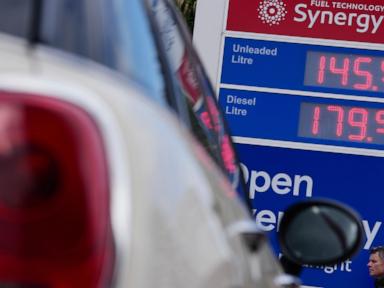
Geopolitical conflict in the Middle East serves as an immediate, exogenous supply-side constraint on the global energy market. When conflicts disrupt the flow of hydrocarbons, the primary impact on the UK economy is not merely a transient price fluctuation at the pump; it is the systemic transmission of a risk premium into domestic price indices. This phenomenon creates a high-frequency inflation shock that forces a recalibration of both monetary policy and private sector capital allocation.
The Mechanics of the Risk Premium
The market reaction to conflict in Iran is driven by the bottleneck nature of the Strait of Hormuz, a conduit for roughly one-fifth of global oil consumption. Pricing in energy markets is forward-looking. The moment conflict intensity increases, traders price in the probability of supply disruption by adjusting futures contracts for Brent Crude. This creates an immediate "risk premium" on the commodity price.
The UK is a net importer of refined petroleum products. Because the exchange rate between the British Pound (GBP) and the US Dollar (USD) is often inversely correlated with global risk sentiment, a spike in oil prices frequently coincides with a weaker Sterling. This creates a double-hit scenario: domestic importers pay more for a barrel of oil priced in USD, and they pay more in GBP terms due to currency depreciation. This interaction is the first stage of the transmission mechanism.
Retail Pass-Through and Price Elasticity
Consumers often view the price at the pump as a simple function of crude oil costs, but the retail price is structurally rigid due to high fixed components. In the UK, fuel costs consist of:
- The Commodity Price: Highly volatile, market-driven.
- Duty and Taxes: Relatively fixed, providing a floor for retail prices.
- Distribution and Refining Margins: These scale with volume and transport costs.
When crude oil prices jump, retailers do not wait for their current inventory to deplete before repricing. They apply "replacement cost accounting," adjusting prices upward to match the cost of the next shipment. This results in an immediate spike at the pump. Because fuel is a necessity with low short-term price elasticity—households cannot abruptly stop driving to work or heating homes—demand remains inelastic. This allows the inflation to embed itself directly into the Consumer Price Index (CPI) without an immediate reduction in consumption volume.
Secondary Transmission: The Logistics Surcharge
The most pernicious aspect of a fuel price shock is the secondary effect on core inflation. Logistics and freight companies operate on thin margins. When diesel prices rise, transport providers apply fuel surcharges to nearly every moving part of the supply chain.
This creates a pervasive cost-push effect across the economy. Food prices, construction materials, and retail goods experience delayed, secondary price increases. These are not energy prices, yet they are inflation caused by energy. This is where the shock transitions from a volatile headline figure to a sticky, structural problem. If these costs are passed on to consumers for an extended period, they begin to influence inflation expectations, leading to wage-price dynamics where employees demand compensation for the rising cost of living, thereby hardening inflation into the economic foundation.
The Monetary Policy Paradox
The Bank of England (BoE) faces a distinct problem during supply-side shocks. Traditional monetary policy—raising interest rates—is designed to cool demand-pull inflation by reducing consumption and investment. It is not designed to produce more oil or reopen blocked shipping lanes.
When the BoE raises rates in response to energy-driven inflation, they are effectively choosing between two negative outcomes:
- Inaction: Allowing inflation to persist, which risks de-anchoring expectations and causing long-term damage to the currency.
- Action: Raising rates to quell demand, which compounds the pain of the supply shock by slowing the economy further, effectively inducing a recession to curb price growth.
The current challenge is that the UK economy is highly sensitive to interest rates due to mortgage structures and corporate debt loads. A high-rate environment, when coupled with energy-driven cost inflation, compresses real disposable income more aggressively than in other developed economies.
Structural Economic Exposure
The susceptibility of the UK to these shocks is amplified by its energy mix and infrastructure. Reliance on imported gas and oil for both electricity generation and transport creates a feedback loop where price volatility in the Middle East translates directly into the UK’s cost of business.
The volatility is compounded by inventory management practices. Just-in-time supply chains reduce overhead costs during stable periods but leave companies devoid of a buffer when supply shocks hit. This lack of strategic inventory reserves ensures that price spikes are transmitted to the end consumer at maximum velocity.
Strategic Action for Capital Allocation
Investors and firm operators must stop viewing energy shocks as isolated events and instead categorize them as a permanent variable in their cost function. The following tactical adjustments are required to mitigate exposure:
- Duration Matching in Hedging: Companies must shift from spot-market purchasing to longer-term supply contracts or derivative hedging for energy inputs. Relying on spot pricing during periods of geopolitical uncertainty creates an unmanaged liability.
- Logistics Efficiency Audits: Given that fuel surcharges will become a structural overhead, logistics routes must be optimized for distance reduction rather than just time. Reducing the "fuel intensity per unit sold" is now a primary margin protection strategy.
- Pricing Power Assessment: Businesses must calculate the price elasticity of their specific product offerings. In an environment of supply-side inflation, companies that lack the pricing power to pass through costs will see margin erosion. Assets with low elasticity—those that consumers cannot avoid buying—should be prioritized in portfolio allocation.
- Balance Sheet Liquidity: As the BoE keeps rates elevated to fight energy-induced inflation, credit costs will remain high. Organizations must prioritize cash-flow-positive operations over speculative expansion to avoid debt service traps.
The strategic play is to treat this volatility as the new baseline for operational planning rather than an anomaly to be waited out. Capital should be allocated toward efficiency and vertical integration that reduces reliance on volatile global commodity inputs.