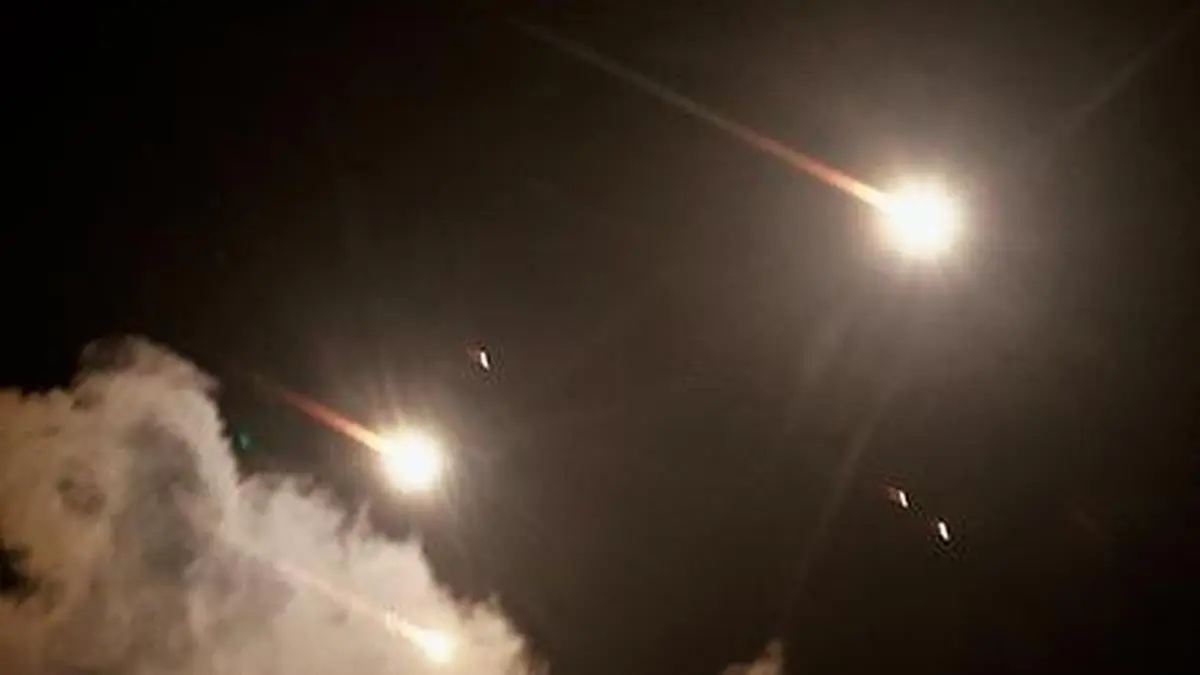
The fragile silence in the Persian Gulf just shattered. After a three-week ceasefire that felt more like a bated breath than actual peace, Iran launched a massive aerial barrage at the United Arab Emirates on Monday. We’re talking 12 ballistic missiles, three cruise missiles, and four drones. While the UAE’s defense systems swatted most of them out of the sky, the message was loud and clear: the "quiet" is over.
If you’re wondering why this is happening now, look at the Strait of Hormuz. On the same day as the strikes, the U.S. launched "Project Freedom," a high-stakes plan to escort merchant ships through the blockaded waterway. Iran sees this as a blatant violation of the April 8 ceasefire. By targeting the UAE, Tehran isn't just venting; it's warning its neighbors that backing the U.S. and Israel comes with a heavy price tag.
The Hardware and the Hits
The UAE Ministry of Defense didn't sugarcoat the numbers. They engaged a total of 19 separate threats in a single afternoon. For a country that’s become a global hub for business and tourism, having ballistic missiles streaking across the sky is a nightmare scenario.
Luckily, the damage was limited. Three people suffered moderate injuries, and a fire broke out at the Fujairah Oil Industry Zone—a critical energy hub on the UAE’s eastern coast—after a drone strike. But the physical damage isn't the point. The psychological weight of 15 missiles launched from across the water is what Tehran is actually selling.
Since this conflict originally kicked off in February 2026, the UAE has become the most targeted nation in the region. Their defense stats are staggering:
- 549 ballistic missiles intercepted to date.
- 2,260 drones engaged.
- 29 cruise missiles neutralized.
These aren't just numbers on a spreadsheet. Every interception represents a potential catastrophe averted in cities like Dubai or Abu Dhabi. It’s a testament to the UAE’s massive investment in missile defense, but even the best shield isn't 100% foolproof forever.
Iran’s Warning to the "Ill-Wishers"
Iranian Foreign Minister Abbas Araghchi didn't mince words after the strikes. He took to X to warn both the U.S. and the UAE against being dragged into a "quagmire by ill-wishers." In Tehran’s eyes, the UAE’s deepening ties with Israel and its support for U.S. naval operations are an existential threat.
The rhetoric is shifting from "defensive" to "corrective." Iran is essentially saying that if the UAE continues to provide a platform for Israeli and American interests, it will no longer be treated as a neutral neighbor. Araghchi called the U.S. escort mission "Project Deadlock," mocking the idea that a military solution can fix a political crisis.
It’s a classic squeeze play. Iran knows it can’t win a head-to-head conventional war with the U.S., so it targets the "softer" links in the chain. By making life uncomfortable and dangerous for the UAE, they hope to pressure Abu Dhabi into distancing itself from Washington and Tel Aviv.
What’s Actually at Stake for You
You might think this is just another Middle Eastern spat, but the economic ripple effects are already hitting. The effective closure of the Strait of Hormuz has sent global fuel prices into a tailspin. Shipping companies and insurers are freaking out. Who wants to send a billion-dollar tanker through a "quagmire" where drones are falling from the sky?
In the UAE, the response has been swift. Dubai and Sharjah have already moved schools back to online learning. The U.S. Department of State issued a Level 3 travel advisory, telling Americans to reconsider travel to the country. For a nation built on the "open for business" mantra, this is a gut punch.
Why "Project Freedom" Changed the Math
The ceasefire mediated by Pakistan on April 8 was always shaky. It gave both sides a chance to reload, but it didn't solve the core issue: who controls the world’s most important oil transit point?
When President Trump announced the U.S. would begin guiding ships through the Strait on Monday, he basically called Iran's bluff. Iran responded by attacking an ADNOC oil tanker (the MV Barakah) and launching the missile barrage. The U.S. Navy countered by sinking seven Iranian IRGC boats.
We’re no longer in a "cold" standoff. This is a hot conflict where everyone is trying to prove they have the stomach for more pain.
The UAE’s Impossible Choice
The UAE is stuck between a rock and a very hard place. On one hand, they’ve hitched their wagon to a high-tech, Western-aligned future involving the Abraham Accords and deep security ties with the U.S. On the other hand, Iran is literally right across the water and has shown it can reach out and touch critical infrastructure whenever it wants.
Abu Dhabi has stated it reserves the "full and legitimate right" to respond. But what does a response look like? Striking back at Iran risks a full-scale war that would vaporize the UAE's tourism-based economy overnight.
Next Steps for Residents and Observers
If you're living in the region or have business interests there, the "wait and see" period is over. You need to act on the reality of a sustained conflict.
- Monitor official channels only: Skip the WhatsApp rumors. Follow the UAE Ministry of Interior and local police apps for real-time aerial threat alerts.
- Verify travel insurance: Most standard policies have "act of war" exclusions. If you're flying in or out of DXB, check the fine print today.
- Prepare for disruption: The shift to remote learning in Dubai and Sharjah isn't a one-day fluke. It’s a blueprint for the coming months.
The regional "quagmire" Araghchi mentioned is here. Whether the UAE can navigate it without losing its status as a global safe haven is the multi-billion-dollar question. For now, the sky over the Gulf is a lot more crowded—and a lot more dangerous—than it was 24 hours ago.