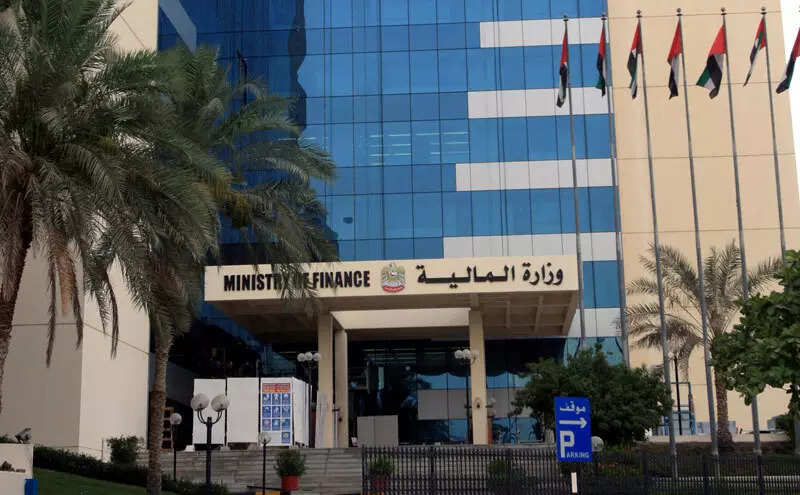
The United Arab Emirates just blinked. For decades, the nation’s economic appeal rested on a singular, defiant promise: no corporate tax. That era ended in 2023 with the introduction of a 9% levy, a move that brought the federation into the global regulatory fold but left many boardrooms wondering if the "tax-free" magic was gone for good. On March 18, 2026, the Ministry of Finance attempted to reclaim that narrative by launching Phase 1 of the Research and Development (R&D) Tax Incentives Programme. The headline is seductive: a tax credit of up to 50% on R&D spending. But for those operating on the ground in Dubai and Abu Dhabi, the fine print reveals a policy that is as much about data collection and international optics as it is about immediate fiscal relief.
This is not a blanket discount for doing business. It is a highly surgical, expenditure-based tool designed to offset the costs of innovation—and it comes with a heavy set of handcuffs.
The Anatomy of a Non Refundable Credit
To understand the 2026 Tax Incentive Rules, one must first look at what the government is not giving away. Unlike the tax regimes in some European jurisdictions or the United States, this credit is non-refundable in its current form. This distinction is critical. If a company spends enough on qualifying research to earn a credit that exceeds its total tax bill, the UAE government is not cutting a check for the difference. The excess simply sits there, potentially useless, unless the business has enough profit to absorb it.
Consider a hypothetical mid-sized tech firm in the Dubai Internet City. If they invest AED 5 million—the absolute maximum cap for Phase 1—into developing a new proprietary AI engine, they could theoretically trigger an AED 2.5 million credit. However, if their 9% corporate tax liability for the year is only AED 1 million, that extra AED 1.5 million in credit doesn't turn into cash. It is a "use it or lose it" scenario for now, though officials have hinted at carry-forward rules or future refundability in Phase 2.
The cap itself is a telling sign of the government's cautious stance. By limiting qualifying expenditure to AED 5 million per entity, the Ministry has effectively built a sandbox. They are willing to let businesses play with the tax rules, but they aren't ready to let the big multinational players wipe out their entire tax bill just yet.
The Frascati Gatekeepers
The UAE is not interested in subsidizing "business as usual." To qualify for the credit, activities must align with the Frascati Manual, the global gold standard for defining R&D. This means the work must be:
- Novel: Aimed at new findings.
- Creative: Based on original concepts.
- Uncertain: Having an unknown final outcome.
- Systematic: Planned and budgeted.
- Transferable: Leading to results that could be reproduced.
Many companies mistakenly believe that "innovation" means any digital transformation or software upgrade. It does not. If you are implementing a third-party ERP system, you get nothing. If you are building a new algorithm from scratch to solve a specific, documented technical uncertainty, you are in the game.
The paperwork trail required is exhaustive. The Federal Tax Authority (FTA) demands contemporaneous documentation. You cannot simply show up at the end of the year and claim you spent money on R&D. You need a paper trail that includes project objectives, technical challenges faced, and a meticulous breakdown of staff time. Personnel costs are typically the largest claimable expense, but they must be backed by logs showing exactly how many hours a senior engineer spent on the "uncertain" part of the project versus routine maintenance.
The Pillar Two Shadow
There is a deeper reason for the specific "non-refundable" design of this incentive. The UAE is navigating the OECD Pillar Two framework, which seeks to ensure large multinational enterprises pay a minimum effective tax rate of 15%. In January 2025, the UAE implemented its own Domestic Minimum Top-up Tax (DMTT) to capture this revenue before it leaks to other jurisdictions.
If the UAE offered "Qualified Refundable Tax Credits," they would be treated as income under OECD rules, which is generally more favorable for a company's effective tax rate (ETR) calculation. However, the UAE chose a non-refundable path for Phase 1. This signals that the Ministry is still testing how these credits interact with the DMTT. They are prioritizing a "predictable effective tax rate outcome" for companies, essentially ensuring that the incentive doesn't accidentally trigger a higher top-up tax elsewhere.
The Free Zone Dilemma
For years, Free Zone entities were the untouchables of the UAE economy, basking in 0% tax environments. Now, they face a choice. To benefit from the R&D credit, a Free Zone person must be subject to Corporate Tax. While some Free Zone entities have "Qualifying Income" taxed at 0%, they may find the R&D credit irrelevant unless they have "Non-Qualifying Income" taxed at the standard 9% rate.
Furthermore, the new rules introduce a minimum spend threshold of AED 500,000 per project. This high floor is designed to weed out small, fragmented claims. It forces companies to commit to significant, high-value projects rather than spreading small amounts across minor improvements.
Strategy for the 2026 Fiscal Year
The 2026 Tax Incentive Rules are a clear signal that the UAE is transitioning from a "low cost" jurisdiction to a "high value" one. For businesses, the honeymoon of simple accounting is over. To capture the 50% credit, a company must behave like a sophisticated global entity.
First, internal accounting must be restructured. General Ledger codes should be created specifically to isolate R&D expenditures—personnel, consumables, and subcontracting fees—from general operational costs. Second, the technical team and the finance team must talk to each other. The engineers need to understand the Frascati criteria just as well as the accountants do, as they are the ones who must document the "technical uncertainty" that justifies the tax break.
The government is watching. This first phase is explicitly described as a "monitoring period." The data gathered in 2026 will determine if Phase 2 includes the holy grail of R&D incentives: cash refunds for loss-making startups. Until then, the credit remains a powerful but restricted tool, available only to those willing to navigate a maze of international standards and rigorous documentation.
Audit your current projects against the Frascati criteria immediately. If your 2026 budget includes significant development spend, the difference between a 9% tax rate and an effective 4.5% rate depends entirely on your ability to prove you are actually innovating.