Silence.
When a three-hundred-meter steel hull begins to take on water in the dark, the terrifying part is not the roar of the sea, nor the groaning of tortured metal, nor even the frantic bark of marine radios crackling across emergency frequencies; it is the sudden, suffocating quiet that descends once the main engines die and the ship loses its forward momentum, leaving twenty-odd human beings adrift over an abyss while two million barrels of crude oil press against fractured bulkheads.
Imagine, for a moment, a hypothetical second engineer named Mateusz standing on a tilting steel catwalk somewhere off the coast of Oman. In this scenario, his boots are slick with condensation and diesel mist. He does not care about geopolitical signaling, maritime chokepoints, or Brent crude futures trading on screens in London and New York. Mateusz cares about the emergency bilge pumps screaming in his ears and the thirty-seven-year-old daughter waiting for him in Gdansk.
Yet, when Iranian officials announced that a tanker carrying two million barrels of oil had sunk in the Strait of Hormuz, the headlines treated the event like a line item on a balance sheet. A claim. A denial or an ambiguity. A ticker symbol twitching upward by three percent before lunch.
We have trained ourselves to read maritime disasters in the Persian Gulf as abstract chess moves played by distant ministries. That habit is dangerous. Because when a Very Large Crude Carrier goes down in the narrowest, busiest energy artery on Earth, the water does not just swallow steel. It swallows the margin of safety that keeps the modern world humming.
The Geography of a Chokepoint
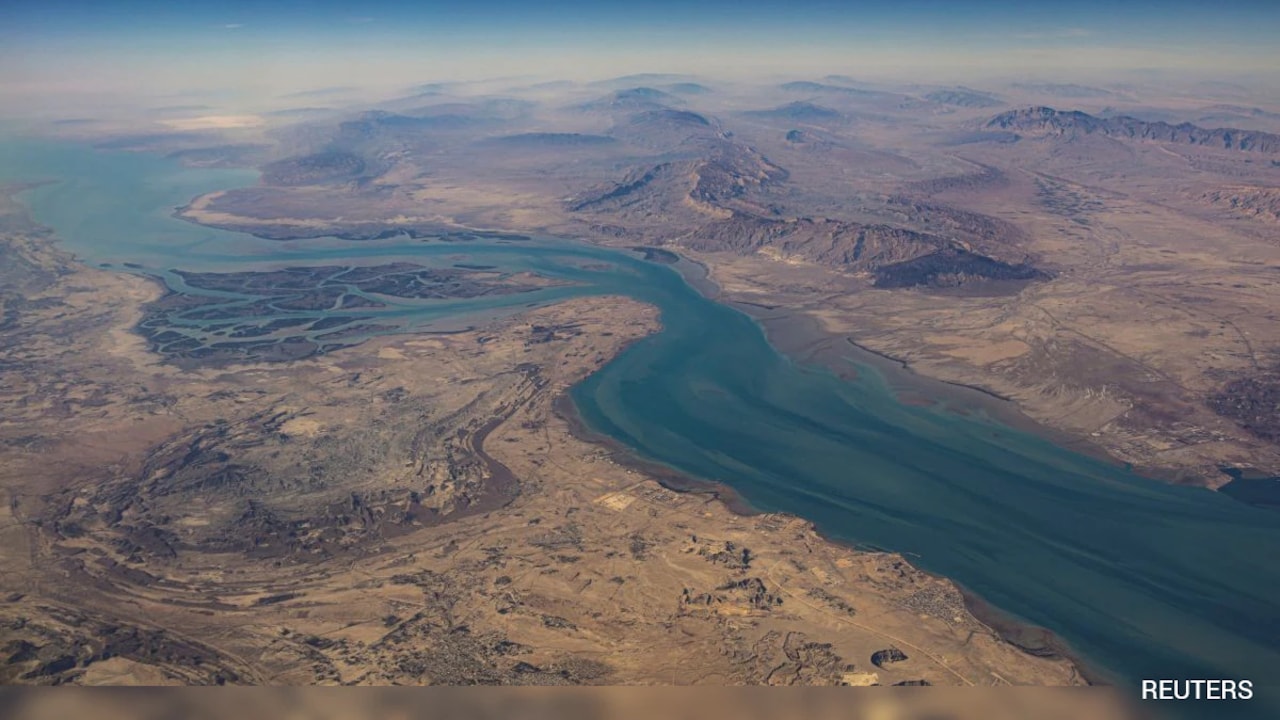
To understand why a single sunken tanker in this stretch of water makes energy traders sweat through their shirts, picture the Strait of Hormuz not as a wide ocean highway, but as the narrow neck of an hourglass. At its tightest point between Oman and Iran, the channel is barely twenty-one nautical miles wide. Within that corridor, the actual shipping lanes—the deep-water tracks capable of accommodating fully loaded supertankers—are just two miles wide in each direction, separated by a two-mile buffer zone.
Every single day, roughly twenty million barrels of petroleum liquids pass through those two narrow lanes. That represents nearly one-fifth of global petroleum consumption and roughly a third of all seaborne-traded oil.
I remember sitting in a cramped maritime insurance office in Piraeus years ago during an earlier wave of Gulf tanker tensions, watching a veteran underwriter trace his thumb across a laminated nautical chart of Hormuz. The air smelled of stale espresso and wet wool. He tapped the chart with a nicotine-stained fingernail and told me something I have never forgotten: "People think shipping is infinite because the ocean is big. It isn't. Global trade runs through ditches. You drop one heavy brick in the ditch, and the whole village floods."
Two million barrels of oil is roughly eighty-four million gallons. Loaded onto a single Very Large Crude Carrier—a class of vessel known in the trade as a VLCC—that cargo weighs close to three hundred thousand metric tons. When a ship of that size sinks in a shallow, high-traffic bottleneck like the Strait of Hormuz, where depths average between fifty and ninety meters, it does not vanish cleanly into a bottomless trench like the Titanic. A three-hundred-meter hull resting on the seabed of a busy shipping lane becomes an underwater mountain range where none existed yesterday.
The Anatomy of an Environmental Nightmare
Consider what happens next when two million barrels of heavy crude meet warm, enclosed saltwater.
Unlike the open Atlantic, where fierce winter gales and massive swells churn oil slicks and disperse toxins across thousands of miles, the Persian Gulf is practically a bathtub. It is shallow, hot, and connected to the Indian Ocean only through the very strait where the disaster occurs. Water circulation takes years. Anything spilled inside stays inside.
First comes the surface slick. Crude oil spreads across calm water with terrifying speed, forming a thick, iridescent blanket that blocks sunlight from reaching the marine plants below. Within hours, the lighter, more volatile hydrocarbons begin evaporating into the air, creating a toxic haze that burns the lungs of rescue crews and settles over coastal fishing villages in Oman, the United Arab Emirates, and southern Iran.
Then comes the invisible poison.
To understand how an oil spill kills an ecosystem, think of a sponge soaked in paint thinner. As waves slap against the slick, microscopic droplets of oil mix into the water column, creating an emulsion known in the industry as "chocolate mousse." Fish gills clog. Coral reefs—some of the most heat-resilient corals on the planet, studied by marine biologists worldwide for clues on surviving climate change—suffocate under a smothering coat of tar. Sea turtles and dugongs, surfacing to breathe, inhale petroleum fumes and coat their nostrils in sludge.
And what about the water people drink?
This is the detail almost every news report misses. Along the arid coasts of the Persian Gulf, fresh water does not fall from the sky or flow down mountain rivers. It is manufactured. Massive desalination plants line the shores of the Arabian Peninsula, sucking in millions of cubic meters of seawater every hour, stripping out the salt, and pumping life-giving water to millions of residents in cities like Dubai, Abu Dhabi, Doha, and Manama.
Oil and desalination plants are mortal enemies. If a massive slick drifts into the intake pipes of a coastal desalination facility, engineers have no choice but to shut the pumps down immediately, lest crude oil foul the delicate reverse-osmosis membranes and destroy billion-dollar infrastructure. In a region where summer temperatures routinely top forty-five degrees Celsius, a forced shutdown of desalination plants is not an inconvenience. It is an existential emergency within seventy-two hours.
Fog of War on the Water
When Tehran claims a tanker has sunk in the Strait of Hormuz, we immediately confront a secondary crisis: the collapse of shared truth.
Maritime incidents in the Gulf rarely arrive with clean, indisputable facts. Instead, they emerge through a thick fog of competing narratives, dark-fleet transponders, and strategic ambiguity. For years, a shadow network of aging tankers—many operating with their Automatic Identification System transponders switched off, sailing under flags of convenience with opaque ownership structures—has moved sanctioned crude through these waters.
When one of these vessels suffers a catastrophic hull failure, an explosion, or a collision, verifying the claim becomes a detective story played out in real time via commercial satellite imagery and faint emergency beacon signals. Was it a structural failure on a poorly maintained, twenty-five-year-old hull pushed past its operational lifespan? Was it a limpet mine? A navigational error in crowded waters where electronic warfare frequently jams GPS signals, tricking bridge crews into believing they are miles away from where their keel actually is?
I will be honest: watching these reports unfold from afar induces a specific kind of helplessness. We want crisp answers. We want a satellite photo with a red circle around the wreck and an official manifest signed by an independent surveyor. Instead, we get conflicting press releases from state news agencies, nervous silence from shipping ministries, and frantic speculation on maritime tracking forums. That uncertainty itself is a weapon. In global markets, fear of an unverified disaster moves prices almost as violently as the disaster itself.
How a Sunken Ship Empties Your Wallet
You might live five thousand miles from the Persian Gulf. You might drive an electric car, buy local produce, and never check the daily price of West Texas Intermediate crude. Still, the ripples from a sunken tanker in Hormuz will find their way into your bank account before the month is out.
Oil is a global fungible commodity—which is a fancy economist's way of saying it behaves like water in a single giant swimming pool. It does not matter whether your country buys its oil from Texas, the North Sea, or Saudi Arabia. If someone drains two million barrels out of the pool in the Middle East, the water level drops everywhere at once.
Wait. It goes deeper than the price at the gas pump.
Look around the room you are sitting in right now. The synthetic fibers in your carpet, the plastic casing around your laptop, the fertilizer that grew the wheat in your morning toast, the diesel fuel that powered the eighteen-wheeler carrying your groceries from a regional distribution hub to your neighborhood supermarket—all of it is tethered to the uninterrupted flow of tankers through the Strait of Hormuz.
When a tanker sinks there, three financial chain reactions fire simultaneously:
- War-risk insurance premiums skyrocket. Lloyd's of London and other marine underwriters immediately reclassify the Persian Gulf as a heightened zone of peril. Within forty-eight hours, the cost to insure a single supertanker transit can jump from tens of thousands of dollars to hundreds of thousands of dollars per voyage. Shipping companies do not absorb that cost; they pass it straight down the supply chain.
- Freight rates tighten globally. If vessels reroute, slow down to navigate around a submerged hazard, or wait at anchor outside the Gulf until naval minesweepers and salvage crews clear the channel, the global fleet effectively shrinks. Fewer available ships mean higher charter rates for every container and tanker on the high seas.
- Inflationary pressure returns to everyday goods. Food, plastics, aviation fuel, and manufacturing inputs all become marginally more expensive to move and produce. It shows up six weeks later as an extra four dollars on your grocery receipt and a steeper surcharge on your next flight.
The Men Who Still Have to Sail Through
Amidst the macroeconomic forecasts and geopolitical posturing, it is easy to forget the people who keep the global economy alive: the seafarers.
Roughly ninety percent of everything we touch, wear, eat, and use travels by sea at some point in its journey. And the men—and small number of women—who crew the tankers transiting Hormuz are overwhelmingly working-class mariners from the Philippines, India, Eastern Europe, and Greece. They sign six-to-nine-month contracts away from their families, living in steel boxes above hundreds of thousands of tons of flammable cargo, eating canteen food, and standing four-hour watches in engine rooms where the heat can reach fifty degrees Celsius.
They do not set foreign policy. They do not profit from oil price spikes. When an incident occurs in the Strait of Hormuz, these crews are the ones ordered to maintain course and speed through darkened waters while radar screens flicker with unidentified fast-attack craft and VHF radios broadcast warnings in three languages.
Think back to Mateusz, our hypothetical engineer on the catwalk. When a ship goes down, salvage companies eventually arrive with heavy-lift barges, saturation divers, and environmental booms. Lawyers spend a decade litigating liability in admiralty courts in London. Politicians issue statements condemning aggression or calling for restraint.
Meanwhile, another tanker slips its moorings at Ras Tanura or Fujairah, turns its bow toward the narrow gap between Oman and Iran, and steams forward into the dark—carrying the fuel that lights our homes, trusting that the water ahead is clear, and hoping the hull beneath their boots holds together until morning.