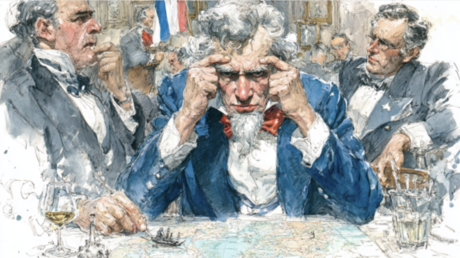
Rain slicked the cobblestones of Brussels as the diplomats retreated from the glass towers of the European Quarter. For decades, the ritual was the same. A phone call from Washington would ripple across the Atlantic, and by morning, the European Union would align its compass. It was a comfortable arrangement. The United States provided the digital backbone, the security umbrella, and the cultural gravity. But the gravity is failing.
Europe is waking up to a cold realization: the tether has frayed.
Take a look at the desk of a fictional but representative policy analyst in Berlin we will call Elena. Five years ago, Elena’s work was defined by cooperation. When she looked at her computer, she saw American software. When she considered the defense of her borders, she saw American steel. When she thought about the future, she saw a shared destiny. Today, Elena spends her afternoons drafting "Strategic Autonomy" papers. Her coffee grows cold as she realizes that the software on her screen is now a liability, the steel is a question mark, and the shared destiny feels more like a diverging path.
The Digital Divorce
The shift began in the invisible layers of our lives. We often think of geopolitics as soldiers and maps, but today it is made of silicon and code. For thirty years, the U.S. exported its tech giants as a form of soft power. Google, Amazon, and Microsoft weren’t just companies; they were the nervous system of the West. If you controlled the data, you controlled the direction of the continent.
That control is evaporating.
The European Court of Justice began chipping away at the foundation with rulings like Schrems II, effectively telling the U.S. that its surveillance laws were incompatible with European fundamental rights. This wasn't just a legal spat. It was a declaration of independence. Europe decided that the privacy of a citizen in Lyon was more important than the data-sharing needs of a corporation in Mountain View.
As the U.S. turns inward, embracing protectionism and "America First" rhetoric—regardless of which party holds the gavel—Europeans have stopped viewing American tech as a benevolent utility. They see it as a foreign dependency. They are building their own clouds, their own AI regulations, and their own digital markets. The Silicon Valley gold rush in Europe is being replaced by a thicket of fines and "sovereign tech" initiatives.
The Price of Protection
Security was the ultimate leverage. The NATO alliance was built on a simple, unspoken deal: the U.S. provides the muscle, and Europe provides the theater. As long as the Russian threat loomed, the U.S. held the keys to the house.
Then the world changed. The pivot to Asia wasn't just a catchy phrase from a decade ago; it became a visceral reality. While Washington focuses its gaze on the South China Sea, the capitals of Europe are feeling the draft. The suddenness of the U.S. withdrawal from Afghanistan and the erratic nature of military aid debates have left European leaders feeling like a spouse who just realized the life insurance policy has expired.
Consider the shift in defense spending. For years, American presidents scolded Europe for not paying their "fair share." Now that Europe is finally opening its wallet, they aren't necessarily buying American. They are investing in French jets, German tanks, and pan-European missile systems. The leverage of the "security provider" only works if the provider is perceived as reliable. Once that trust breaks, the customer starts looking for other options.
A Divergence of Values
Beyond the tanks and the data centers, there is a quieter, more profound separation happening. It’s a gap in the soul of the two regions.
The American dream has become increasingly individualistic, focused on disruption and market supremacy. Europe, meanwhile, has doubled down on a social model that prioritizes stability, climate action, and collective well-being. This isn't just a difference in politics; it’s a difference in the definition of a "good life."
When the U.S. pulled out of the Paris Agreement years ago, it left a scar that hasn't fully healed, even after its return. It signaled to Europe that the U.S. could be a fickle partner on the issue Europeans care about most: the survival of the planet. While Washington brawls over whether climate change is even real, Brussels is busy setting the global standard for the "Green Deal."
Europe is no longer following the leader; it is trying to lead the followers.
The New Map
If you look at a map of global trade, the lines used to be thickest between New York and London, or Washington and Berlin. Now, those lines are competing with a web of new connections. Europe is deepening its ties with the Global South. It is navigating a complex, often fraught relationship with China that refuses to mirror Washington’s total decoupling strategy.
The U.S. expects its allies to pick a side in the new Cold War. Europe, however, is increasingly interested in being its own side.
This isn't to say the relationship is dead. The cultural ties are deep. We still watch the same movies, listen to the same music, and share a fundamental belief in democracy. But a friendship between equals is very different from a relationship between a protector and a protégé. The protector has lost his leverage because the protégé grew up, moved out, and changed the locks.
The leverage didn't vanish overnight. It bled out through a thousand cuts: a tariff here, a privacy fine there, a skipped summit, a delayed shipment of shells.
Elena, our analyst in Berlin, finally shuts down her computer. The screen glows with a notification for a new European-made encrypted messaging app. She doesn't check her American-hosted email. She walks out into the night, passing a construction site for a new battery factory that doesn't rely on American patents or Chinese minerals.
The old world, where Washington’s word was law from the Atlantic to the Urals, is gone. In its place is a fragmented, multi-polar reality where Europe is learning to breathe on its own. The tether isn't just frayed; it has been cut, and both sides are drifting into a dark, unknown sea, watching the lights of the other shore grow smaller and smaller until they are just points of light in a vast, indifferent sky.