Four women went to a hair salon to feel human for an hour. They didn't come home. They weren't combatants. They weren't holding rifles or hiding in tunnels. They were sitting under hair dryers and chatting in a basement-level beauty parlor in the Tulkarem refugee camp. Then the ceiling collapsed.
The reality of the West Bank in 2026 has become a lottery of survival where even the most mundane spaces offer zero protection. On this particular afternoon, an Israeli airstrike targeted a nearby building. The military claimed they were hitting a "command center" used by local militants. Maybe they were. But the physics of modern warfare doesn't care about intent. The explosion sent massive shards of concrete and twisted metal through the walls of the neighboring salon.
Bayan, Shadia, Hanan, and Laila died instantly.
We often hear about "collateral damage" in press briefings. It's a sanitized, corporate term designed to make you forget that someone’s mother just had her skull crushed while choosing a nail polish color. This wasn't an accident in the way a car crash is an accident. It was the predictable result of using high-yield explosives in one of the most densely populated square miles on earth. If you fire a missile into a crowded refugee camp, you're choosing to kill whoever happens to be standing on the other side of the wall.
The myth of the surgical strike in Tulkarem
Military spokespeople love the word "precise." They'll tell you about GPS guidance and thermal imaging as if war is a video game played with a fine-tipped pen. It’s not. When a 500-pound bomb hits a target in a place like Tulkarem, the "kill zone" is just the beginning. The shockwave travels through the ancient, interconnected foundations of the camp.
Refugee camps aren't suburbs. They're vertical labyrinths. The walls of one house are literally the walls of the next. When the intended target—a small room allegedly housing two gunmen—vaporized, the energy had to go somewhere. It went sideways. It went through the thin cinderblock barrier of the beauty salon.
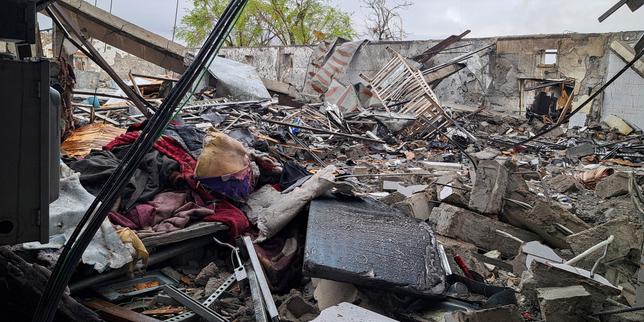
I’ve seen the photos from the aftermath. It’s haunting because of the contrast. You see pink styling chairs covered in grey ash. You see broken mirrors reflecting piles of rubble. There’s a stray hair clip sitting on a blood-stained floor. It’s the jarring intersection of normal life and sudden, violent erasure.
Why the West Bank is reaching a breaking point
Tensions in the West Bank didn't start yesterday. But the intensity of these urban incursions has shifted into something much darker over the last year. Tulkarem and Jenin have become the primary theaters for a brand of warfare that used to be reserved for Gaza.
The Israeli Defense Forces (IDF) argue that these raids are necessary to dismantle "terror infrastructure." They point to the rise in IEDs and armed resistance coming out of the camps. On the other side, the residents see an occupying force that has abandoned any pretense of restraint. When you're a 20-year-old girl getting your hair done for a wedding and you end up under a slab of concrete, "security concerns" sound like a cruel joke.
The Palestinian Authority is basically a ghost at this point. They have no control over these camps. This leaves a vacuum that’s being filled by local armed groups and met with overwhelming air power. The result is a cycle where every "successful" strike on a militant creates five more who are radicalized by the sight of their sisters and mothers being pulled from the wreckage of a storefront.
The psychological toll of the basement salon
For women in Tulkarem, the beauty salon wasn't just about aesthetics. It was a rare "safe space." In a conservative, high-stress environment under constant surveillance, these shops are the only places where women can speak freely, take off their hijabs, and breathe.
To have that specific space turned into a tomb is a different kind of trauma. It tells the population that nowhere is off-limits. Not your bedroom, not your school, and not even the one place you go to feel beautiful. It’s a message of total vulnerability.
The data behind the debris
If you look at the reports from B'Tselem or Human Rights Watch, the pattern is clear. The use of air-launched munitions in the West Bank has increased by over 300% in the last eighteen months. We're talking about drones, Apache helicopters, and occasionally fighter jets.
The legal argument for these strikes often hinges on "military necessity." But international law also requires proportionality and a clear distinction between civilians and combatants. When the "debris" from a strike kills more civilians than the strike itself kills militants, the math of proportionality fails.
- Density Factor: Tulkarem camp houses roughly 21,000 people in less than 0.2 square kilometers.
- Structural Integrity: Most buildings are self-constructed with poor reinforcement, making them prone to "pancake" collapses during nearby explosions.
- Response Time: Ambulances often struggle to reach strike sites because of narrow alleys and military checkpoints, turning treatable injuries into fatalities.
Stop looking at these as statistics
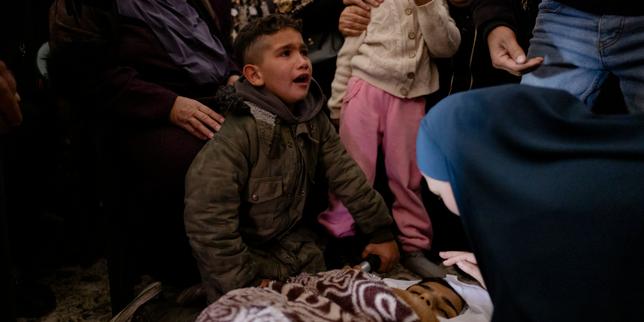
It's easy to scroll past a headline about four dead in the West Bank. We've been conditioned to see these names as part of an endless, unsolvable tally. But these women had lives that were moving toward something. One was a university student. Another was a grandmother who had saved up for weeks to treat herself.
We have to stop accepting the "unfortunate accident" narrative. If a policy consistently results in the deaths of non-combatants in "safe" zones, the policy itself is the problem. It’s a choice to prioritize a tactical hit over the lives of the people living next door.
The international community usually offers "deep concern." It’s a useless phrase. Concern doesn't rebuild a salon and it certainly doesn't bring back Bayan, Shadia, Hanan, or Laila. What’s needed is a fundamental shift in how "security" is defined. If security for one group requires the constant, lethal insecurity of another, it isn't security at all. It's just a slow-motion catastrophe.
The next time you hear about a strike in a refugee camp, don't just look at the target. Look at the walls. Look at the people on the other side of them. The rubble in Tulkarem isn't just concrete; it's the remains of a world that we've allowed to become a firing range.
If you want to understand the current situation better, look into the specific reporting from Al-Haq or the UNRWA situation reports for the northern West Bank. They provide the ground-level context that often gets buried under the "official" military narratives. Read the names. Remember the salon. Demand better than "collateral damage."