The federal government is paying private companies nearly $2 billion to completely stop building green energy projects. Let that sink in for a second. It isn't a zoning dispute or a standard regulatory delay. It is an aggressive, taxpayer-funded buyout strategy designed to systematically dismantle the American offshore wind industry from the inside out.
New York Attorney General Letitia James just threw a massive wrench into this operation. Leading a powerful coalition of seven blue states, James filed a major federal lawsuit challenging a quiet, jaw-dropping deal struck by the Trump administration. The target? A $1 billion buyout settlement with French energy giant TotalEnergies. Under this agreement, the administration essentially gave the multinational corporation a massive payout to walk away from two crucial wind farms off the coasts of New York and North Carolina.
But the real kicker isn't just the money. The terms of the deal require TotalEnergies to take that cash, explicitly pledge never to build new offshore wind projects in the United States, and actively invest hundreds of millions into fossil fuels instead.
If that sounds like a cartoonishly blatant attack on clean energy, it's because it is. The states are calling it an illegal, cooked-up "pay-not-to-play" scheme. Honestly, they have a remarkably strong legal case.
The Secret Anatomy of the TotalEnergies Buyout
To understand why this lawsuit is such a big deal, you have to look at what was actually lost when the administration killed the Attentive Energy project. Located about 54 miles south of Long Island, this single wind farm was on track to generate 3 gigawatts of clean power. That is enough electricity to sustain a million homes and businesses by the early 2030s. According to the legal complaint, losing it will rob New York ratepayers of an estimated $10 billion in long-term electricity savings, including $500 million earmarked directly for low-income households.
Add in the Carolina Long Bay lease, which was projected to supply power to another 300,000 homes, and you are looking at a catastrophic hit to the East Coast energy grid.
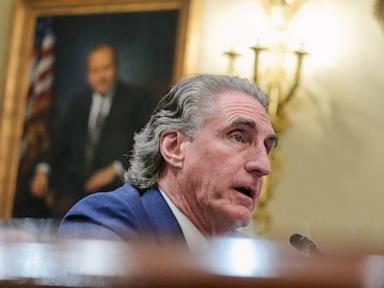
The White House and Interior Secretary Doug Burgum defend the deal by framing it as a harmless administrative refund. They argue that the $795 million paid out for the New York lease and the $133 million for the North Carolina project simply returned the money TotalEnergies originally paid during the 2022 lease auctions. Burgum essentially claims the company just gave the government an interest-free loan and wanted out because the projects were no longer economically viable without federal subsidies.
Don't buy that spin for a minute. Companies don't casually abandon billions of dollars in developed infrastructure and multi-year construction plans over a polite refund. TotalEnergies paused the project immediately after the 2024 election because they knew federal hostility was coming. The administration didn't just hand back a deposit; they effectively weaponized the federal budget to force a private entity into a non-compete clause against green energy.
Why the White House Evaded the Front Door
The Trump administration didn't try to cancel these leases through standard executive orders. Why? Because they tried that trick before and got absolutely crushed in court.
Back in late 2025, federal courts ruled that the administration’s sweeping pauses on wind energy authorizations were completely arbitrary, capricious, and flat-out illegal. Judges made it clear that a president cannot just wave a magic wand and freeze valid, legally binding maritime leases because he personally dislikes "windmills".
So, the administration pivoted to a loophole. If you can't legally revoke a lease, you just bribe the company to surrender it willingly.
The lawsuit, filed in the District Court for the District of Columbia, exposes exactly how the Department of the Interior broke federal law to pull this off. The coalition of states—including Connecticut, Maine, Massachusetts, New Jersey, Rhode Island, and Vermont—points out two massive legal vulnerabilities in the administration's strategy:
1. The Outer Continental Shelf Lands Act Violations
Under long-standing federal law, the Interior Department cannot just tear up a maritime energy lease on a whim. To cancel an active lease, the agency is legally required to hold formal administrative hearings. They must produce concrete evidence showing that the project causes active, serious harm to national security, life, property, or the environment. The administration suddenly claimed "national security concerns" justified the cancellation, completely ignoring years of prior federal reviews that cleared the project. They bypassed the mandatory public hearings entirely.
2. Siphoning the Federal Judgment Fund
This is where the administration's plan gets incredibly shady. The $795 million payout didn't come from a fund approved by Congress for energy management. Instead, the administration pulled the cash from the federal Judgment Fund. This specific pot of money is strictly reserved for paying out court judgments or settling legitimate, imminent lawsuits against the United States. TotalEnergies hadn't even sued the government. The states argue that using this fund to finance a proactive buyout of a green energy company is a blatant, illegal misuse of taxpayer dollars.
The Domino Effect on the Rest of the Industry
This lawsuit is about much more than just one French corporation. It is a desperate effort to protect the entire U.S. offshore wind sector from an organized, highly coordinated execution campaign.
TotalEnergies was just the first domino to fall. Right after this deal was made public, the administration used the exact same buyout strategy to kill Golden State Wind off the coast of California and targeted another major joint project, Bluepoint Wind, off the shores of New York and New Jersey.
If the courts allow the executive branch to use the federal Judgment Fund as a private piggy bank to pay off green energy developers, the entire industry will evaporate before 2030. No developer will risk investing billions in American waters if the federal government can use a combination of regulatory pressure and massive financial payouts to force their competitors to pack up and leave.
It creates a terrifying precedent for state economies. New England and the tri-state area are already facing soaring energy demands, with regional power needs expected to jump nine percent over the next decade. Coastal states have built their entire long-term climate and economic strategies around offshore wind. Killing these projects threatens thousands of high-paying union jobs, compromises the stability of regional power grids, and forces states to rely heavily on imported fossil fuels.
What Happens Next
The multi-state coalition is asking a federal judge to step in immediately, vacate the settlement agreement, and completely restore the original leases to Attentive Energy.
Given how badly the administration fared in the 2025 wind litigation, the states have an incredibly high probability of winning a preliminary injunction. The legal framework governing federal leases is rigid for a reason. It prevents the executive branch from radically upending multi-billion-dollar industries based entirely on political whims.
If you want to track where this battle goes, keep a close eye on the District Court docket for the District of Columbia over the next few weeks. If the judge grants the injunction, it will instantly freeze the administration's broader $2 billion buyout initiative. That would force other energy companies currently sitting at the negotiating table to reconsider whether walking away is even a legal option. Clean energy advocates should also watch California's parallel state investigation into the Golden State Wind collapse, which could spark a second major federal front in this litigation war.