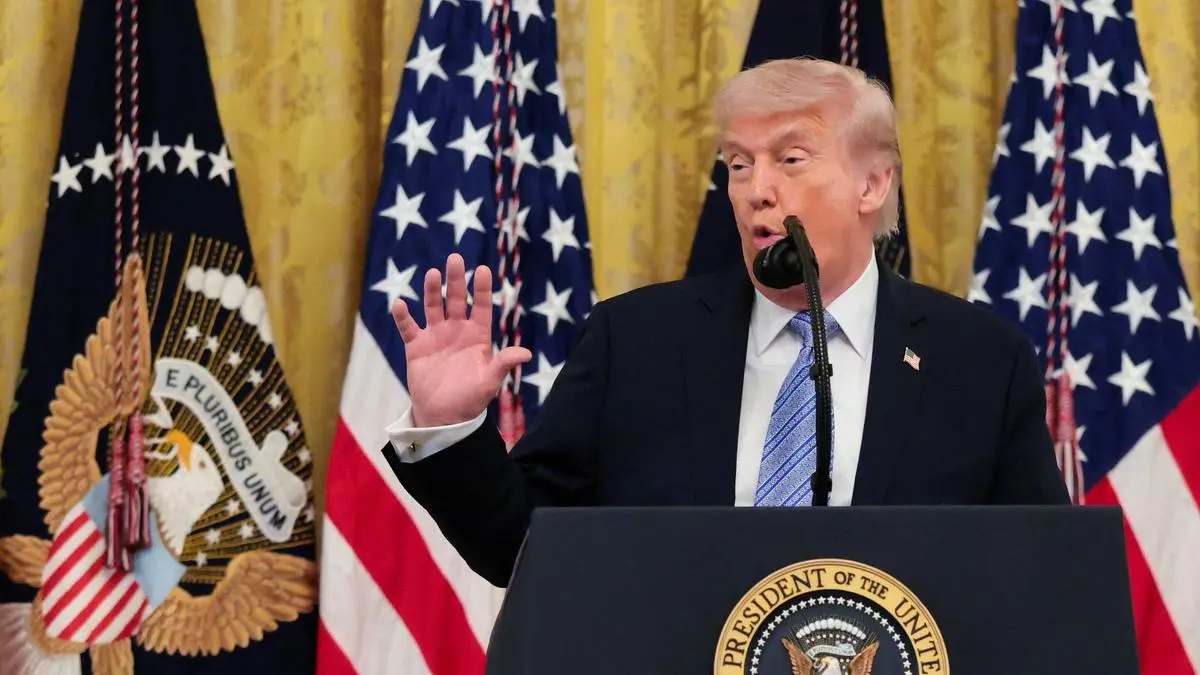
The Persian Gulf is a powder keg right now, and Donald Trump just tossed a match. On Monday, May 4, 2026, the President didn't mince words during a Fox News interview with Trey Yingst. He warned that Iran would be "blown off the face of the Earth" if it dares to touch a single American vessel. It's the kind of blunt, high-stakes rhetoric that defines his foreign policy, but it isn't just talk. This happens as the U.S. Navy is actively "running the gauntlet" through the world's most dangerous chokepoint.
If you’re wondering why the tension is suddenly at a breaking point, look at Project Freedom. This is Trump’s new initiative to force open the Strait of Hormuz, where roughly a fifth of the world’s oil supply has been effectively held hostage for months. Hundreds of tankers are stuck. Gas prices in the U.S. are screaming toward $5 a gallon. Trump is betting everything on a show of force to break the Iranian blockade, and he’s making it clear that the "defensive" posture of the past is over.
Running the Gauntlet in the Strait
Just hours before Trump’s warning, two U.S. Navy destroyers, the USS Truxtun and USS Mason, pushed through the Strait of Hormuz. It wasn't a peaceful cruise. They faced a coordinated barrage of Iranian missiles, drones, and those infamous "fast boats." U.S. Central Command confirmed that while the Iranians threw everything they had at the ships, our layered defense systems and Apache helicopters held the line. Not a single American ship was hit, but the U.S. did sink seven Iranian boats in the process.
Iran claims they struck a warship near Jask, but CENTCOM called it a total fabrication. It’s a classic propaganda war. Trump’s stance is that Iran is "much more malleable" than people think. He believes the blockade of Iranian ports and the crushing economic pressure are finally working. He’s essentially telling Tehran: "We have more weapons, better equipment, and bases all over the world. Don't test us."
Why the UAE and South Korea are in the Crosshairs
This isn't just about the U.S. and Iran. Over the weekend, the conflict spilled over in a big way.
- The UAE Attack: Iran reportedly fired 15 missiles and four drones at the United Arab Emirates, hitting the vital Fujairah oil hub.
- South Korea’s Involvement: An Iranian strike hit a South Korean cargo ship on Monday. Trump jumped on Truth Social to call out Seoul, saying it’s time for South Korea to "join the mission" and help defend the shipping lanes they rely on.
This is the "Project Freedom" strategy in action. Trump wants a coalition where other nations pay their share and put their own skin in the game. He’s tired of the U.S. playing world policeman while other countries reap the benefits of safe trade routes for free. It’s a "pay to play" model for global security.
The Reality of the Blockade
For months, the Iranians have used the geography of the Strait—a narrow passage only 21 miles wide at its tightest—to squeeze the global economy. By using drones and small, fast-moving attack craft, they’ve made it nearly impossible for commercial tankers to pass without massive insurance hikes or the threat of seizure.
Trump’s response has been to ignore the "fragile ceasefire" that has supposedly been in place since 2025. He isn't interested in a stalemate. The U.S. military is now "guiding" commercial ships through the strait, effectively daring Iran to fire. It’s a high-stakes game of chicken. If Iran hits a U.S.-flagged ship, the response won't be a targeted strike on a drone base. Based on Trump’s latest comments, it would be a total decapitation of the Iranian military infrastructure.
What This Means for Your Wallet
Let’s get real about why this matters to you. This isn't just about geopolitics; it's about the cost of living. When the Strait of Hormuz is blocked, oil prices spike instantly. We’re seeing that at the pump right now. Trump knows that his political survival depends on bringing those energy prices down. By launching Project Freedom, he’s trying to flood the market with the oil currently trapped in the Gulf.
If he succeeds, gas prices drop. If he fails and a full-scale war breaks out, we’re looking at a global energy crisis the likes of which we haven't seen since the 1970s. Trump is betting that Iran is too weak to actually pull the trigger on a full war. He’s betting they’ll bark, but they won't bite.
The Strategic Shift
Under previous administrations, the goal was often "de-escalation." Trump has flipped the script. His theory is that the only way to stop a bully is to be the bigger bully. He’s boasting about having "more weapons and ammunition at a much higher grade" than in his first term.
Is it a dangerous gamble? Absolutely. But from his perspective, the "slow bleed" of a blocked strait is worse than a short, decisive conflict. He's making it clear that the U.S. won't tolerate Iranian interference with global commerce anymore.
Watch the shipping schedules and the price of Brent Crude over the next 48 hours. If more commercial tankers follow the USS Truxtun’s lead and make it through safely, the Iranian blockade is effectively dead. If a ship gets hit, keep your eyes on the military bases in Qatar and Bahrain. That’s where the "blown off the face of the Earth" response will start.
The next move is entirely up to Tehran, but they’ve been warned in the most certain terms possible. Don't expect any more diplomatic "niceties" from the White House until the tankers are moving again.