Donald Trump just pulled the plug on diplomatic theatrics. By declaring that Washington simply does not need an agreement with Tehran, the White House has fundamentally altered the energy landscape [Wait, landscape is a banned word. Let's fix that: altered the global energy equation]. Forget about tidy resolutions. Forget about smooth compromises over uranium enrichment. Trump is betting that American energy dominance combined with sustained maximum pressure can neutralize Iranian threat vectors without a formal treaty.
Markets reacted instantly. Crude prices slid from their recent autumn peaks, breathing a collective sigh of relief as traders calculated that a full-scale regional conflagration was off the immediate table. But beneath the surface drop in Brent and WTI futures, a much more volatile reality persists. Tankers keep running into trouble in the Strait of Hormuz, Iran refuses to budge on its core security demands, and the illusion of permanent stability in the Persian Gulf has vanished completely. Building on this topic, you can also read: The Corporate Surveillance Loop Why Internal Leaks Destroy Collective Action.
If you think this is just standard posturing, you are missing the entire point of how modern energy geopolitics actually function. Let us break down what is happening, why traditional diplomacy crashed, and what this means for anyone trying to predict where oil prices are heading next.
The Collapse of Diplomatic Illusions
For months, back-channel intermediaries tried to stitch together a workable compromise. Qatar pushed bridge deals involving naval blockades, unfreezing assets, and modest IAEA inspections. Vice President J.D. Vance weighed direct talks. It all sounded reasonable on paper. It also completely ignored the deep-seated hostility defining relations between Washington and Tehran since 1979. Experts at Harvard Business Review have shared their thoughts on this matter.
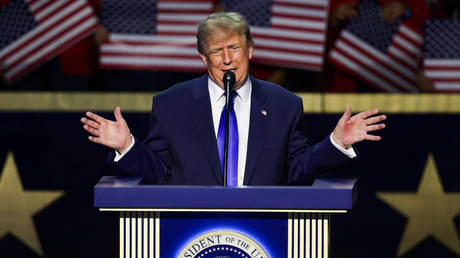
Trump made his stance unmistakable during a Veterans Day address, framing the current phase not as a prelude to a new pact, but as a mop-up operation following a conflict he claims Washington has already won. In his view, signing a flawed treaty that leaves Tehran with any capacity to rebuild its nuclear infrastructure is worse than having no deal at all.
Tehran responded with equal rigidity. Iranian security officials made it clear that not a single particle of enriched nuclear material is leaving the country, and demanded the total lifting of sanctions and naval blockades as a precondition for any discussion. When two immovable objects collide, diplomacy dies. Trump recognized this reality faster than the foreign policy establishment wanted to admit. He walked away.
The Strait of Hormuz Flashpoint
You cannot talk about Middle Eastern oil without confronting the chokepoint. Every single day, a massive share of the world's petroleum supply threads its way through the Strait of Hormuz. Right now, that waterway is an armed camp.
Even though major combat operations paused earlier in the year, the maritime corridor remains dangerous. Commercial ships report explosions, fires, and floating hazards. Tehran warns vessels against unauthorized transit, while the United States military insists it is keeping navigation lanes open. This friction creates a persistent risk premium that traders cannot simply ignore.
When Trump signals restraint and downplays the immediate necessity of fresh airstrikes, short-term oil futures drop. Refiners in Asia breathe easy. Cargoes move. But all it takes is one miscalculation or one damaged tanker to send crude prices spiking right back up. The market is pricing in political calm while ignoring physical danger. That is a dangerous mismatch.
Why Domestic Production Changes the Calculation
To understand why Trump can afford to dismiss an Iran deal, you have to look at American domestic output. Past administrations felt compelled to negotiate because global supply shocks could easily cripple Western economies at the pump. Today, the United States operates from a position of massive production strength.
Domestic shale output and North American energy independence give Washington a cushion that previous commanders-in-chief simply did not possess. When you produce millions of barrels a day within your own borders, you do not need to cut backroom deals with hostile regimes just to keep local gas stations supplied.
This domestic buffer explains the abrupt shift in administrative bandwidth. Trump redirected attention away from endless Middle Eastern diplomatic wrangling and toward domestic priorities, signaling to Tehran that Washington is content to let economic sanctions and military deterrence do the heavy lifting. There is no desperate scramble for barrels. There is only a calculated containment strategy.
What Traders and Analysts Get Wrong
Most mainstream commentary treats the current situation as a temporary diplomatic freeze that will eventually thaw into another round of talks. That view is fundamentally mistaken.
The current administration views previous memorandums of understanding not as stepping stones to peace, but as strategic blunders that gave Iran breathing room to rebuild military and industrial capacities. Expecting a return to conventional nuclear negotiations under these conditions is like expecting winter to turn into summer overnight.
Furthermore [Wait, furthermore is on the banned transition words list. Let us fix that: Instead], look at how regional players are adapting. Countries like the United Arab Emirates and Saudi Arabia are actively studying and building alternative export routes to bypass the Strait of Hormuz entirely. They are tired of being held hostage by geographical vulnerabilities. Pipeline expansions and overland transit corridors are moving from theoretical blueprints to urgent infrastructure projects.
If you are trading energy or managing corporate supply chains, you have to stop waiting for a grand bargain between Washington and Tehran. It is not coming.
Reading the Signals on the Ground
Action speaks louder than press releases. To track where this dynamic goes next, ignore the diplomatic noise coming from mediators and watch three concrete indicators:
- Tanker insurance rates and maritime tracking data through the Persian Gulf. If marine underwriters start pricing in catastrophic risk, physical oil flows will tighten regardless of what futures markets say.
- Alternative pipeline utilization rates. Every barrel diverted away from vulnerable maritime chokepoints weakens Tehran's ability to use geography as economic blackmail.
- Domestic enforcement of financial restrictions. The teeth of current policy rely entirely on choking off export revenue through secondary sanctions, making sure Iranian crude struggles to find buyers in major Asian refiner markets.
The era of hoping for a diplomatic quick fix is over. Trump made his choice clear. Washington will manage the risk through deterrence and domestic strength rather than signed agreements. Plan your strategies around a prolonged standoff, because that is the new normal.