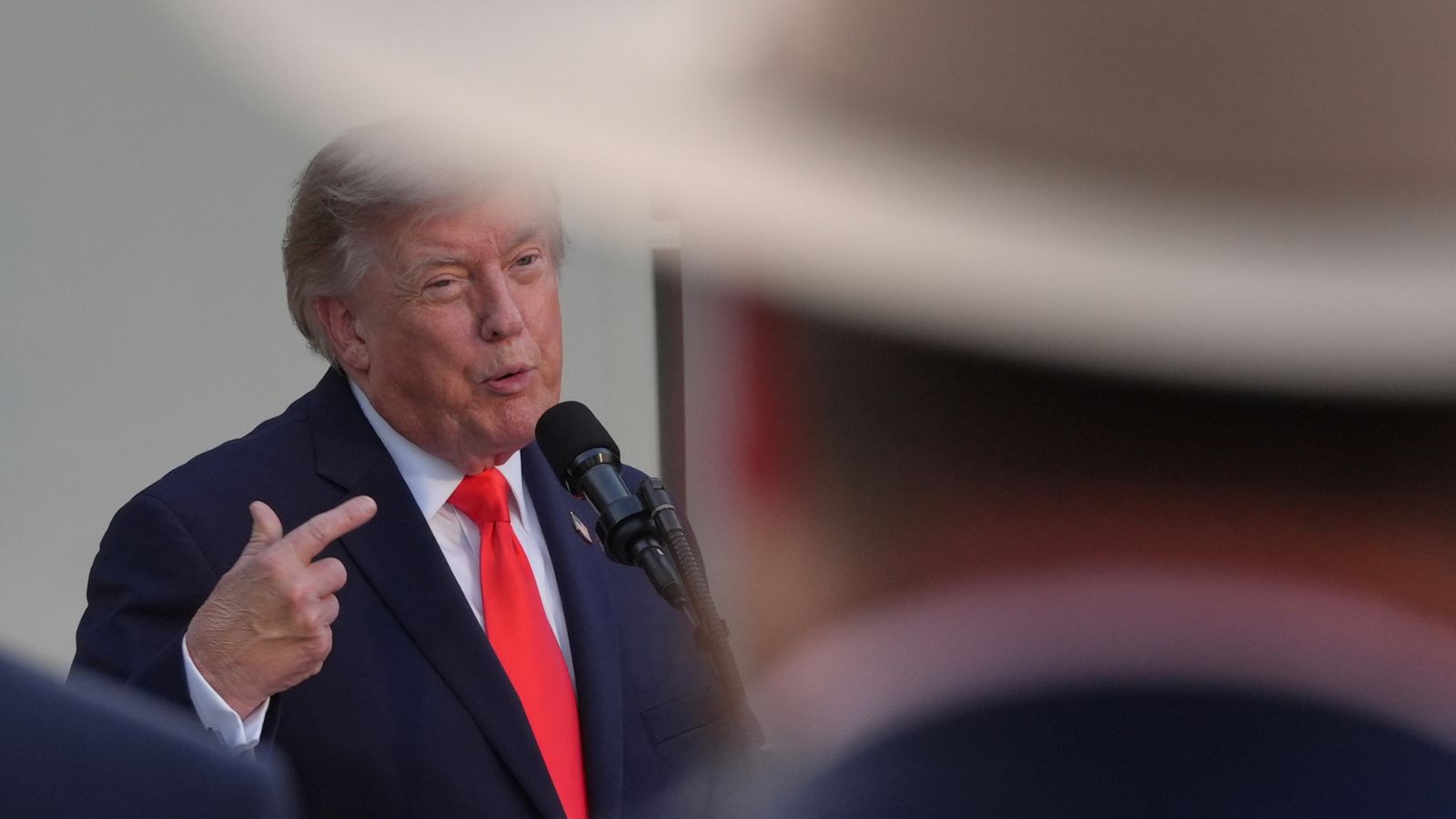
Mainstream media outlets are predictably echoing the official Washington narrative after a drone struck the Singapore-flagged cargo vessel Ever Lovely in the Strait of Hormuz. President Donald Trump took to Truth Social to label the incident a "foolish violation" of the newly signed ceasefire memorandum of understanding, claiming the U.S. knocked down three other drones and that Iran is messing up its own leverage.
The defense establishment and the press are treating this like a chaotic, desperate act of bad faith by Tehran. They are entirely wrong.
This was not a rogue provocation, nor was it a failure of Iranian discipline. It was a calculated, highly sophisticated demonstration of asymmetric strategic leverage. Washington thinks it is negotiating from a position of pure strength, but Tehran just demonstrated exactly who controls the physical realities of global trade. If you think four drones hitting a ship means the peace process is collapsing, you are asking the wrong question. The real question is why the United States believed a piece of paper signed last week would instantly rewrite decades of geography and maritime doctrine.
The Illusion of Freedom of Navigation
The consensus view hinges on a flawed premise: that the interim agreement guaranteed immediate, unmonitored freedom of navigation through the world's most critical choke point. When the UN’s International Maritime Organization attempted to reroute stranded vessels along an alternative passage hugging the coast of Oman, it assumed the U.S. umbrella would shield those ships.
Iran's response was swift, kinetic, and deliberate. Hours before the strike, Iranian Deputy Foreign Minister Kazem Gharibabadi stated clearly that safe passage cannot be guaranteed under ambiguous arrangements or parallel routes drawn outside of Tehran’s oversight. The drone strike on the Ever Lovely was a direct implementation of that policy.
I have tracked maritime security bottlenecks for years, and the biggest mistake Western analysts make is treating the Strait of Hormuz like international open waters. Geographically and operationally, Iran views it as its sovereign front yard. By hitting the upper deck of a single high-value cargo carrier while letting it proceed, the Islamic Revolutionary Guard Corps sent a precise message: we can touch you whenever we want, wherever we want, and your billion-dollar naval escorts can only stop three out of four threats.
Asymmetric Math Always Favors the Drone
Let's look at the mechanical reality of modern naval defense, stripped of political posturing. The Pentagon brags about intercepting three one-way attack drones. But look at the underlying balance sheet.
- The Offensive Cost: Four Iranian delta-wing loitering munitions cost roughly $20,000 to $50,000 apiece to manufacture. Total Iranian capital outlay: under $200,000.
- The Defensive Cost: The U.S. Navy relies on interceptors like the SM-2, SM-6, or Evolved SeaSparrow missiles to guarantee a kill on low-altitude threats. Each of these interceptors costs between $1 million and $4.3 million.
- The Economic Friction: A single drone slips through, hits the bridge of a commercial vessel, and the IMO immediately suspends its vessel evacuation program, leaving 500 ships stranded. Lloyd's of London underwriters instantly spike war risk premiums across the board.
The mainstream press calls the drone deployment "foolish." In reality, it is a textbook execution of cost-imposition strategy. Iran forced a total halt to the UN's evacuation initiative, preserved its leverage over the ongoing 60-day nuclear negotiations, and forced the U.S. to expend multi-million dollar assets, all for the price of a used pickup truck.
The Flawed Premise of Washington's Leverage
The administration insists that Iran wants a deal desperately because its economy is under duress and it needs to unfreeze assets. While true on paper, this economic pressure does not automatically translate into tactical submission in the Persian Gulf.
The mistake Western negotiators make over and over again is assuming that diplomatic progress requires total tactical passivity. To the IRGC, the ceasefire memorandum signed in Islamabad is not a promise to disarm; it is a framework to govern a cold peace. By testing the boundaries of the agreement on day one, Tehran is defining the rules of engagement for the next 60 days of talks. They are telling Washington that if the U.S. wants a permanent nuclear deal, it must explicitly accommodate Iran's role as the primary maritime authority in the Strait. Parallel routes through Omani waters without Iranian coordination will simply not be tolerated.
Admittedly, this strategy carries severe risks for Tehran. A single miscalculation—a drone hitting a crew's quarters instead of an empty upper deck, resulting in mass casualties—could easily force Trump's hand and trigger the very escalatory cycle Iran wants to avoid. It is a high-wire act of the highest order.
But treating this complex signal as a mere tantrum ignores the reality of asymmetric warfare. The Ever Lovely is still sailing, the U.S. is still talking, and Iran just proved that a signed piece of paper does not change the physical reality of who holds the kill switch to 20% of the world's petroleum supply.


