Trade wars rarely start with a whisper. They begin when a 50 percent tariff lands on twenty billion dollars worth of everyday goods, turning hockey sticks and industrial cement into geopolitical leverage.
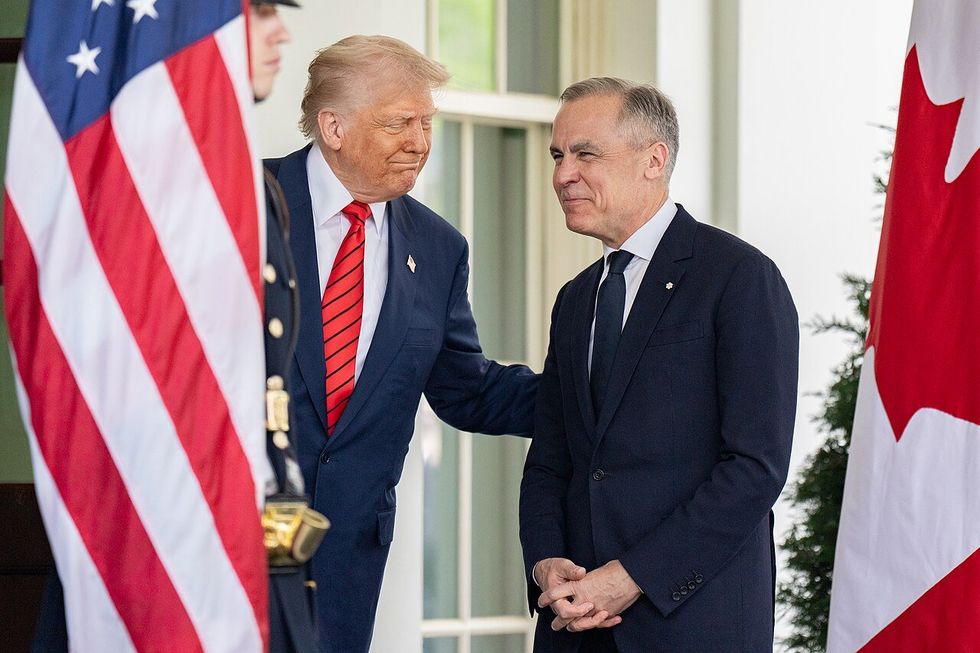
When talks between Washington and Ottawa collapsed overnight, Prime Minister Mark Carney didn't blink. He walked away from a deal that he argued would mortgage Canada's economic independence. Donald Trump fired back on social media with accusations about dairy markets and statehood.
Now, the rhetoric is spilling over. Provincial leaders are lining up behind Ottawa's hardline defense, and nobody pretends this is business as usual anymore. If you want to understand where North American commerce is heading, you have to look past the angry social media posts and examine the structural shift happening right now.
The Anatomy of a Breakdown
Negotiations didn't fail because someone forgot to carry a decimal point. They failed because the fundamental philosophy of cross-border trade broke down entirely.
Washington walked into the room demanding structural concessions on procurement and market access that Ottawa viewed as a surrender. Carney called it what it was: economic coercion. When the US administration slapped 50 percent duties on Canadian imports ranging from alcoholic beverages to medical tongue depressors, the baseline rules of the USMCA vanished.
Canadian officials faced a stark choice. They could accept a bad agreement that compromised their automotive and manufacturing sectors, or they could take the hit and fight back. They chose the fight.
Ontario Premier Doug Ford didn't mince words when backing the prime minister's decision to walk.
"We never started this fight, but I can assure you, we're going to win this fight," Ford told reporters.
That sentiment reflects a broader reality across the country. Provincial leaders who usually spend their time bickering with Ottawa are suddenly singing from the same sheet. Manitoba's Wab Kinew and Nova Scotia's Tim Houston both rallied behind the federal stance, arguing that appeasement only invites deeper demands.
What the US Administration Got Wrong
Washington miscalculated Canada's threshold for pain. There's a long-standing assumption in American politics that Canada's heavy reliance on the US export market leaves it with zero room to maneuver. Roughly 70 percent of Canadian exports head south. That looks like total dependence on a spreadsheet.
In practice, weaponizing economic integration changes the psychological landscape. When a trade partner threatens your sovereignty and floats the idea of annexing your country as a 51st state, economic data takes a back seat to national pride.
Carney warned about this exact scenario months ago at Davos. He argued that middle powers negotiating alone with superpowers are treated from a position of weakness unless they are willing to absorb short-term shocks. By rejecting the final terms, Canada became a live-fire test case for how a middle power survives trade aggression from an economic behemoth.
Trump's response on Truth Social—claiming that Canada wants the benefits of statehood without paying the dues—highlights a transactional worldview that leaves little room for traditional alliances.
The Cost of Dollar-for-Dollar Retaliation
Canada isn't just taking the punch. Ottawa has promised dollar-for-dollar retaliatory tariffs starting September 8, targeting American steel, dairy, and consumer electronics.
This tit-for-tat escalation hurts businesses on both sides of the border. Manufacturers who rely on integrated supply chains spanning Michigan and Ontario are scrambling. Every time a part crosses the border three or four times during assembly, these tariffs act like a tax on efficiency.
Consumers will feel the pinch too. Prices for construction materials, beverages, and specialized equipment are ticking upward. Yet, public opinion polling inside Canada suggests citizens overwhelmingly support the government's refusal to cave. When trust evaporates, economic pain becomes a secondary concern.
Where This Leaves North American Business
If you run a supply chain touching Canada or the United States, hope is not a strategy. The old framework of predictable, frictionless border trade is gone for the foreseeable future.
Stop assuming exemptions will save your specific sector. Diversify your supplier base away from high-tariff choke points before your competitors beat you to it. Build compliance buffers into your pricing models to handle sudden policy shifts overnight. Keep a close eye on the September retaliation dates, because supply chains will experience another wave of disruption when Canada's counter-tariffs officially drop.
Prepare for a long, grinding dispute rather than a quick political fix.