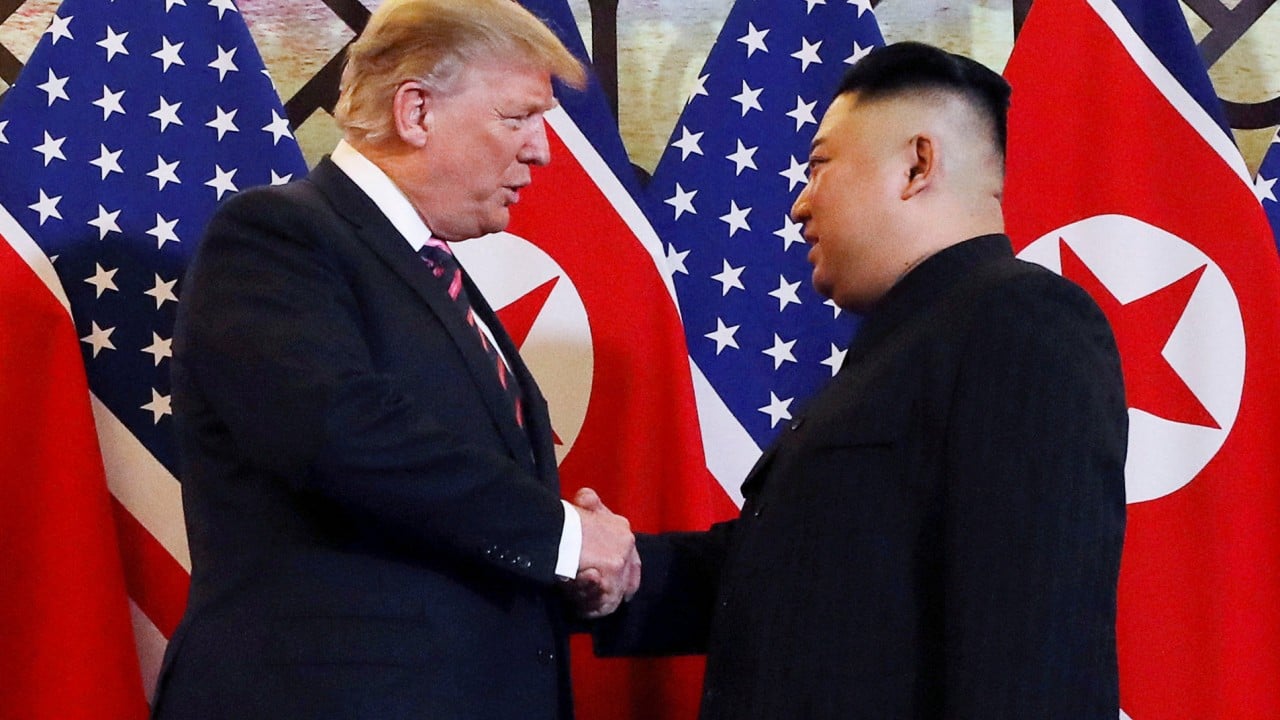
Donald Trump walked out of a historic 70-minute meeting with Xi Jinping and Vladimir Putin in Shenzhen, China, and graded his own performance a "12 out of 10". Rep. Gregory Meeks isn't buying it.
Meeks, the top Democrat on the House Foreign Affairs Committee who is poised to retake the committee gavel after his party's sweeping midterm victory, went on NPR to ask a blunt question. What did the United States actually get out of sitting down with Beijing and Moscow? If you look past the banquet photos and the handshakes, the answer looks awfully close to nothing. Meanwhile, you can explore similar developments here: La mécanique de l'érosion côtière en Californie et l'effondrement des modèles fonciers littoraux.
Why the Shenzhen Summit Set Off Alarm Bells in Congress
On November 19, 2026, Trump, Xi, and Putin gathered at the Kylin Villa in Shenzhen during the Asia-Pacific Economic Cooperation summit. It was the first time the leaders of the United States, China, and Russia had ever sat down together in a three-way summit. The White House framed it as an unprecedented push for global peace.
Meeks saw something very different. Speaking with NPR's A Martínez, the New York congressman warned that Trump's solo approach to authoritarian leaders risks undercutting traditional American alliances. You don't walk into a room with two seasoned strongmen without bringing your allies along, and you certainly don't do it without securing concrete concessions up front. To see the bigger picture, we recommend the detailed article by The Guardian.
Honestly, Meeks has a point that goes way beyond partisan politics. Diplomacy with Beijing and Moscow works when Washington negotiates from a position of unified strength alongside Europe and Indo-Pacific partners. When an American president shows up alone to trade flattery with Xi and Putin, allies in Tokyo, Seoul, and Brussels start wondering if Washington is cutting side deals behind their backs.
The Problem With Trading Photo Ops for Legitimacy
Look at what Putin got just by showing up. The Russian president is still under an International Criminal Court arrest warrant for alleged war crimes in Ukraine, and his economy has been battered by years of Western sanctions. Before Shenzhen, Putin hadn't even attended an APEC summit since 2017.
Yet there he was, standing shoulder-to-shoulder with the leaders of the world's two largest economies, escorted to his car by Xi Jinping, and praised in state media as an indispensable architect of global order. As Putin parted ways with Xi, Kremlin cameras caught him remarking that nobody expected things to go so well. Of course they went well for Moscow. Putin didn't have to give up an inch of Ukrainian territory to get back on the world stage.
Breaking Down the Four-Point Peace Declaration
The White House released a joint communiqué titled the "U.S.-Russia-China Heads of State Declaration toward Peace". On paper, a three-way peace declaration sounds huge. Once you read the actual text, though, the gaps are glaring.
Here is what the three leaders actually agreed to in Shenzhen:
- A shared swipe at the International Criminal Court: All three nations declared that state officials must enjoy immunity from prosecution and criticized the ICC for what they called jurisdiction abuse. That language directly shields Putin from his war crimes warrant while aligning with Washington's anger over ICC warrants targeting former Israeli Prime Minister Benjamin Netanyahu.
- Vague talk on nuclear risk: The communiqué restated the old Cold War line that a nuclear war cannot be won and must never be fought, promising future dialogue on risk reduction. There were zero binding limits, zero inspection mechanisms, and zero timelines.
- United Nations reform: The three permanent Security Council members pledged to reform the UN so it responds better to global challenges, without specifying a single structural change.
- Energy production: They reaffirmed the need for stable energy flows and higher refined petroleum output.
Notice what's completely missing from that list? Ukraine isn't mentioned once. Neither is the escalating conflict in Iran, where attacks on shipping in the Strait of Hormuz have rattled global markets. Within days of the summit, Russia launched another major wave of attacks on Ukraine.
The Nvidia Scandal and Chinese Espionage Concerns
Meeks didn't stop at the summit communiqué during his NPR interview. He also pressed the alarm on Chinese espionage and the turmoil surrounding chipmaker Nvidia.
Just days before the Shenzhen trip, Nvidia CEO Jensen Huang had stepped down following allegations of an affair with a suspected Chinese spy—a scandal that raised immediate national security questions about sensitive artificial intelligence hardware. Then, right after returning from Asia, Trump publicly revealed he had personally urged Nvidia's board to reinstate Huang.
To national security hawks on Capitol Hill, the timing feels backwards. China's entire industrial strategy hinges on acquiring advanced semiconductors and AI compute power to close the military and economic gap with the United States. Meeks and fellow House Democrats have argued that treating tech security and Chinese intelligence threats casually undermines American competitiveness right when export controls need tightening, not softening.
Why China Walked Away the Clear Winner
If you look at the diplomatic choreography in Shenzhen, Beijing played its hand masterfully.
Chinese analysts at the International Institute for Strategic Studies pointed out that Xi Jinping used the trilateral meeting to project China's convening power. Xi personally greeted Trump at the airport, seated him at the head table during the gala dinner, and even had the banquet band play "Y.M.C.A." Trump loved the pageantry. Meanwhile, Chinese state commentaries framed the summit as proof that Beijing now sits on completely equal footing with Washington.
That's the trap of summitry built on personal chemistry. Trump measures success by whether foreign leaders treat him with respect and put on a good show. Xi and Putin measure success by whether they fracture Western unity, weaken international courts, and normalize their geopolitical ambitions without paying a price.
How a Democratic House Changes Foreign Policy Oversight
This debate isn't staying confined to radio interviews for long. In the November 2026 midterm elections, Democrats won the House by a massive 14-point popular vote margin—the widest victory for either party since the post-Watergate wave of 1974.
When the new Congress is sworn in, Rep. Gregory Meeks is set to become chair of the House Foreign Affairs Committee, while incoming House Speaker Hakeem Jeffries has already signaled that confronting the administration's foreign policy—including ending U.S. military involvement in Iran—will be an immediate priority.
That shift in power means the White House will soon face subpoena-backed oversight on what was actually discussed behind closed doors in Shenzhen. Lawmakers can demand formal briefings from the State Department on whether any unwritten assurances were given to Moscow regarding Ukraine sanctions, or to Beijing regarding semiconductor export restrictions and new tariff threats.
If you're tracking how U.S. foreign policy shifts over the coming months, watch three concrete indicators rather than White House press releases:
- House Foreign Affairs Committee hearings: Look for Meeks to haul senior State and Commerce Department officials before Congress in early 2027 to testify on U.S.-China tech enforcement and the Shenzhen communiqué.
- Allied reactions in Europe and Asia: Watch whether NATO members and Indo-Pacific partners like Japan and South Korea accelerate independent defense spending—a sure sign they no longer trust Washington's security umbrella.
- Concrete movement on Ukraine and the Strait of Hormuz: Until Russia halts offensive operations or Iran stops targeting commercial shipping, any "declaration toward peace" remains pure theater.
Spectacle isn't strategy, and a warm banquet in Shenzhen doesn't solve a single crisis threatening American security.
To hear more on the diplomatic reaction and context surrounding the trilateral summit, watch Trump Under Fire At Home Over Xi-Putin Summit, which covers congressional pushback to the Shenzhen meeting.