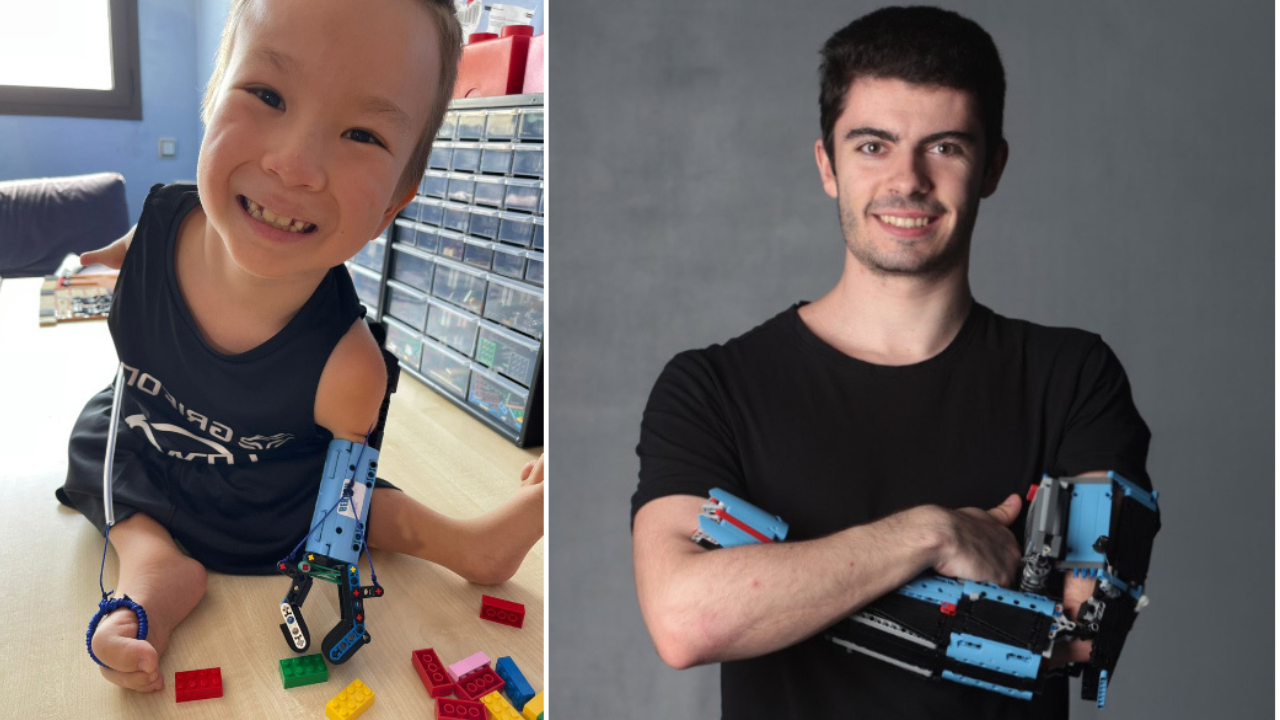
Commercial prosthetics cost thousands of dollars, leaving growing children perpetually underserved by the medical industry. Traditional healthcare models rely on custom manufacturing cycles that take months, while a child outgrows an artificial limb in a matter of seasons. David Aguilar, born with an underdeveloped right forearm, changed the calculus of assistive technology by building a functioning mechanical arm out of standard toy bricks at eighteen years old. This DIY engineering approach bypasses bureaucratic delays and corporate pricing structures, proving that accessible innovation often starts outside traditional laboratories.
The medical device industry functions on strict regulatory pathways and proprietary designs. Standard myoelectric prosthetics utilize muscle sensors and microprocessors, pushing retail prices past tens of thousands of dollars. For pediatric patients, this financial barrier creates a system where replacements are financially burdensome or outright impossible. Insurance companies rarely cover frequent updates for growing bodies.
When David constructed his first functional arm in Andorra, he utilized plastic bricks, rubber bands, and nylon string. The mechanics relied on basic tension and leverage. Bending the elbow pulled internal cords, closing a makeshift claw to grip objects. The total cost of materials was negligible compared to clinical alternatives.
Engineering accessibility requires understanding mechanical constraints without overcomplicating the mechanism. Commercial limbs prioritize lightweight carbon fiber and high-torque actuators, yet these components demand specialized repair technicians. Plastic brick assemblies offer an open-source advantage. Any broken component can be replaced in minutes using standard elements found in a playroom.
Critics of consumer-built assistive devices point to durability issues and a lack of precise tactile feedback. Plastic joints fatigue under heavy loads, and simple string-tension systems cannot match the grip strength of motorized digits. These limitations are real. However, dismissive industry analysts miss the primary utility of early-stage mechanical solutions for young users.
For a child navigating social environments, a conventional heavy medical prosthesis can feel intimidating and clinical. A brightly colored plastic arm transforms a perceived medical deficiency into an engaging conversation piece. Peer perception shifts from pity to curiosity. The psychological benefit of wearing a self-customized device often outweighs the raw mechanical output during formative years.
Scaling this approach requires moving beyond individual bedrooms into collaborative maker spaces. Schools and community centers equipped with basic tools and standard building blocks can function as decentralized fabrication hubs. Instead of waiting for centralized shipments from medical manufacturers, communities can prototype custom fittings locally.
The broader implications extend into how we view open-source hardware design. Proprietary locks on medical software and hardware stifle grassroots problem-solving. When design blueprints remain open, iterative improvements happen rapidly across global networks of independent creators.
Accessibility should not depend entirely on corporate philanthropy or government subsidies. True independence means empowering individuals to build, repair, and modify their own tools. The intersection of play materials and prosthetic engineering demonstrates that human ingenuity thrives when rigid institutional frameworks step aside.


