Two French documentary filmmakers and their Togolese fixer are sitting in a Lomé prison right now. Their crime? According to state authorities, they made false declarations on their immigration paperwork. According to media watchdogs, it is a blatant crackdown wrapped in bureaucratic red tape.
Gaël Mocaër and Sebastian Perez Pezzani, alongside local fixer Fred Vedomey, were arrested in northern Togo while shooting a project for French public television. Now, they face pretrial detention and formal charges. Reporters Without Borders has called the move unjustified. The Togolese government insists the paperwork doesn't match the reality on the ground.
The Paperwork Trap
Bureaucracy makes a convenient weapon. When a state wants to control who tells its stories, administrative technicalities offer a clean excuse.
The filmmakers applied for work visas and secured authorization through the Ministry of Tourism, Culture and Arts, according to press freedom groups. Culture Minister Isaac Tchiakpé fired back, stating flatly that no such authorization was granted by his office. Meanwhile, Togo's media regulator, the HAAC, claims it received zero accreditation requests from France Télévisions.
Truth gets buried in conflicting statements. Did the crew cut corners on their visas? Or did shifting political winds render their approved paperwork worthless overnight?
A Region Closing Its Doors to French Media
You can't separate this arrest from the broader geopolitical earthquake shaking West Africa. Relations between traditional French media and several African governments have completely fractured.
Togo has steadily drifted away from Paris's orbit. The nation has increasingly aligned itself diplomatically and militarily with countries like Russia, alongside military-led neighbors like Mali, Burkina Faso, and Niger. Those three junta-led nations have famously expelled French troops and sidelined French broadcasters.
Togo hasn't gone quite that far, but the warning signs are flashing bright red. Authorities suspended broadcasts from Radio France Internationale and France 24, accusing those networks of biased and inaccurate reporting during domestic protests.
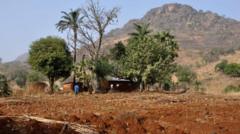
When you film in northern Togo, you are operating in a security zone. Armed groups linked to al-Qaida and the Islamic State operate near those borders. Governments get nervous. They become hyper-sensitive about foreign cameras documenting security vulnerabilities or military movements.
The Human Cost of Geopolitics
Behind the diplomatic posturing lie real human stakes. Sebastian Perez Pezzani reportedly suffers from serious health problems requiring immediate medical attention. Pretrial detention in overcrowded West African facilities rarely accommodates complex medical needs.
Fixers take the heaviest risks in these scenarios. Fred Vedomey, the local collaborator, faces the exact same legal jeopardy as his European colleagues, yet local journalists and fixers rarely receive the high-level consular protection that kicks in for foreign nationals. When foreign crews leave after an incident, local media workers stay behind to face the fallout.
Press freedom across the region continues to shrink. Journalists trying to document unrest, security threats, or political shifts find themselves blocked, detained, or forced to wipe their camera rolls.
Check your credentials twice if you are reporting in West Africa right now. Relying on verbal assurances or single-agency sign-offs no longer protects you. Authoritarian drift spares no one, and a misplaced stamp on a visa application can quickly turn into a cell block reality.