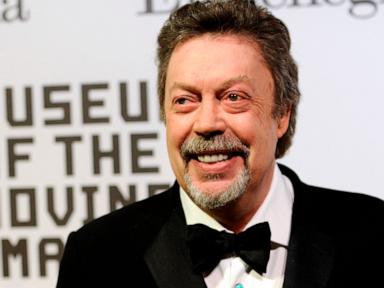
Timothy James Curry did not merely act; he hijacked every frame he inhabited. When news broke that the legendary chameleon of stage and screen passed away at his Los Angeles home at the age of eighty, the immediate cultural reflex was to invoke the corset, the fishnets, and the midnight screenings of 1975. Dr. Frank-N-Furter made him immortal, yes. But reducing Curry to a single transgressive sweet transvestite from Transylvania misunderstands the sheer structural engineering of a career built on subverting expectations.
He was an English actor trained in classical theater who realized that dignity was vastly overrated. While his contemporaries chased leading-man straight-jacket conformity, Curry weaponized his theatricality. He understood that audiences do not actually want to root for perfection. They want to watch someone having an absolute, ungodly amount of terrorizing fun.
Consider the trajectory. Long before the 2012 stroke that slowed his physical mobility, Curry carved out a specialized niche as the industry's premier theatrical mercenary. If a production required a villain who could chew the scenery with enough velocity to splinter the set pieces, the call went to Curry. Yet, labeling him a mere scenery-chewer misses the technical precision of his choices. Watch his micro-expressions as Wadsworth the butler in the 1985 farce Clue. The physical coordination required to sprint through an estate room-by-room while narrating a complex multi-person murder mystery is staggering. He treated screen comedy like high-stakes athletics.
Then there is the horror. In 1990, the television adaptation of Stephen King's It terrified an entire generation of children, not because of computer-generated effects—which thankfully did not exist in scale—but because of Curry's raw, unfiltered performance as Pennywise. Strip away the greasepaint and the red wig, and you find an actor playing pure, ancient malice mixed with vaudevillian glee. He did not lean on cheap jump scares. He leaned on the unsettling dissonance of a monster who looked inviting right before he tore your arm off. It was a masterclass in psychological disruption.
Industry analysts often talk about "brand consistency" for modern stars. Curry had the opposite approach. He operated as a stylistic anarchist. One year he was playing the Lord of Darkness in Ridley Scott's dark fantasy Legend, buried under pounds of horns and heavy prosthetic latex. The next, he was singing about the hard-knock life as Rooster Hannigan in Annie, or hamming it up as the concierge in Home Alone 2. He transitioned fluidly into voice acting, lending his distinct, velvety baritone to animated masterworks and unexpected corners of pop culture like Star Wars: The Clone Wars, proving that his instrument worked just as effectively when the camera could not see him.
Hollywood today is risk-averse, algorithmic, and obsessed with casting bankable faces who play variations of themselves. Curry belonged to a dying breed of character actors who possessed leading-man gravity without any vanity. He did not care if he looked grotesque, ridiculous, or downright terrifying. He wanted the audience to lean closer to the screen, wondering what explosive choice he was going to make next.
The fishnets are packed away. The greasepaint is gone. But the blueprint of how to command a room, an audience, and an entire medium remains intact, echoing every time an actor decides to throw away the script's safety rails and embrace the magnificent chaos of the dark