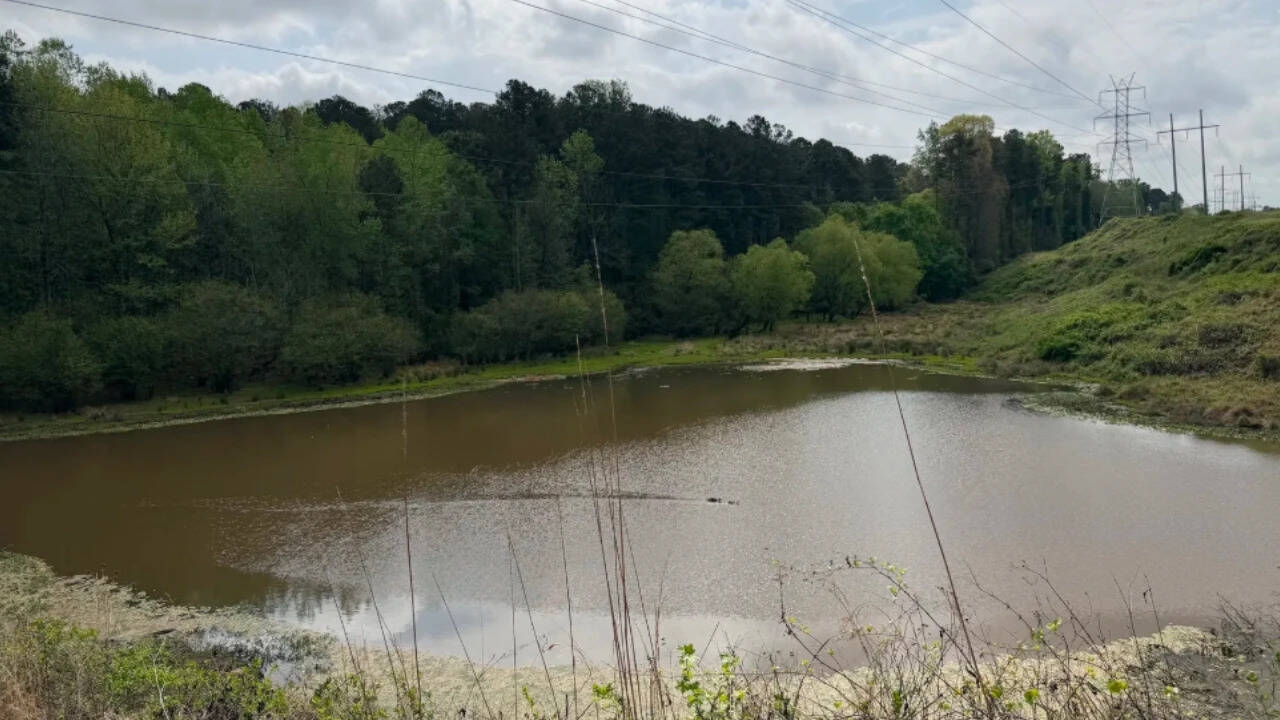
The headlines wept tears of sentimental green goo over an Atlanta teacher trying to keep students away from a locked 26-acre patch of urban timber. Now, a three-million-dollar infusion is slated to unlock the gates, clear the brush, and hand the pristine canopy back to the public. Everybody breathes a sigh of relief. The local community wins. Nature triumphs over concrete.
It is a complete farce.
For decades, urban planners and preservationist romanticism have peddled a lazy consensus. The narrative says that leaving a patch of land completely alone, locked behind chain-link fences and guarded by well-meaning educators, preserves its ecological soul. That throwing millions at "unlocking" it via manicured boardwalks and interpretive signs somehow returns us to a state of pristine harmony. I have watched cities flush capital down the drain on these green vanity projects while the actual underlying urban ecology rots from neglect and poor management.
Let us look at the mechanics of what happens when you take a neglected, overgrown 26-acre urban forest and dump three million dollars into public access without a radical shift in ecological strategy. You do not get an Eden. You get a fragmented, heavily trafficked postage stamp of nature that immediately degrades under foot traffic, invasive species encroachment, and zero active stewardship.
The Myth Of Untouched Urban Wilderness
The core fallacy is treating a 26-acre parcel wedged inside a sprawling metropolitan area as if it were a remote section of the Great Smoky Mountains. It is not. It is an urban remnant.
Ecologically, an isolated pocket of trees surrounded by asphalt, stormwater runoff pipes, and dense suburban or urban neighborhoods is not a self-sustaining wilderness. It is an artificial island. Without continuous, aggressive intervention, these parcels become choked with English ivy, privet, and kudzu. They turn into vectors for erosion as stormwater cascades off adjacent rooftops and parking lots, scouring the topsoil bare.
When the original defenders of that locked forest tried to keep students out, they were operating on a defensive instinct. They recognized that the moment humans touch these fragile patches, the degradation accelerates. But locking the gate is not management; it is abandonment wrapped in good intentions.
Throwing three million dollars at the problem without addressing the core structural mechanics is worse than leaving the gate locked. Paving gravel trails, putting up wooden viewing platforms, and planting native saplings sounds noble in a city council press release. In reality, it slices up already tiny habitats into unviable fragments. It compacts the soil around root systems, suffocating mature trees. It introduces heavy foot traffic that drives out ground-nesting fauna and accelerates weed seed dispersal on the soles of sneakers.
If you want to save urban tree canopies, you have to stop treating them like museum exhibits under glass and start treating them like high-maintenance infrastructure.
What Three Million Dollars Should Actually Buy
Let us break down how municipal green spaces are typically funded and where the money actually goes. When politicians announce a multi-million-dollar package for park access, the cash rarely goes toward the tedious, unsexy labor of ecological restoration. It goes to consultants, concrete contractors, ribbon-cutting ceremonies, and decorative signage that tells you what kind of oak tree you are looking at while the root system underneath is choking on runoff.
Imagine a scenario where a city actually deployed three million dollars with ruthless operational efficiency.
Instead of building boardwalks for casual strollers, that money would fund a decade-long invasive species eradication contract. It would install underground retention vaults up-gradient to capture and filter the toxic stormwater runoff before it scours the forest floor. It would hire full-time, year-round ecological technicians whose only job is to manage the understory, monitor soil chemistry, and orchestrate controlled burns or targeted removals where necessary.
That is not romantic. It does not look good on a campaign flyer. You cannot easily take a smiling selfie next to a subterranean stormwater vault. But it is what keeps a forest alive.
The public obsession with physical access is ruining the very things we claim to love. We demand that every square inch of green space be converted into a recreational park for jogging, dog-walking, and smartphone photography. But a 26-acre forest is too small to function as a multi-use recreational park and an ecological sanctuary at the same time. You have to pick one.
If the goal is recreation, pave it, put up swing sets, and stop pretending it is an environmental sanctuary. If the goal is conservation, keep the gates locked, keep the humans out, and spend the money on professional ecological rehabilitation. Trying to do both with three million dollars is a mathematical and biological impossibility.
The Economics Of Green Gentrification
There is another uncomfortable reality that the sentimentalists refuse to touch. Poring millions into opening and beautifying an urban green space shifts land values overnight.
When you upgrade a neglected, fenced-off patch of timber into an accessible, pristine community amenity, you trigger the immediate economic gravitational pull of green gentrification. Property values along the perimeter spike. Developers move in. Rents rise. The original residents of the surrounding neighborhood—the ones who lived next to the overgrown, ignored thicket for decades—get priced out by the very municipal improvements meant to benefit the community.
The teacher who originally fought to keep the students away and protect the land understood something profound, even if their methods were defensive. They understood that the moment the state and real estate interests turn their eyes toward a piece of urban green space, the calculus changes from ecology to economics.
We must stop pretending that throwing money at nature always equals a net positive for the ecosystem or the local community. Capital injection without strict, scientifically rigorous ecological boundaries is just real estate marketing with extra trees.
If you unlock the forest without a permanent, funded commitment to defend it from invasive species, soil compaction, and recreational overuse, you are not saving it. You are just managing its slow-motion execution while patting yourself on the back for being a champion of the environment.
Keep the heavy machinery out. Fire the consultants. Pay the ecologists to do the dirty, unglamorous work of keeping the soil alive. Otherwise, leave the gates locked.