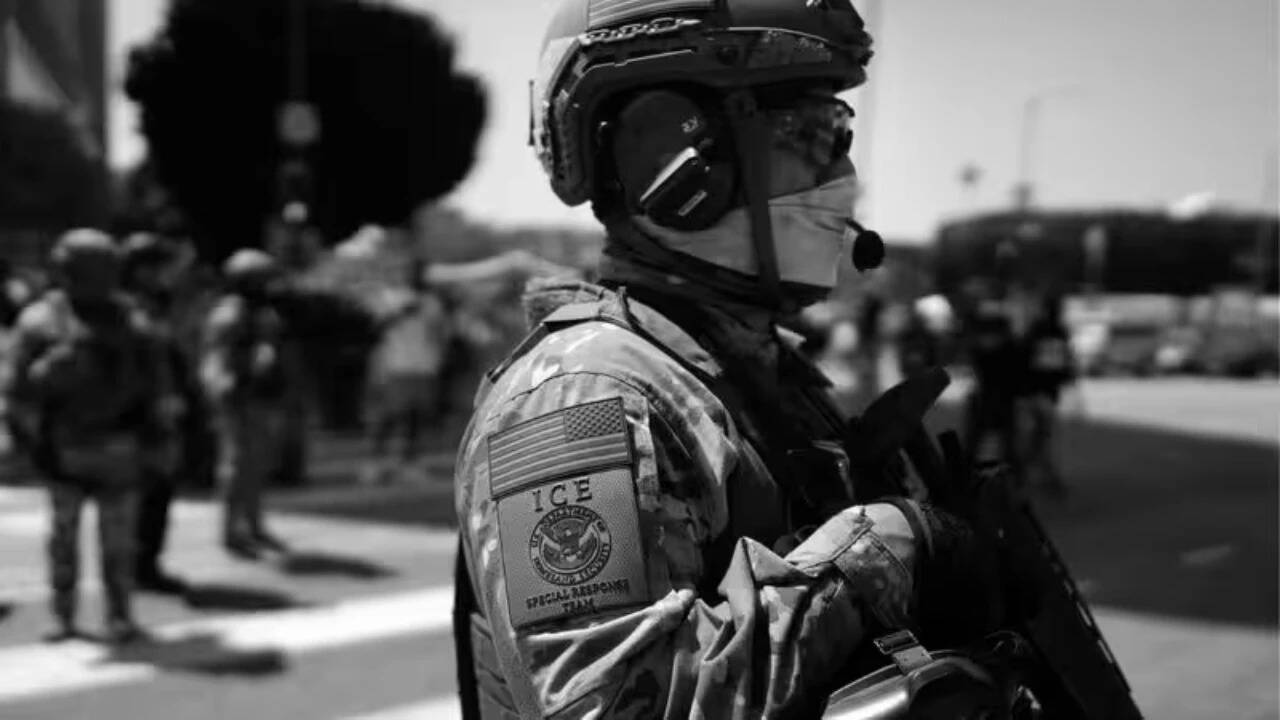
Thirty years is a long time to hide in plain sight. For three decades, a Canadian fugitive convicted of horrific child sex offenses managed to evade international law enforcement, carving out a quiet existence south of the border. When Immigration and Customs Enforcement (ICE) agents finally moved in to make the arrest, it marked the end of a decades-long manhunt that exposes glaring vulnerabilities in North American cross-border tracking.
The mechanics of how a convicted sex offender crosses an international boundary and vanishes for a generation involve a combination of lax historical vetting, outdated database integration between Ottawa and Washington, and the sheer vastness of domestic anonymity in the United States. This case is not an isolated anomaly. It serves as a stark reminder of the structural blind spots that allow transnational criminals to exploit the world's longest undefended border. Discover more on a related subject: this related article.
The Anatomy of a Thirty-Year Evacuation
To understand how someone outruns justice for thirty years, you have to look at the state of immigration and criminal databases in the mid-1990s. When the subject initially fled Canada, biometrics were in their infancy. Paper warrants did not automatically sync across federal agencies, and local police departments in the United States had no native mechanism to cross-reference foreign criminal histories unless an Interpol red notice was actively being pursued by a specialized federal task force.
Borders are only as strong as the data supporting them. In the decades following the 1990s, biometric sharing improved dramatically, but legacy fugitives who slipped through the cracks before the digital revolution often became invisible ghosts. They secured housing, obtained fraudulent or alternate identification, and settled into communities where no one had any reason to look backward. Additional reporting by TIME highlights similar perspectives on this issue.
Law enforcement agencies operate under resource constraints that force prioritization. Violent crimes happening in real-time always take precedence over cold-case extradition warrants from neighboring countries, especially when the trail goes completely cold within the first seventy-two hours.
The Mechanics of Transnational Manhunts
When ICE Enforcement and Removal Operations (ERO) finally catch up to a fugitive after thirty years, it rarely happens because of a cinematic midnight raid. It usually stems from a modern data audit.
Federal agencies routinely run historical databases against newly updated facial recognition software, updated fingerprint repositories, and state-level administrative records. When an old file gets matched with a current utility bill, a renewed driver license, or a medical database entry, the house of cards collapses instantly.
The process involves several distinct phases.
- Database Cross-Matching: Modern analytics compare historical Canadian warrant repositories against current US municipal and state records.
- Surveillance and Verification: Once a high-probability match is identified, field agents conduct physical surveillance to confirm identity and assess potential flight risks or threats.
- Coordination with Foreign Partners: ICE works in tandem with the Royal Canadian Mounted Police (RCMP) and Interpol to verify that the warrant remains active and that extradition proceedings are legally sound.
- Execution and Detention: The final apprehension occurs administratively under immigration law before criminal extradition or deportation proceedings take place.
This multi-agency workflow sounds seamless on paper. In practice, jurisdictional friction often delays action. State and local law enforcement prioritize local public safety, while federal agencies juggle national security, large-scale cartel activity, and administrative deportations. A foreign sex offender living quietly in a suburb does not always trigger immediate red flags until a specific task force initiates a retrospective audit.
The Policy Failures Behind the Blind Spot
Why did it take thirty years? The answer points directly to institutional inertia and the historical divide between immigration enforcement and criminal justice systems.
For decades, immigration enforcement focused primarily on unauthorized entry rather than tracking long-term foreign residents who entered legally or overstayed visas decades prior. If an individual maintains a low profile, pays taxes under a localized identity, and avoids drawing the attention of local police, they exist in a blind spot between agencies.
Furthermore, privacy regulations in both the United States and Canada historically created bureaucratic roadblocks to sharing real-time citizen data. While intelligence sharing has tightened significantly in the post-9/11 era, legacy cases from the pre-digital era require manual investigation. Analysts have to manually pull dusty paper files, translate old microfiche records into digital formats, and match them against modern databases. Many departments simply lack the manpower to chase ghosts unless a specific tip forces their hand.
The public often assumes that governments track every individual continuously. The reality is far more mundane. Modern states are vast bureaucracies built on reactive enforcement. Without automated alerts or a whistleblower, old warrants can sit in filing cabinets or dormant database partitions indefinitely.
The Reality of Cross-Border Accountability
The arrest of this Canadian fugitive brings a sense of institutional closure, but it also forces a reckoning over how many others might still be hiding in plain sight. As artificial intelligence and integrated biometric databases become standard tools for immigration and law enforcement agencies, the window for hiding across international borders is shrinking rapidly.
Yet technology alone cannot replace investigative grit. Algorithms can flag anomalies, but human agents must still verify the intelligence, secure the warrants, and execute the takedowns. The fact that it took three decades for this specific individual to face justice highlights both the persistence of modern investigators and the systemic gaps that allowed a dangerous criminal to live a full life outside the law.
The system eventually caught up, but thirty years is a stark reminder of how easily accountability can be delayed when borders act as barriers to information rather than bridges for justice.