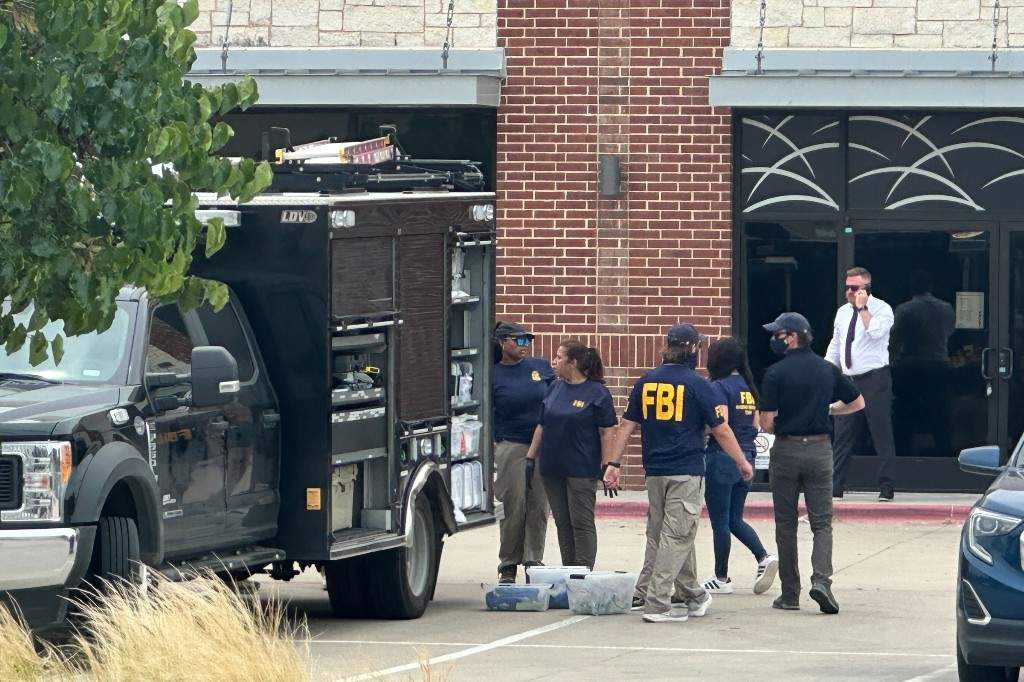
The recent gunfire that left two dead and three wounded near a North Austin shopping center is more than a tragic police blotter entry. It represents a systemic collapse of the "safe zone" expectation that has long anchored American suburban commerce. When shots rang out at the Great Hills Trail retail hub, the immediate response followed a weary, well-rehearsed script: sirens, yellow tape, and a brief dip in foot traffic. However, the data reveals a much grimmer reality for the retail sector. Violence in these semi-public spaces is no longer an anomaly but a predictable outcome of crumbling private security infrastructure and the limitations of municipal law enforcement.
This specific incident, occurring in a high-traffic area anchored by major national brands, underscores a hard truth that developers and city planners are desperate to ignore. The traditional retail security model—largely consisting of "observe and report" personnel—is completely outmatched by the current threat environment. We are witnessing the death of the shopping center as a neutral sanctuary.
The Myth of Private Security Deterrence
For decades, the presence of a patrol car with amber lights or a uniformed guard was enough to maintain a sense of order. That era is over. Most retail security contracts are designed to mitigate shoplifting and manage parking disputes, not to neutralize active threats. These guards are often paid barely above minimum wage and are strictly instructed by corporate legal departments never to engage an armed suspect.
The Great Hills Trail shooting exposes the gap between the perception of safety and the reality of protection. Shoppers see a uniform and feel a false sense of security. In reality, that uniform often has no more power—and sometimes less training—than the average citizen. This creates a vacuum. When a crisis erupts, the minutes it takes for Austin Police Department units to arrive become an eternity. During that window, the retail environment is a lawless zone where the only defense is the speed of one’s own feet.
The business implications are devastating. Insurance premiums for commercial landlords in high-crime jurisdictions are skyrocketing. Some firms are now seeing "violence surcharges" or being denied coverage altogether if they cannot prove a significant investment in armed, high-tier security. This isn't just a matter of public safety; it is a fundamental threat to the viability of brick-and-mortar commerce in Texas.
The Failure of the Urban Buffer Zone
Urban planners once viewed "lifestyle centers" and open-air malls as buffers—controlled environments that offered the variety of a city street without the perceived dangers of a downtown core. The Austin shooting proves that these buffers have evaporated. The sprawling parking lots and multiple entry points that make these centers convenient also make them impossible to secure effectively.
Tactical Vulnerability of Open Air Centers
Unlike enclosed malls, which can be locked down at central pinch points, open-air centers are tactically porous. A shooter can move from a vehicle to a storefront in seconds.
- Vehicle Access: Most Texas shopping centers are designed for maximum car proximity, meaning a threat can be at the doorstep without ever passing through a security checkpoint.
- Acoustic Confusion: In open-air environments, echoes off concrete and glass make it difficult for panicked shoppers to identify the direction of gunfire, often leading them to run toward the danger rather than away from it.
- Law Enforcement Latency: Even with "high priority" dispatch, navigating suburban traffic and sprawling parking lots slows down the initial tactical entry.
The Economic Aftershocks of Bloodshed
When blood is spilled on a sidewalk, the "property value" conversation shifts from aesthetics to liability. We are seeing a quiet exodus of premium tenants from centers that have experienced high-profile violence. It takes years for a brand to recover from being the backdrop of a viral video showing shoppers hiding under racks of clothing. The cost of a shooting isn't just measured in the tragic loss of life, but in the permanent "stain" on the location's commercial reputation.
The Regulatory Blind Spot
Texas leadership often speaks of "hardening" schools, but the retail sector remains a "soft target" by design. There is a glaring lack of state-level mandates for security standards in large-scale commercial developments. Currently, a developer can build a multi-million dollar shopping hub and provide zero professional security, relying entirely on taxpayer-funded police.
This is a hidden subsidy for the retail industry. Every time a major shooting occurs at a mall, the public bears the cost of the emergency response, the investigation, and the long-term trauma care, while the property owners often hide behind "limited liability" clauses. There is no requirement for these centers to implement modern surveillance tech, such as gunshot detection sensors or integrated camera feeds that link directly to police real-time crime centers.
We are operating on a 1980s security philosophy in a 2026 threat environment. The friction between Texas's relaxed firearm laws and the private sector's desire for a "family-friendly" atmosphere has reached a breaking point. You cannot have a high-density, high-tension public space with no barrier to entry and expect traditional policing to solve the fallout.
The Professionalization of Fear
In the wake of the Austin incident, we will see the inevitable rise of "Tactical Retail." This is the shift toward private security forces that look and act like paramilitary units. While this may provide a deterrent, it fundamentally changes the shopping experience. People do not want to buy a latte or a pair of jeans while walking past a guard with a plate carrier and a rifle.
Yet, this is the direction the industry is heading. The "security-industrial complex" is moving into the suburban mall. We are seeing a surge in demand for:
- Ballistic Glazing: High-end retailers are quietly replacing standard glass with reinforced laminates.
- K9 Patrols: Dogs are being used not just for bombs, but for "socialized deterrence," providing a mobile threat detection unit that is more approachable than an armed guard.
- AI-Integrated Surveillance: Cameras that flag "erratic behavior" or the drawing of a weapon before a shot is even fired.
These technologies are expensive. The cost will be passed down to the consumer, further widening the gap between "safe" premium shopping districts and "dangerous" discount centers. This creates a tiered system of public safety where your physical security is determined by the price point of the stores you frequent.
Rethinking the Perimeter
The investigation into the Great Hills Trail shooting will likely focus on the shooter's motive and the immediate police response. This is a mistake. The focus should be on why the perimeter failed. If a shopping center is a private entity that invites the public in for profit, it must bear a greater burden of the public’s protection.
The era of the "hands-off" landlord is over. If a property owner fails to provide a secure environment, they should be held as liable as a bar that over-serves a drunk driver. The legal precedent is shifting. Trial lawyers are increasingly targeting "negligent security" in the wake of mass shootings, and the settlements are reaching the tens of millions.
This isn't about politics or the Second Amendment. It is about the fundamental breakdown of the social contract in commercial spaces. When you can no longer walk from your car to a storefront without a reasonable expectation of survival, the model is broken.
The Austin tragedy is a loud, violent reminder that the suburban dream of the safe, bustling marketplace is being sustained by little more than hope. Hope is not a security strategy. The blood on the pavement at Great Hills Trail won't be washed away by a press release or a "thoughts and prayers" social media post from the property management firm. It requires a total overhaul of how we define, fund, and execute security in the American retail landscape.
Property owners must stop treating security as a line-item expense to be minimized and start seeing it as the primary service they provide. Without safety, there is no commerce. Without a radical shift in how these "soft targets" are hardened, the Austin shooting will simply be another data point in the slow, violent decline of the American shopping center. Stop looking at the shooter and start looking at the gaps in the fence.