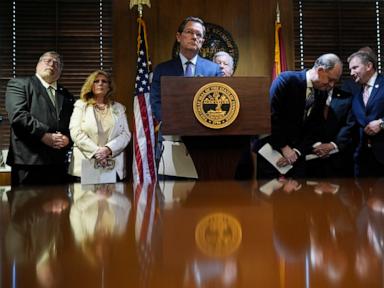
The corporate media is treating Davidson County Chancellor Patricia Head Moskal’s temporary restraining order against the Tennessee Department of Health as a standard battle lines story. On one side, you have the state legislature pushing a hardline immigration agenda. On the other, you have heroic doctors and civil rights advocates protecting medically fragile children.
Both sides are entirely missing the point. This court injunction is not a high-minded victory for constitutional rights or a devastating blow to state sovereignty. It is a blindingly obvious exposure of absolute bureaucratic illiteracy. The state did not lose because its policy was too aggressive. The state lost because its administrators literally failed to read the opening paragraphs of the very law they were trying to enforce.
The Incompetence Behind Public Chapter 1106
The mainstream narrative frames Public Chapter 1106 as a calculated piece of the state's legislative machinery. The reality is far less organized. The law was designed to force government agencies to verify the legal status of adults seeking public benefits. Yet, the Tennessee Department of Health immediately weaponized it against the Children’s Special Services program, sending out terrifying warning letters to the families of roughly 400 seriously ill children.
They told these families that if they kept receiving medical coverage for things like cancer, cerebral palsy, and diabetes after June 30, 2026, their names would be handed over to the Tennessee Department of Safety’s immigration division.
Here is the twist that the cable news talking heads ignore: the legislation’s own sponsor, Senator Ed Jackson, explicitly stated he never intended for the law to apply to children. The text of the law itself explicitly states it applies to applicants over the age of 18.
Imagine running a state agency with a budget of millions, surrounded by legal counsel, and failing to comprehend a basic age restriction written in plain English. This is not a malicious master plan. It is sheer administrative incompetence. The Department of Health manufactured a crisis out of thin air simply because nobody in the office bothered to read past the first page of the statute.
The Myth of Clean Immigration Data
Even if the state managed to rewrite the law to target minors legally, the mechanism would still fall apart. The politicians pushing these data-sharing mandates operate under a fundamentally flawed premise. They believe immigration status is a simple binary toggle: you are either documented or undocumented.
Anyone who has spent ten minutes analyzing federal immigration frameworks knows this is a fantasy. Immigration status is a shifting, hyper-complex web of temporary protections, pending applications, visa backlogs, and mixed-status households.
When the Department of Health threatened to report these families, they sent letters to people who were completely lawfully present. The state health department possesses exactly zero infrastructure to accurately determine a person's federal immigration status. It is a specialized, federal legal determination that frequently stumps immigration judges, let alone a state clerk processing healthcare forms in Nashville.
By demanding that public health employees act as proxy border patrol agents, the state guarantees a deluge of bad data. They are not creating transparency. They are building an expensive, error-ridden database filled with false positives that will choke the Tennessee Department of Safety with useless paperwork.
The Economic Irony of Targeted Safety Nets
Let us talk about the financial argument that politicians use to justify these crackdowns. House Speaker Cameron Sexton defended the package by arguing that the state should not spend taxpayer dollars on undocumented residents unless they are in jail. It is a popular talking point, but the economics are completely backwards.
The Children’s Special Services program is partially funded by federal grants. It manages chronic, severe conditions before they escalate. When you scare families away from a safety-net healthcare program, the illnesses do not miraculously disappear. A child with unmanaged diabetes or severe epilepsy does not stop needing medical intervention; they just stop getting it early.
Instead of receiving low-cost, preventative management through the program, these children end up in private and public emergency rooms when their conditions become life-threatening. Under federal law, emergency rooms are legally required to stabilize anyone who walks through the door, regardless of legal status or ability to pay.
Emergency room care is the most expensive, inefficient form of healthcare on earth. When hospitals absorb those massive, uncompensated care costs, they do not just take the loss. They pass those expenses directly onto insured citizens through higher premiums and inflated medical bills. They shift the burden to local county budgets.
By attempting to save a negligible amount of public benefit spending on 400 sick children, Tennessee is actively structuring a system that forces its own taxpayers to foot a much larger, chaotic emergency medical bill down the line. It is fiscal conservatism transformed into a self-inflicted financial wound.
Doctors as the New Legal Shield
The only reason this administrative trainwreck was halted is that three Nashville physicians from Siloam Health stepped up to sue. They did not do it out of a desire to engage in a national political debate. They did it because the state's administrative blundering directly interfered with their ability to practice medicine.
When a state health department forces a doctor to choose between treating a child with leukemia and turning that child’s family over to law enforcement, it shatters the basic foundation of medical ethics. The state effectively tried to transform public clinics into federal processing centers.
The immediate casualty of this policy was patient trust. Long before Chancellor Moskal issued her temporary restraining order, families were already pulling their children out of vital therapies. They were choosing the certainty of medical decline over the threat of family separation.
This brings us to the core failure of the entire legislative strategy. If a policy's real-world outcome is that legal residents flee public programs out of sheer panic, while the state creates an unmanageable, illegal data-sharing system that violates its own statutory boundaries, the policy is objectively broken. It does not matter what your stance on border security is. You cannot enforce a law that is built on a foundation of administrative illiteracy and economic delusion.
The July 2 hearing will likely center on the explicit age limits within Public Chapter 1106. The state’s legal team will have to explain to a chancellor why they decided a law explicitly targeting adults should apply to toddlers on ventilators. It will be a painful, embarrassing display for the state attorney general's office.
Stop looking at this case as a grand ideological battle. This is a story about a state government that got blinded by partisan rhetoric, forgot how to read its own legislation, and accidentally designed a system that drives up healthcare costs for its own taxpayers. The system did not get blocked because the courts are activist. It got blocked because the state forgot how to do its job.