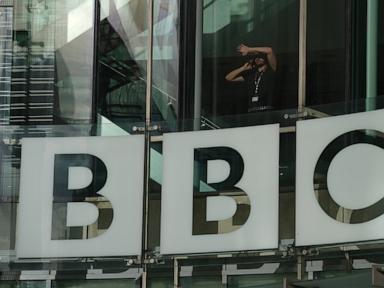
When Donald Trump slapped a ten billion dollar lawsuit against the British Broadcasting Corporation last December, legal analysts understood the playbook immediately. The filing targets a 2024 documentary edit regarding a speech given before the January 6 Capitol riots, demanding five billion dollars for defamation and another five billion for unfair trade practices. It is a staggering financial demand anchored to an equally staggering claim of economic and reputational injury. Yet when a federal court recently ordered his family trust to begin turning over closely guarded financial records to back up those claims, the reaction from the plaintiff was not compliance. It was an emergency scramble to change the rules of the game.
U.S. District Judge Roy Altman granted a temporary reprieve, pausing an order from a Miami magistrate that would have forced the first wave of financial disclosures. The pivot hinges on an unpublicized amended complaint designed to quietly drop the business-related damages and laser-focus exclusively on reputational harm. By shrinking the scope of the lawsuit on paper, Trump's legal architects hope to shield the inner workings of his commercial empire from judicial sunlight. It is a tactical retreat wrapped in procedural maneuvering, raising a sharp question about whether massive damages claims are meant to be proven in a courtroom or simply used as a headline-grabbing weapon.
The Anatomy of an Inflationary Damages Claim
In standard civil litigation, claiming ten billion dollars in damages is not something done on a whim. The threshold requires rigorous economic modeling, profit projections, and proof of direct causation between a defendant's action and a measurable loss of enterprise value. When the BBC's defense team pushed for financial discovery, they were doing what any competent litigator would do when faced with an astronomical payout demand. They asked to see the books.
The rationale is simple. If a plaintiff asserts that corporate valuations and brand revenues have cratered due to a disputed documentary edit, the defense has an absolute right to test that hypothesis against reality. For months, the Donald J. Revocable Trust stalled against these demands, calling the BBC's requests shockingly broad. But the legal trap was already sprung. Either the plaintiff opens the corporate vault to substantiate the ten billion dollar figure, or he admits that the number was an arbitrary fiction designed for maximum political and public relations impact.
By attempting to amend the complaint to strip away the business injury claims, the legal strategy shifts from proving actual loss to arguing abstract reputational hurt. It is an effort to eat the cake and keep it too. Claim an unprecedented fortune on day one to dominate the news cycle, then quietly narrow the parameters when the court demands the receipts.
Why Financial Transparency is the Ultimate Deterrent
For decades, the private architecture of Trump's business empire has remained notoriously shielded from public view, save for intermittent and heavily scrutinized financial disclosures during campaign seasons. A federal court discovery process is entirely different. It involves sworn depositions, subpoenaed bank records, and forensic accounting that does not care about public relations spin.
Media watchdogs and First Amendment experts point out the glaring contradiction of the plaintiff's position. Claiming ten billion dollars in damages while simultaneously arguing that examining corporate health is overly intrusive creates an untenable legal paradox. If an enterprise is valued, branded, and leveraged on a global scale, its financial realities cannot be cordoned off when a court asks for proof of injury.
The BBC has already issued an apology over the specific editing of the January 6 speech while fiercely contesting the defamation allegations. Yet the core battle has long transcended standard broadcast standards. It has become a stress test for how international media organizations handle high-stakes multi-billion-dollar litigation funded by political figures who treat the judicial system as an extension of the public square.
The Economics of Legal Attrition
Litigation of this magnitude is rarely about securing a final, triumphant verdict at trial. Experienced industry observers note that the strategy relies heavily on asymmetrical warfare. Defending against a ten billion dollar lawsuit requires millions of dollars in legal fees, thousands of hours of administrative labor, and a constant drain on institutional resources.
Even if a media outlet is entirely in the right, the cost of defense can function as an effective deterrent against aggressive reporting. When a case hits a roadblock like financial discovery, the calculus shifts. If the plaintiff decides that protecting corporate privacy is more valuable than pursuing commercial damages, the amended complaint becomes a damage-control mechanism. It allows the lawsuit to limp forward toward a provisional February trial date without exposing the balance sheets that justified the headline-grabbing numbers in the first place.
The temporary pause granted by Judge Altman buys time, but it does not resolve the fundamental structural flaw of the plaintiff's case. A court cannot indefinitely weigh claims of historic financial devastation while barring the defendant from looking at the numbers. As the legal maneuvering grinds toward the winter trial, the central illusion of the ten billion dollar demand faces an inevitable reckoning with basic evidentiary rules.