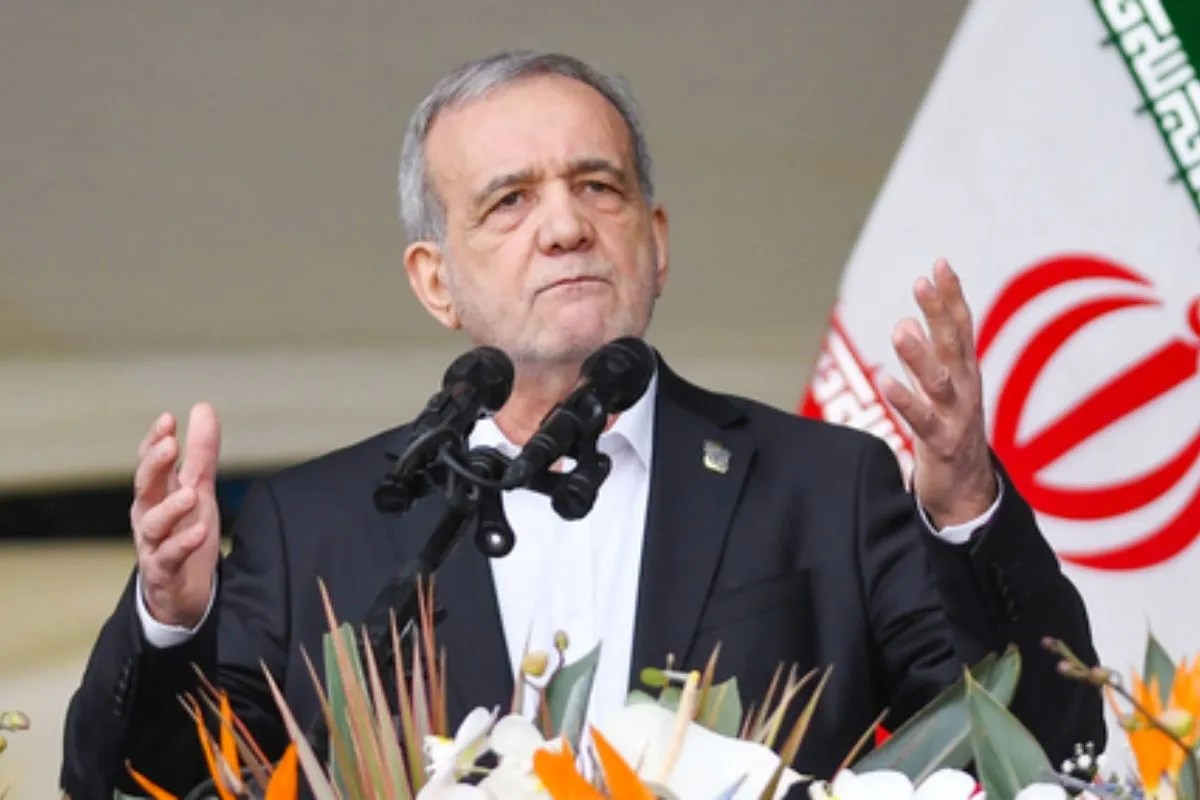
Iranian President Masoud Pezeshkian recently declared that the ongoing conflict with the United States should be brought to a close, asserting that Tehran currently operates from a position of power and dignity. This public posturing, delivered during a state meeting, represents a calculated attempt to redefine the narrative of a war that has spanned several months. By framing a potential cessation of hostilities as a choice made from strength rather than necessity, the Iranian leadership seeks to avoid the domestic and international perception of surrender while exploring diplomatic exits.
The rhetoric coming out of Tehran is not merely a call for peace but a strategic pivot intended to capitalize on perceived global fatigue regarding the conflict. Pezeshkian emphasized that the world recognizes Iran's resilience, particularly in the face of what he categorized as American violations of international norms, including strikes on civilian infrastructure such as hospitals and schools. This framing serves a dual purpose. It attempts to isolate Washington diplomatically by highlighting the humanitarian costs of the intervention, while simultaneously bolstering domestic support for the regime by painting their defensive actions as a successful stand against external aggression.
However, beneath the veneer of national confidence lies a complex reality of economic strain and military attrition. While the Iranian president speaks of "victory," the regime continues to grapple with the fallout from aggressive sanctions and the physical destruction of key sites. The administration in Washington, currently led by President Donald Trump, has shown little inclination to soften its stance, with officials like Treasury Secretary Scott Bessent continuing to pledge the collapse of the current regime through intensified economic pressure.
The friction between the two nations is deeply rooted in decades of historical antagonism, dating back to the 1953 interventions and intensifying through years of proxy conflicts and mutual distrust. For the current Iranian government, the challenge is to secure a deal that preserves the regime’s legitimacy without appearing to bow to the "bullying" tactics that Pezeshkian has publicly denounced. Any agreement reached will likely be sold to the Iranian public as a hard-won diplomatic achievement, a narrative already being prepared by officials who characterize previous memoranda of understanding as dignified and honorable.
Internal dynamics within Iran also influence this shift in tone. Pezeshkian’s comments follow an apparent consolidation of support from the Supreme Leader, Ayatollah Ali Khamenei, for a diplomatic path that was previously dismissed. This alignment suggests that the Iranian state has reached an internal consensus on the need to stabilize the situation before the domestic costs of the conflict—both economic and social—outweigh the perceived geopolitical benefits of continued confrontation.
The broader geopolitical environment further complicates this standoff. Regional powers and international observers, including China, have frequently signaled that continued pressure and sanctions are insufficient to resolve the fundamental issues at play. Beijing’s insistence on political and diplomatic solutions highlights the growing discomfort among global players with a conflict that threatens to disrupt maritime trade and destabilize the Middle East indefinitely. Yet, as long as Washington views its maximum pressure campaign as a viable instrument of statecraft, the gap between Tehran's desire for a dignified exit and the reality on the ground remains vast.
For the observer of this conflict, the primary indicator of change will not be the proclamations of strength or the defiant warnings of "no surrender" that follow each diplomatic overture. Instead, the real movement will occur behind closed doors, in the technical committees tasked with reconciling sanctions relief with nuclear or military concessions. The current messaging is merely the prelude to the inevitable, difficult bargaining process. Whether this leads to a durable settlement or merely a tactical pause depends on the willingness of both capitals to accept a version of reality that deviates from their own rigid, public-facing ideologies.
This video provides additional context regarding the ongoing diplomatic maneuvering and the defiant stance maintained by Iranian officials amid current negotiations.
http://googleusercontent.com/youtube_content/1