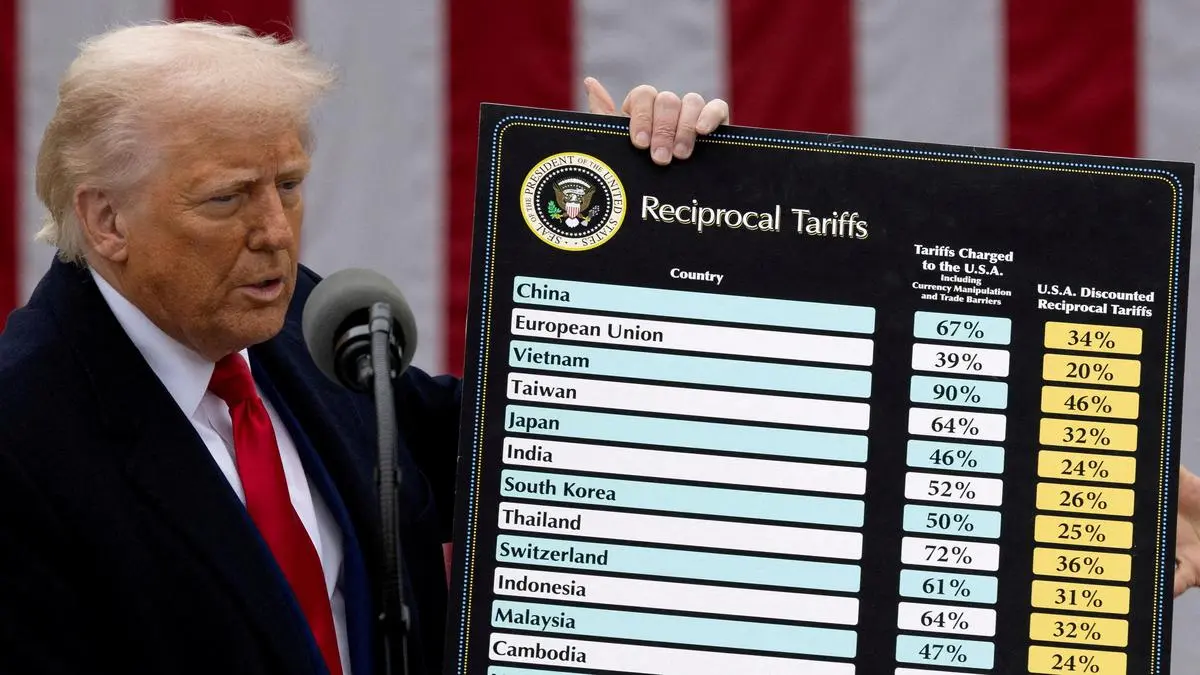
The mainstream financial press is currently throwing a party for American importers, pointing to a massive $20.6 billion pot of tariff refunds heading back into corporate coffers. The narrative is comforting: the government overreached, the courts intervened, and now businesses are finally getting their hard-earned capital back.
It is a beautiful story. It is also completely wrong.
If you are an executive waiting on a slice of that $20.6 billion payout, stop celebrating. This massive payout is not a windfall. It is a lagging indicator of structural supply chain failure, an admission of dead capital, and a brutal lesson in how inflation and bureaucratic delay strip the value out of corporate balance sheets. The crowd sees a victory for global trade; anyone who understands the time value of money and operational mechanics sees a disaster dressed up as a refund check.
The Trillion Dollar Opportunity Cost
Let us strip away the celebratory headlines and look at the raw mechanics of how these refunds actually work.
When the US government levies Section 301 tariffs, or any other sweeping trade penalties, importers do not get to argue their case upfront. They pay the duties at the port of entry. The capital leaves their bank accounts immediately.
For years, billions of dollars have sat languishing in federal accounts while legal battles wound their way through the Court of International Trade. To the uninitiated, getting that money back means a restored balance sheet. To a chief financial officer, that money represents years of missed deployment.
Consider what that capital could have done between the time it was seized at the port and the moment the refund check finally clears:
- Inventory Optimization: Capital tied up in escrow could have funded inventory diversification, moving production out of tariff-heavy zones years ahead of schedule.
- Automation and Scaling: Millions spent on disputed duties could have gone toward warehouse automation, offsetting the rising cost of domestic labor.
- R&D and Product Margins: For high-margin sectors like tech and specialized manufacturing, that frozen cash could have fueled product cycles that are now permanently behind schedule.
When the government hands you back $10 million three years late, they are handing you back depreciated paper. Even with interest factored in, the statutory interest rates paid by Customs and Border Protection rarely match the internal rate of return (IRR) of a high-performing business. You did not win a legal battle; you gave Uncle Sam an interest-free or low-interest loan while your competitors who bypassed the tariffs entirely ate your market share.
The Passing the Buck Fallacy
The lazy consensus assumes that tariffs are a simple tax absorbed by the importer or passed directly to the consumer. Therefore, a refund is a neat reversal of that pain. This view completely ignores how modern pricing strategies operate.
When these tariffs were first implemented, importers faced a brutal choice: absorb the cost and watch gross margins collapse, or raise prices and risk losing market share to domestic alternatives. Most did a mix of both. They re-negotiated vendor terms, squeezed their logistics providers, and adjusted retail pricing structures.
Now that the refunds are coming, do you honestly believe those pricing structures will magically reverse?
They cannot. The supply chain has already adjusted to the higher baseline. Contracts were signed, shelf prices were set, and consumer expectations shifted. The idea that a tariff refund restores market equilibrium is a myth.
Instead, these refunds create a secondary distortion. Companies receiving the largest payouts will temporarily show artificially inflated earnings. Wall Street will cheer. Then, a quarter or two later, the operational reality sets in: the fundamental cost of goods sold remains high, global shipping lanes are still volatile, and the structural inefficiencies that the tariffs forced into existence are now permanent fixtures of the business.
Why Compliance Is a Sunk Cost Trap
I have watched logistics departments spend hundreds of thousands of dollars on specialized customs attorneys and trade consultants to claw back these funds. The industry has spawned an entire ecosystem of compliance experts who profit exclusively off the complexity of the Harmonized Tariff Schedule (HTS).
The hard truth is that chasing tariff exclusions and retroactive refunds is a low-yield strategy for long-term growth. It focuses organizational energy backward instead of forward.
Imagine a scenario where an industrial manufacturer spends four years fighting a classification ruling on steel components. They eventually win and secure a $5 million refund. On paper, the trade compliance team looks like heroes. But look at the opportunity cost: during those four years, their nimbler competitor stopped sourcing from the disputed region entirely, redesigned their product to use lighter composite materials, and locked in long-term domestic supply agreements.
The competitor did not need a refund because they did not write the check to begin with. They built resilience, while the first company built a litigation department.
Dismantling the Supply Chain Consensus
People frequently ask: "How else are we supposed to protect our margins when trade policy changes overnight?"
The premise of the question is flawed. It assumes that trade policy is a temporary storm to be weathered through legal appeals and financial hedging. It treats tariffs as an anomaly rather than the permanent cost of doing business in a fractured geopolitical environment.
If your supply chain strategy relies on winning court cases against the federal government to hit your margin targets, your business model is broken. The $20.6 billion refund pool is not a sign that the system is fixing itself. It is a monument to a legacy trade model that is failing to adapt.
True operational security does not come from waiting for a customs broker to file a successful protest. It comes from implementing aggressive, structural changes to how and where value is created:
- Near-Zero Tariff Architectures: Designing products from the blueprint phase to utilize components that fall outside high-risk HTS codes.
- Dynamic Sourcing Elasticity: Maintaining active supply relationships in multiple trade blocs simultaneously, allowing volume to shift within weeks, not fiscal quarters.
- Value-Add Shifting: Moving assembly and finishing operations to intermediate countries to legally alter the country of origin under substantial transformation principles, rather than praying for a retroactive exclusion.
The Toxic Cash Injection
There is a dark side to this influx of capital that no one in the business press wants to touch. For mid-market importers struggling with cash flow, this refund will act like a financial narcotic. It provides a sudden, non-operational cash injection that masks underlying structural decay.
When a company receives a massive check that did not come from selling more goods or cutting operational waste, the pressure to innovate evaporates. Management teams use the influx to pay down debt accumulated through poor inventory management or to buy back stock to satisfy short-term shareholder demands.
It delays the inevitable reckoning. The companies that survived the tariff era without relying on the promise of refunds are the ones that lean, mean, and structurally optimized. They learned to live in a high-tariff world. The ones waiting on the mail carrier to deliver their survival capital are living on borrowed time.
Take the money. Cash the check. But do not dare call it a win. The government took your liquidity when you needed it most, held it during an inflationary cycle, and is returning a diluted fraction of its purchasing power while your operational liabilities continue to mount.
The $20.6 billion payout is not a recovery. It is the final receipt for years of disrupted trade, lost momentum, and strategic paralysis. If you use it to fund the same old supply chain strategies that got you caught in the tariff net in the first place, you are simply paying for your next financial bottleneck in advance. Stop looking back at what the government owes you and start engineering your business so their policy shifts cannot touch you at all.