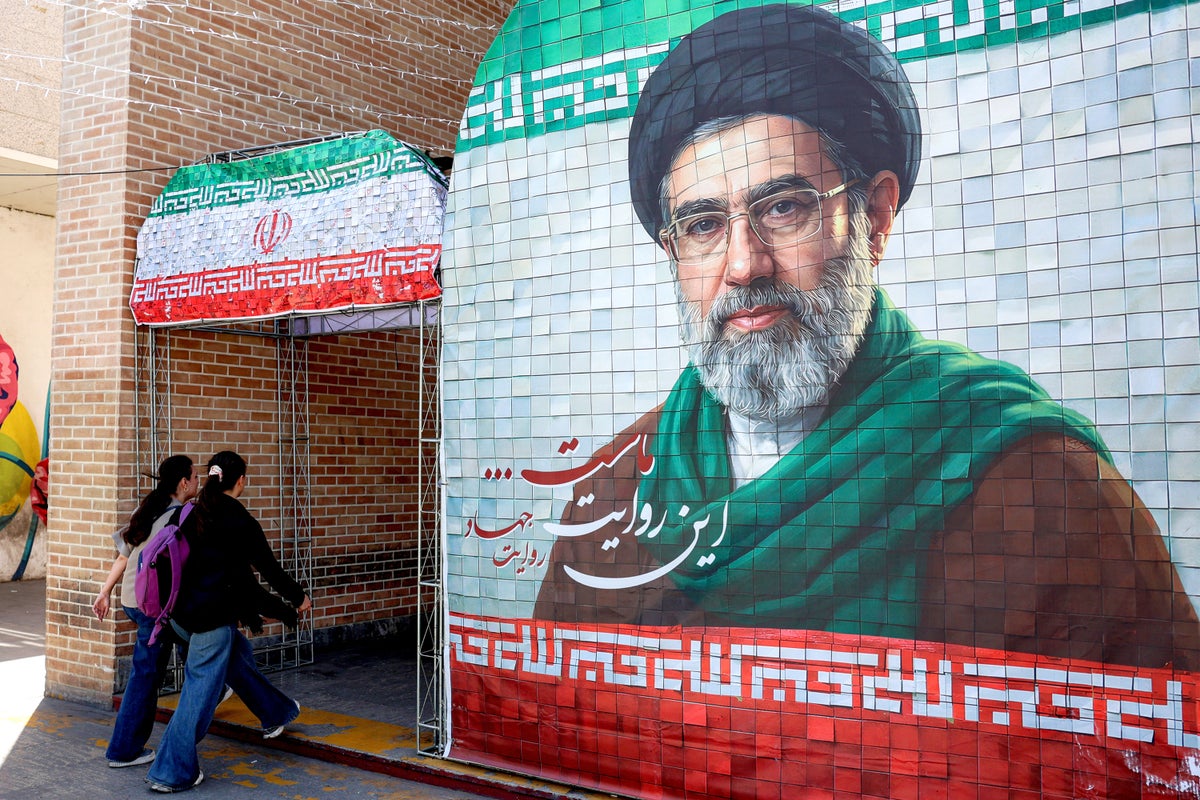
Iranian President Masoud Pezeshkian just admitted something striking on state television. Direct interaction with Supreme Leader Mojtaba Khamenei is currently very difficult.
If you follow Middle Eastern politics, you know this isn't just standard bureaucratic friction. It points straight to a massive security and leadership crisis inside Tehran. Mojtaba Khamenei hasn't made a single public appearance since taking over the highest office. He replaced his late father, Ayatollah Ali Khamenei, who died during the initial US-Israeli strikes earlier this year.
The Security Paranoia Inside Tehran
Why is basic communication such a massive hurdle? Survival.
The regime is terrified of electronic surveillance. Intelligence reports indicate that the ruling inner circle fears audio recordings could give away the supreme leader's exact physical location. Modern signals intelligence tracks acoustic signatures, electrical grid anomalies, and subtle device noise. Because of this paranoia, the state rarely releases audio of Mojtaba, relying instead on heavily vetted written letters.
Pezeshkian tried to downplay rumors of an internal split during his broadcast. He insisted that his working relationship with the new leader remains strong, praising his logic and ethics. But admitting that routine contact is hard tells a different story. Running a state under continuous military and economic pressure becomes nearly impossible when the executive branch and the supreme authority operate behind thick walls of operational security.
Navigating Ceasefires and Domestic Strain
This communication bottleneck happens at the worst possible time for Iran's administration.
The country is trying to navigate the aftermath of a bruising direct conflict with the United States and Israel. Back in June, Pezeshkian and US officials reached a Pakistan-mediated memorandum of understanding to formalize a ceasefire and lift crippling naval blockades. While Mojtaba Khamenei eventually endorsed the framework, it sparked intense internal bickering.
Hardliners and reformists are pulling in opposite directions. Critics within the establishment claim that state officials are conceding too much. Meanwhile, Pezeshkian publicly accused domestic actors of manufacturing divisions to undermine the government.
What Comes Next For Iran's Leadership
Sanctions are biting hard. Public dissatisfaction remains close to a boiling point. Pezeshkian himself called this era the most difficult period since the 1979 Islamic Revolution.
When the top leadership can't talk freely without risking a targeted strike, policy paralysis follows. Expect more friction between the executive office and the clerical establishment as long as the supreme leader stays locked away in undisclosed safety. The regime wants to project an image of total unity, but the cracks are starting to show on live television.