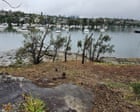
You can buy an exclusive harbourside mansion, but you cannot buy the right to chainsaw down an entire public ecosystem just to watch the sunset over the water. Or can you? When a Sydney gardener named Yi Wang was handed a $187,500 court fine for orchestrating the mass slaughter of 287 native trees, it exposed a dirty little secret about real estate vanity in Australia. Luxury property owners routinely treat public nature reserves like their own private landscaping budgets.
The scale of destruction at Woodford Bay in Longueville is staggering. We are talking about 1,210 square metres of protected council-owned foreshore bushland stripped bare because someone wanted a better panoramic glimpse of Sydney Harbour. Cash payments left hidden in a shoe and hastily arranged clearing operations show just how brazen illegal tree vandalism has become among the ultra-wealthy.
How a Simple Gardening Job Became an Environmental Crime
It started innocently enough. Wang, the director of Sydney Garden Home, was hired to trim some grass at a waterfront property on Lucretia Avenue. The house next door had sold years prior for a cool $7.6 million, prized precisely because it commanded water views and bordered lush public reserves.
Things escalated fast. The stepdaughter of the property owner, Yao Wu, allegedly turned to Wang the very next day with a much bigger demand. She wanted the trees gone. "This is my backyard," Wang later claimed Wu told him.
Except it wasn't her backyard. It belonged to the public.
Workers moved in and cleared a native forest canopy that had stood since at least 1943. By the time the dust settled, 287 trees had been illegally felled. The destruction wiped out vital local habitats for protected and threatened wildlife, including microbats and powerful owls. Experts note that full ecological recovery in that stretch of bushland could take up to three decades.
The Real Cost of Destroying Protected Foreshore Land
Let us talk about the penalty. The New South Wales Land and Environment Court, presided over by Justice Rachel Pepper, convicted Wang and levied a $187,500 fine.
Is it enough? Honestly, no.
When you weigh a nearly $200,000 penalty against the millions of dollars added to a harbourside property's market value by unlocking unobstructed water views, it starts to look less like a punishment and more like a calculated cost of doing business. Wealthy developers and homeowners have crunched these numbers before. They know municipal councils are often slow to litigate, and they know the financial upside of a crystal-clear harbor vista can easily eclipse regulatory fines.
Beyond the lost trees, the clearing severely damaged an Indigenous cultural site. The land vandalism degraded the natural soil stability and protection previously surrounding an ancient Aboriginal midden. You cannot simply write a check to replace thousands of years of Indigenous heritage or a mature native canopy that buffered the harbor from erosion.
Why Tree Vandalism Keeps Happening in Sydney
Sydney's luxury property market breeds an intense psychological obsession with water views. Real estate agents market every square inch of glass overlooking the harbor as a golden ticket to status. When a multi-million-dollar view is partially blocked by stubborn eucalyptus or native shrubs, some owners lose their minds.
They hire contractors who are willing to look the other way. They operate under the cover of darkness or use quick weekend bursts of labor to avoid nosy neighbors. Lane Cove Council caught wind of this particular incident, leading to a thorough investigation and prosecution, but many smaller acts of arboreal vandalism go completely unnoticed.
If you own property near public bushland, the rules are clear. You do not own the view beyond your property line. Crossing that boundary to clear public space ruins habitats, destabilizes banks, and steals natural beauty from the rest of the community.
Courts need to start handing down mandatory full-site remediation orders that force offenders to pay for the painstaking, decade-long restoration of mature canopies, rather than just accepting a standard monetary fine. Until the personal and financial consequences of destroying public trees outweigh the luxury real estate gains, rogue operators will keep reaching for the chainsaw.


