The signing of the Agreement on Supply Chain Resilience between Singapore and New Zealand represents a fundamental shift from speculative globalization to a protocol-driven model of economic survival. While traditional free trade agreements (FTAs) focus on the reduction of tariff barriers to maximize margin, this bilateral treaty functions as a fail-safe mechanism for critical infrastructure. It codifies the transition from "just-in-time" efficiency to "just-in-case" security, establishing a legal framework that prevents the unilateral seizure of essential goods during global systemic shocks.
The Triple-Threat Vulnerability Model
To understand the necessity of this treaty, one must identify the three specific failure points in global trade that it seeks to remediate. Small, open economies like Singapore and New Zealand face an asymmetrical risk profile compared to larger, resource-rich nations.
- Jurisdictional Sequestration: During the 2020-2022 period, several nations invoked emergency powers to halt exports of medical supplies and food. This "beggar-thy-neighbor" policy created a vacuum where even pre-paid contracts were unenforceable.
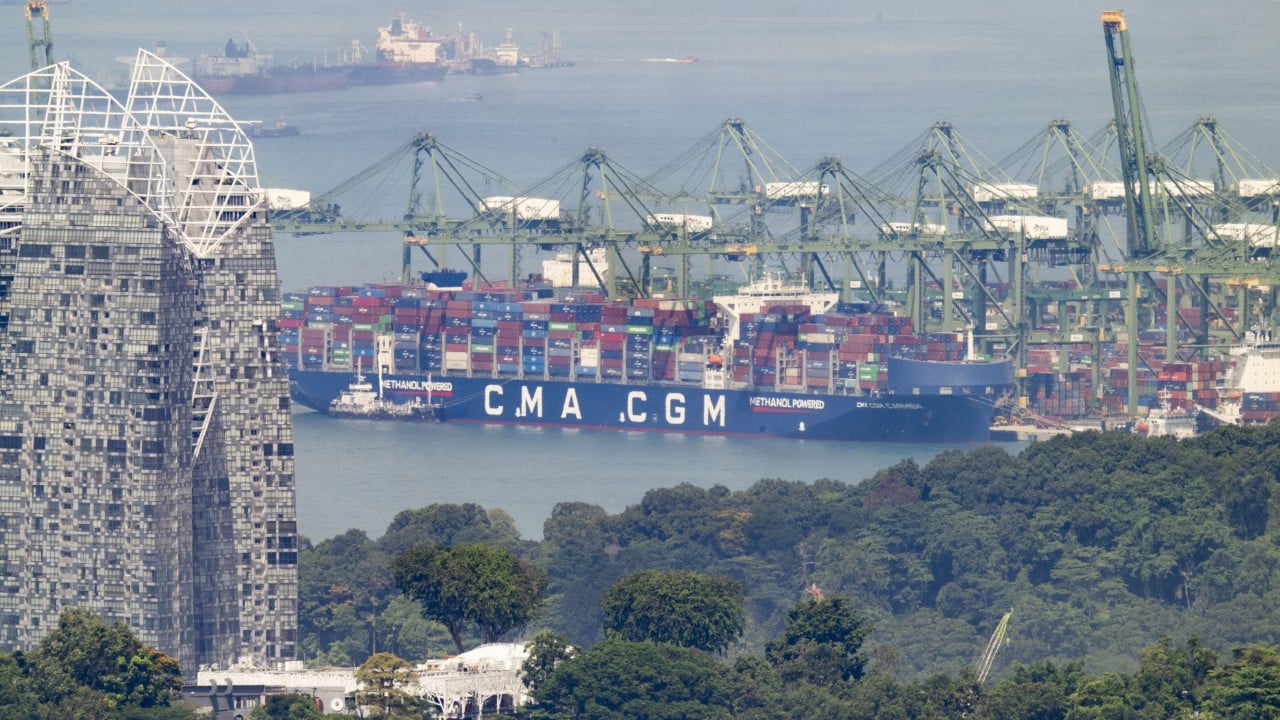
- Logistical Stranding: Congestion at major transshipment hubs often leads to the deprioritization of smaller markets. Without a diplomatic "fast-track," essential perishables or high-value components can languish in port indefinitely.
- Price Volatility Feedback Loops: In a crisis, the absence of a supply guarantee forces panicked procurement, which artificially inflates costs and further destabilizes the domestic economy.
The treaty addresses these by creating a legal "green lane," ensuring that even if third-party trade collapses, the bilateral flow of defined essential goods remains uninterrupted.
Defining the Essential Goods Taxonomy
The effectiveness of this treaty rests entirely on how "essential goods" are categorized. A vague definition renders the agreement unenforceable; a too-narrow definition makes it obsolete. The framework adopts a tiered approach to classification:
- Life-Sustaining Commodities: Primarily food products (meat, dairy, and grains) and potable water. For Singapore, New Zealand serves as a primary protein source; for New Zealand, Singapore acts as a critical node for specialty chemical and technology imports.
- Medical and Pharmaceutical Inputs: Not just finished vaccines, but the precursor chemicals, reagents, and PPE required to maintain a functioning healthcare system.
- Industrial Linchpins: Energy-related products and spare parts for critical infrastructure (water desalination, power grids, and telecommunications).
By pre-identifying these categories, both nations bypass the legislative delays typically associated with defining emergency cargo. The treaty establishes a "positive list" that is reviewed periodically, ensuring the agreement evolves alongside technological shifts, such as the increasing importance of lithium-ion components in energy security.
The Mechanism of Non-Intervention
The core innovation of the Singapore-New Zealand treaty is the Non-Interference Mandate. Most trade agreements contain "Escape Clauses" that allow a country to stop exports if their own national security is at risk. This treaty intentionally constricts those clauses.
When a crisis is triggered, the agreement mandates that neither party will impose export prohibitions or restrictions on the agreed-upon list of essential goods. This creates a "sovereign carve-out." Effectively, New Zealand agrees that a portion of its food supply belongs to the Singaporean supply chain even during a domestic shortage, and Singapore agrees that its logistics and refined outputs remain accessible to New Zealand.
This creates a Mutual Dependency Equilibrium. The cost of breaking the treaty—total loss of trust and access to the other’s critical exports—outweighs the short-term political gain of hoarding resources.
Quantitative Impacts on Trade Fluidity
The treaty eliminates the "Risk Premium" associated with bilateral trade between the two nations. In standard economic models, businesses factor in the possibility of trade disruption, which increases the cost of long-term contracts.
- Reduction in Insurance Premiums: Guaranteed passage reduces the risk of cargo loss or spoilage due to political interference.
- Inventory Optimization: Companies can maintain lower safety stocks if they have high confidence in the replenishment cycle, freeing up working capital for R&D or expansion.
- Direct Investment Incentives: Singaporean firms are more likely to invest in New Zealand’s agriculture sector (and vice versa for tech) when the output of those investments is legally protected from export bans.
Structural Bottlenecks and Implementation Limits
While the treaty is a masterclass in bilateral diplomacy, it is not a panacea. Several operational constraints limit its efficacy:
- Third-Party Transit Risks: The treaty covers bilateral intent, but it cannot control the actions of third-party nations. If a shipment from Auckland to Singapore is diverted or blocked in an intermediate port (such as in Southeast Asia or Australia), the treaty offers no legal recourse against that third party.
- Private Sector Compliance: The governments can promise not to block exports, but they cannot always compel private companies to prioritize specific orders without significant financial intervention. The treaty functions best when the state has a direct hand in the supply chain or via state-owned enterprises.
- Scalability Issues: A network of bilateral treaties is exponentially more complex to manage than a single multilateral agreement. If Singapore signs 20 such treaties, and two partners claim the same limited resource during a crisis, a "priority conflict" emerges that the current text does not fully resolve.
The Strategic Blueprint for Global Trade
The Singapore-New Zealand model provides a template for what is becoming a "fragmented but fortified" global economy. The era of universal trade liberalization is being replaced by a series of high-trust, high-security corridors.
To capitalize on this shift, enterprise leaders and policy architects should move toward a Corridor-Based Procurement Strategy. Instead of sourcing from the lowest-cost provider globally, firms must map their supply chains against these emerging bilateral "safety zones."
Investment should be diverted toward nations that have codified non-interference agreements. The "Security Yield"—the value of knowing a shipment will arrive during a crisis—now rivals the traditional "Cost Yield." The next evolution of this framework will likely involve the integration of blockchain-based "Smart Contracts" that automatically trigger shipping priorities and payments the moment a crisis is declared by either central bank, removing human bureaucratic delay from the survival equation.
The final strategic move for nations observing this treaty is the pursuit of Plurilateral Resilience Hubs. If this bilateral agreement can be expanded to include other high-trust partners like Denmark or Canada, it creates a distributed network of essential resource nodes that can sustain each other even if the primary global trade arteries are severed.