The ink on a Colombian voter’s index finger dries to a dark, stubborn purple. For days after an election, you can spot them in the bakeries of Bogotá, on the crowded register buses of Medellín, and along the humid docks of Buenaventura—men and women carrying a quiet, indelible mark of partition. It is a tiny badge of participation, but in a country carved by decades of internal war, high-altitude disparity, and deep economic scar tissue, that purple smudge carries the weight of an ultimatum.
On this specific Sunday, the choice hanging over the ballot box did not look like the choices of the past. The old political machinery, the dynastic families who had traded the presidency back and forth like an heirloom for generations, had been utterly demolished in the first round. Instead, thirty-nine million registered voters woke up to an architectural shift in their democracy. Expanding on this topic, you can find more in: The Geopolitics of Soft Power: How Yoga Functions as an International Optimization Framework.
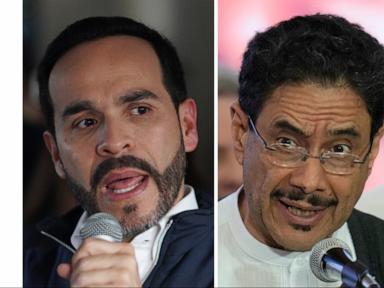
On one side stood a former leftist rebel who promised to turn the traditional economic model upside down. On the other, an unpredictable billionaire construction tycoon who ran his campaign largely from a smartphone screen, capturing the fury of a nation tired of being robbed by its leaders.
Colombia did not just vote. It chose which kind of unknown it was willing to risk. Experts at Al Jazeera have also weighed in on this situation.
The Sound of the Street
To understand how a nation arrives at such a precipice, you have to leave the marbled halls of the presidential palace in Bogotá and look at the concrete reality of those who live beneath its shadow.
Imagine a street vendor named Maria. She is not a real person, but she represents millions of real Colombians who wake up at four in the morning to boil potatoes, fry empanadas, and set up metal carts on corners where the exhaust fumes are thick enough to taste. Maria survived the pandemic by burning through what little savings she had. When the government proposed a tax reform that threatened to raise the price of basic groceries, she joined the protests that filled the avenues. She watched the smoke rise. She saw the youth clash with police.
For Maria, and for more than forty percent of the country living below the poverty line, politics is not an intellectual exercise in governance. It is a matter of caloric intake.
The social explosion that shook Colombia was a long time coming. The 2016 peace accord with the Revolutionary Armed Forces of Colombia (FARC) was supposed to open a new chapter, one where resources could finally be redirected from fighting a rural insurgency to building roads, schools, and hospitals. But peace is expensive, and it is fragile. When the expected dividend of stability failed to trickle down to the barrios, frustration turned to fury.
The political establishment failed to read the thermometer. They assumed the old scripts would work—that voters could be frightened into status quo complacency by invoking old ghosts. They were wrong. The hunger for change grew too loud to ignore.
The Rebel and the Mirror
The progressive candidate, Gustavo Petro, carried a resume that would have been unthinkable for a viable presidential contender a decade earlier. In his youth, he belonged to the M-19 guerrilla movement, a group that chose urban insurgency over democratic dialogue before disarming in 1990. Petro served time in prison, transitioned into civilian politics, became a senator, and eventually ran the capital city as mayor.
His campaign was an exercise in grand design. He spoke of an immediate halt to all new oil exploration, a pivot toward green energy, and a sweeping redistribution of wealth to heal the country's profound inequality. To his supporters, he was a prophetic figure, the first leader who truly saw the invisible margins of the country. To his detractors, his economic ideas were a blueprint for institutional collapse, a path that would mirror the fiscal ruin of neighboring Venezuela.
His rallies were theatrical, filled with poetry, music, and the heavy rhetoric of historical destiny. Yet, for many undecided voters, a lingering doubt remained. Could a man who spent his life fighting the system actually manage its vast, bureaucratic machinery?
Then came the counterweight.
Rodolfo Hernández did not fit into any ideological box. He was an elderly construction magnate from the provinces, a self-styled anti-corruption crusader who spoke in the coarse, blunt language of a wealthy grandfather who had run out of patience. He did not hold massive rallies. He did not debate policy nuances. Instead, he made short, viral videos on TikTok, broadcasting from his luxury estate, calling politicians "thieves" and "bums."
Hernández offered a seductive, minimalist thesis: the country's problems were not structural; they were criminal. If you stop the stealing, there will be enough money for everyone.
It was a message that bypassed traditional political alignment. It appealed to the businessman in Medellín who wanted low taxes, but it also resonated with the taxi driver in Cali who was tired of paying bribes to transit cops. Hernández became a human mirror for a deeply angry electorate. People poured their own hopes into his vague promises, ignoring his lack of a coherent legislative platform or his own upcoming trial for alleged corruption during his time as a provincial mayor—an accusation he vigorously denied.
The Invisible Stakes
As the afternoon sun began to drop behind the Andes, the long lines outside the voting centers started to thin. The tension in the air was palpable, a collective holding of the breath across thirty-two departments.
The stakes were far higher than the fate of two men. The real question was whether Colombia's institutions could withstand the velocity of the change that was coming, regardless of who won the count. For two centuries, Colombia had been an outlier in South America—a country that, despite its horrific internal violence, maintained a remarkably stable, conservative democratic framework. It had never swung to the radical left like its neighbors. It had avoided the military dictatorships that redefined Argentina, Chile, and Brazil in the twentieth century.
That exceptionalism was on the ballot.
Consider what happens when a society loses faith in its foundational myths. The myth of Colombian stability was built on the idea that things might be difficult, but the alternative was always chaos. By the time this runoff arrived, millions of citizens decided that the status quo was the chaos. They were willing to jump into the dark.
The fear on the right was existential. They saw the potential victory of the left as the end of private enterprise, a direct threat to property rights, and a betrayal of the military forces that had fought for decades to keep the state from collapsing. The fear on the left was equally profound. They believed that a victory for an unpredictable populist businessman would lead to an authoritarian regression, an erosion of civil liberties, and the final abandonment of the fragile peace process.
There was no middle ground left to stand on. The center had been hollowed out weeks before, leaving only two starkly different visions of the future facing off across a narrow chasm.
The Verdict and the Long Echo
The results in Colombian elections arrive with a terrifying, efficient speed. Within hours of the polls closing, the digital tallies began to flood the screens. The margin was razor-thin, a shifting tide that kept the country paralyzed before the television sets in corner stores and living rooms.
When the mathematical certainty finally hardened, the progressive candidate had secured the victory. The outsider conceded with a brief, uncharacteristically quiet video message from his home.
In the immediate aftermath, the streets of Bogotá erupted into a cacophony of car horns, cheers, and tears. For those who had felt excluded from their own country's narrative for two hundred years, it felt like an eviction notice had finally been served to the old elite. For others, a cold, heavy dread set in, a sudden worry about what the markets would look like when they opened the following morning.
Winning an election, however, is merely an act of poetry. Governing is prose.
The new leader faced a nation split almost precisely down the middle, a fractured congress, and an economic landscape battered by global inflation and a staggering deficit. The promises made on the campaign trail—the radical shifts in energy, the overhaul of healthcare, the deep agrarian reform—would now have to pass through the meat grinder of legislative compromise and real-world math.
As night fell over the mountains, the celebration began to wind down, replaced by the quiet, sobering reality of tomorrow. The purple ink on millions of fingers would wash away over the coming days, but the choice made on that Sunday would remain, etched deeply into the history of the republic. Colombia had stepped off the old map. There was no going back to the familiar shore.