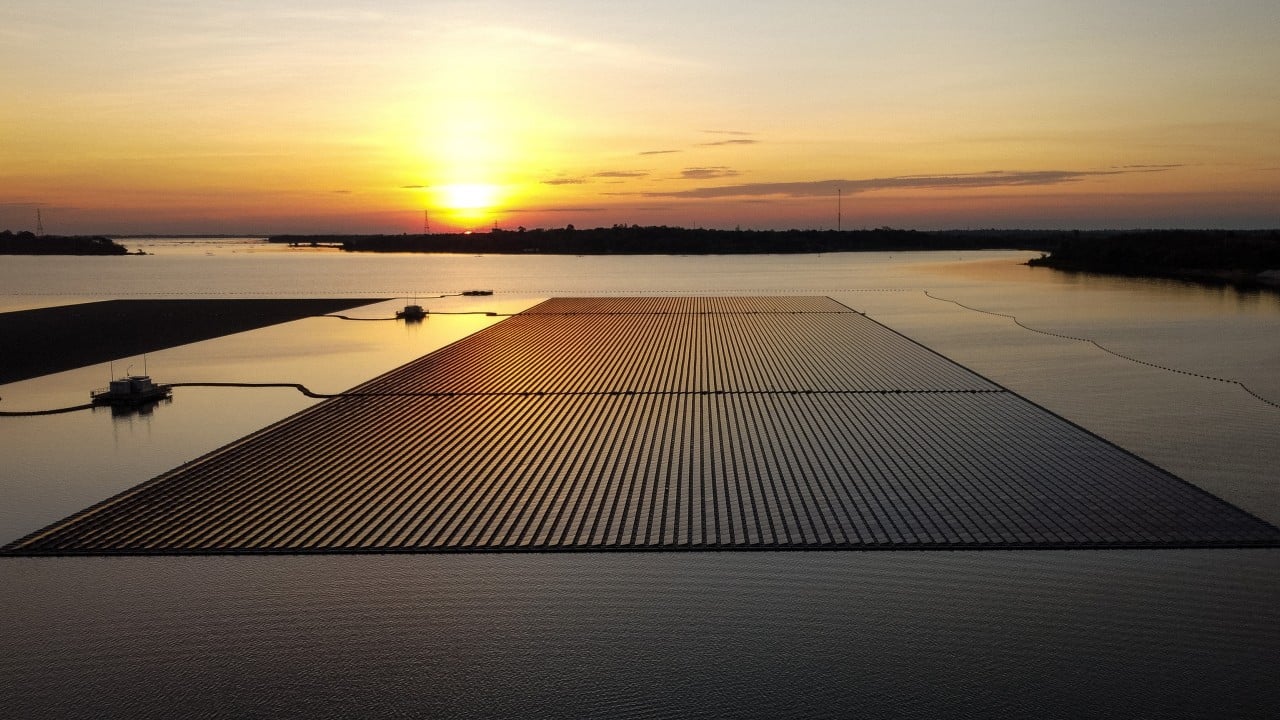
The rooftop looked like a mirror facing the sky. In the heavy heat of a Bangkok afternoon, those blue silicon panels drank the glare, turning an invisible rain of photons into quiet, humming volts of electricity. Down below, Somchai wiped the sweat from his forehead, looking at his monthly utility bill with a heavy knot in his stomach.
He had done what the advertisements said. He had invested his savings into a clean energy future, believing the promise that the sun belonged to everyone.
Instead, he found himself paying a tax on the daylight itself.
Across Thailand, a grand vision is colliding with the stubborn weight of economics. The national push for rooftop solar power was supposed to be a triumph. It was framed as an unstoppable march toward green independence, a decentralized grid where every home could become its own power plant. But beneath the glossy brochures and government projections lies a quiet, frustrating barrier. The people who need relief from high energy bills the most are discovering that the entry fee is simply too steep.
Consider what happens when a policy is built for corporations rather than cottages.
To understand the grid, you have to understand the math of survival. A large factory or a sprawling commercial warehouse can absorb the high upfront costs of installation. They amortize the expense across massive energy loads, turning capital expenditure into long-term savings within a few short years. For them, solar energy is an obvious spreadsheet victory.
For a household using minimal electricity, the equation fractures entirely.
Somchai’s modest home consumes just enough power to run a refrigerator, a few oscillating fans, and the lights that keep the night at bay. His monthly bill is relatively small. When he looked into installing a residential solar setup, the price tag loomed like a concrete wall. The hardware, the permits, the specialized inverter, the certified technicians—every layer of the bureaucratic and physical machinery added cost.
He did the calculations. At his current consumption rate, the break-even point stretched out for a decade. Ten years of waiting just to recover the initial cash outlay, assuming nothing broke, assuming the regulations didn't shift beneath his feet, assuming the government's net-billing buyback rates remained stable.
They did not remain stable.
Policy shifts introduced hurdles that turned enthusiasm into hesitation. The financial incentives for feeding surplus energy back into the national grid were dialed back, replaced by complex administrative structures that favored large-scale utility providers. For the average family, the math stopped making sense. Why spend thousands of dollars upfront to save a few hundred baht a month, especially when the rules of the game could change with a ministerial signature?
The result is a strange paradox. Thailand possesses an abundance of equatorial sunlight, a baking, relentless resource that beats down upon millions of rooftops every single day. Yet the adoption curve for low-power residential users has flattened into a plateau of quiet resistance.
They are not turning away from solar because they hate the environment. They are turning away because they cannot afford the privilege of being green.
This is the invisible flaw in many modern technological transitions. We assume that because a technology is clean, it is automatically democratic. We forget that transition requires capital, and capital has a habit of favoring those who already have it. When the barrier to entry remains locked behind high costs, green initiatives risk becoming an exclusive club for the affluent, leaving lower-income households trapped on the wrong side of the energy divide.
Step inside a neighborhood on the outskirts of Chiang Mai, and you can see the split with your own eyes. On one side of the lane, a newly built suburban estate features sleek, dark panels glistening on every roof, subsidized by corporate financing and high disposable incomes. Just twenty feet away, weathered wooden homes rely on grid power that strains under the weight of climate change, the owners watching the rising utility tariffs with quiet dread.
The air conditioner hums, stutters, and keeps running. The meter spins.
Government schemes aimed at boosting renewable adoption often focus on the macro level. They measure success in gigawatts added, carbon offsets calculated on grand spreadsheets, and international climate pledges met. Those are vital metrics. But they miss the human friction at the bottom of the ladder. If a policy fails to solve the liquidity crisis of the everyday citizen, it remains an elite blueprint rather than a societal shift.
To fix this, the approach has to change from the ground up.
Imagine a framework where micro-loans are as frictionless as a mobile payment, where installation costs are bundled directly into utility billing over twenty years without punishing interest rates, where neighborhood microgrids allow surplus energy to be traded locally without passing through layers of bureaucratic tollbooths. If solar energy is to become truly ubiquitous, it must make financial sense for the person who counts every baht, not just the corporation balancing a corporate social responsibility portfolio.
Until then, the blue panels will remain a luxury item. They will glitter in the tropical sun, silent monuments to a transition that promised everything to everyone, but delivered its rewards only to those who could afford the ticket to ride.
As the sun dips below the Bangkok horizon, painting the smog in bruised shades of violet and orange, the grid hums on. Somchai turns on a single fan to keep the stagnant air moving. Outside, his roof remains bare, cool, and quiet in the gathering dark.


