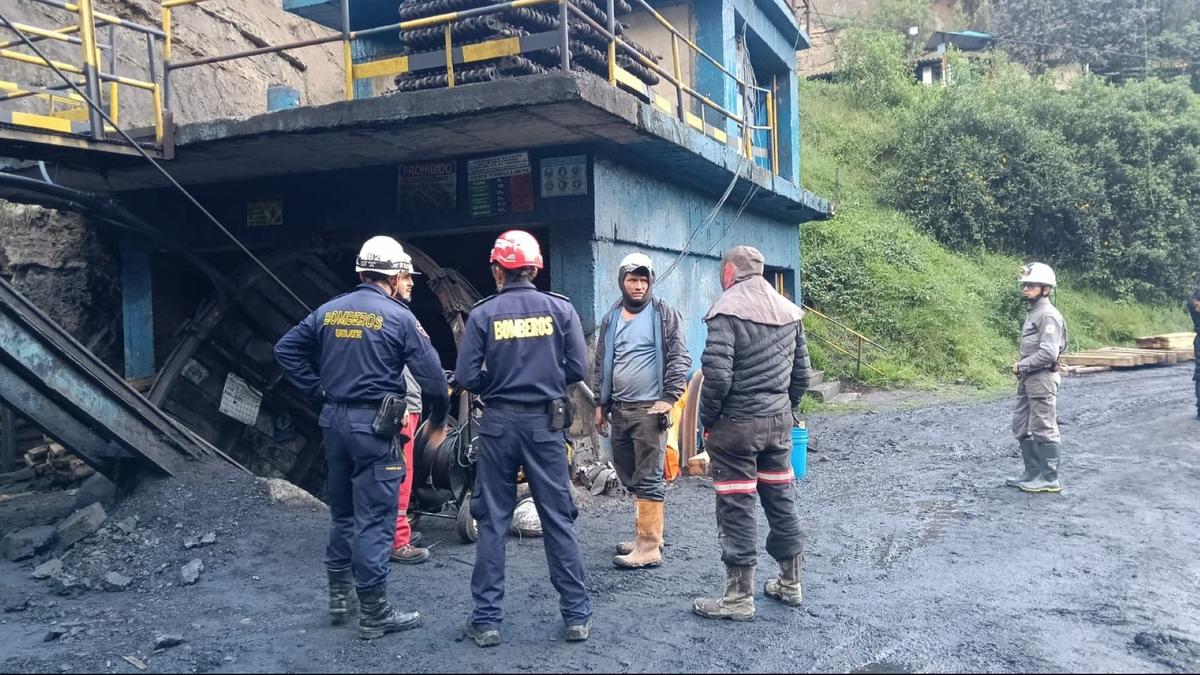
The fatal methane explosion in Sutatausa, Cundinamarca, serves as a grim validation of the systemic failure in subterranean safety protocols within the Colombian coal sector. When nine miners lose their lives in a single event—part of a larger cluster that claimed 21 victims in total—it is not an isolated accident but a failure of gas management architecture and regulatory enforcement. This event highlights a critical bottleneck in the Colombian energy transition: the reliance on small-to-medium scale mining operations that lack the capital depth to implement automated, real-time atmospheric monitoring.
The Chemistry of Instability: Methane Accumulation and Ignition
Subterranean coal mining is governed by the concentration of methane ($CH_4$) within the coal seams. In the Andean tunnels of Sutatausa, the risk is defined by the Lower Explosive Limit (LEL). Methane becomes explosive when its concentration in the air reaches between 5% and 15%. Below this range, there is insufficient fuel; above it, there is insufficient oxygen to sustain the reaction.
The explosion follows a predictable but preventable chain of causality:
- Desorption: As coal is extracted, trapped methane is released into the tunnel atmosphere.
- Ventilation Stagnation: If the mechanical ventilation system fails to maintain a cubic-meters-per-minute flow rate sufficient to dilute the $CH_4$ below 1%, the gas pockets reach the LEL.
- The Ignition Source: In under-regulated sites, this is typically a spark from non-intrinsically safe electrical equipment, friction from cutting tools, or unauthorized smoking.
The force of the Sutatausa blast was likely amplified by coal dust entrainment. An initial methane explosion kicks up fine coal dust, which then ignites in a secondary, more devastating wave of pressure. This secondary explosion often accounts for the majority of structural collapses and fatalities, as it consumes the remaining oxygen and replaces it with carbon monoxide ($CO$).
The Economic Architecture of Risk
The Colombian mining sector is bifurcated between massive multinational open-pit operations and thousands of small-scale underground mines. The Sutatausa disaster occurred in the latter, where the economic incentives for safety are often misaligned with operational reality.
Capital Expenditure vs. Safety Compliance
Implementation of a Continuous Emissions Monitoring System (CEMS) requires a significant upfront investment. For many local operators, the cost of installing sensors at 50-meter intervals throughout the gallery system exceeds the projected short-term profit margins. Instead, these mines often rely on handheld detectors. The limitation of handheld devices is human error: they only measure the atmosphere where the operator is standing, leaving "dead zones" in the upper corners of the tunnels where methane, being lighter than air, naturally pools.
The Regulatory Gap in Cundinamarca
The National Mining Agency (ANM) faces an asymmetrical challenge. While regulations for "Category III" mines (high-risk gas mines) are rigorous on paper, the frequency of physical inspections is insufficient to ensure that ventilation curtains and blowers are functioning 24/7. This creates a moral hazard where operators prioritize extraction speed over the mandatory "waiting periods" required after blasting to clear toxic gases.
Post-Explosion Logistics and the Oxygen Deficit
The recovery of the nine miners was delayed not by lack of will, but by the physics of the post-blast environment. The explosion creates an atmosphere known as afterdamp—a mixture of carbon dioxide, carbon monoxide, and nitrogen.
- Carbon Monoxide Toxicity: At concentrations above 1.28%, $CO$ causes immediate unconsciousness and death within minutes because it binds to hemoglobin 200 times more effectively than oxygen.
- Thermal Instability: The heat from the initial blast can linger in the rock face for days, risking a tertiary ignition if fresh oxygen is pumped in too quickly before the site is cooled.
Rescue teams must utilize Self-Contained Breathing Apparatus (SCBA) and move with extreme caution to avoid triggering further roof collapses. The structural integrity of a mine after a methane blast is compromised; the pressure waves shatter the timber or steel supports, turning the tunnel into a chaotic debris field.
Strategic Shift: Mandatory Automation and the "Safety Bond"
To prevent the recurrence of the Sutatausa tragedy, the Colombian mining framework must move beyond reactive fines and toward a structural overhaul of operational licenses.
The first step is the de-linking of safety monitoring from human intervention. Any mine classified as having high methane potential should be legally required to have an automated "kill switch" linked to atmospheric sensors. If methane levels hit 1.5%, the electrical grid for the entire mine should automatically deactivate, preventing any potential ignition source from functioning.
The second shift involves a Financial Safety Bond. Currently, the cost of a disaster is largely externalized to the state and the families of the victims. By requiring mining firms to hold high-value insurance bonds specifically for "gas-related incidents," the insurance industry becomes a secondary regulator. Insurers will refuse to cover mines that do not meet rigorous, sensor-based safety benchmarks, effectively pricing out high-risk, low-compliance operators from the market.
Mining in the Andean ridge cannot continue under the 20th-century model of "extraction at any cost." The transition to a modernized, safe, and regulated industry requires the immediate closure of all sites that cannot demonstrate real-time, digital gas-tracking capabilities. The nine lives lost in Sutatausa are a metric of the current system's obsolescence.