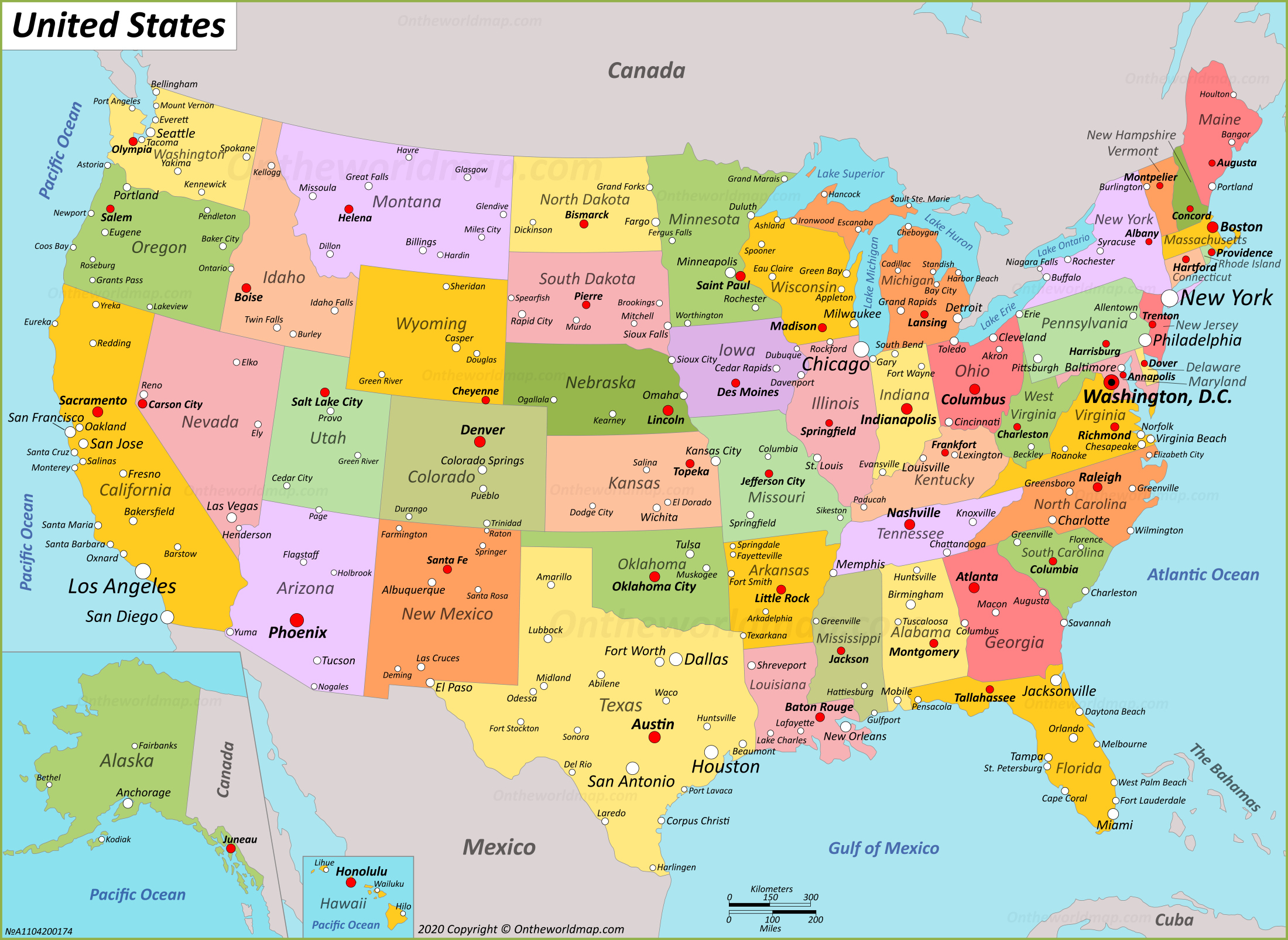
Canada’s economic proximity to the United States has transitioned from a geographical advantage to a strategic bottleneck. While the bilateral relationship historically provided a friction-less vent for Canadian surplus and a source of cheap capital, the emergence of American protectionist industrial policy and shifting global trade blocs has inverted this benefit. The Canadian economy now faces a systemic "concentration risk" where over 75% of exports are tied to a single market that is actively de-globalizing. Analyzing this shift requires moving beyond political rhetoric to examine the mathematical realities of trade elasticities, productivity gaps, and the diminishing returns of the North American integration model.
The Trilemma of Canadian Economic Sovereignty
The Canadian economic model rests on three legs that are increasingly at odds with one another: the maintenance of the United States-Mexico-Canada Agreement (USMCA) framework, the pursuit of independent climate and carbon pricing goals, and the necessity of attracting global investment to solve a chronic productivity crisis. Mark Carney’s recent observations regarding the "weakness" of these ties highlight a failure to adapt to the "America First" consensus that now dominates both sides of the U.S. political aisle.
This tension is best understood through the Integrated Dependency Function. In this framework, Canada's GDP growth is not merely correlated with U.S. demand; it is subordinated to U.S. regulatory whims. When the U.S. implements subsidies like the Inflation Reduction Act (IRA), Canada is forced into a "subsidy race" it cannot win fiscally, or it must accept the hollowing out of its manufacturing base.
The Mechanics of Asymmetric Integration
The asymmetry of the Canada-U.S. relationship creates three specific points of failure:
- Demand Elasticity and Monopsony Power: Because the U.S. is the primary buyer for Canadian energy and raw materials, it acts as a monopsonist. Canada lacks the pipeline and port infrastructure to pivot bulk exports to Asian or European markets rapidly. This lack of "outside options" reduces Canada’s bargaining power in trade renegotiations.
- The Productivity Divergence: While Canada has successfully grown its population through aggressive immigration, its capital investment per worker has stagnated. In contrast, the U.S. has seen a surge in tech-driven productivity. The result is a widening gap in real GDP per capita. Canada is essentially exporting low-value raw materials and importing high-value technology and services, a classic "staples trap" updated for the 21st century.
- Regulatory Arbitrage: As the U.S. moves toward deregulation or targeted industrial subsidies, Canada’s commitment to a national carbon price creates a cost-basis discrepancy. Without a North American border carbon adjustment mechanism, Canadian firms face higher operational costs than their U.S. competitors, incentivizing capital flight across the border.
The Erosion of the Security-Trade Nexus
For decades, Canada operated under the "Defense for Trade" unspoken agreement: by aligning with U.S. security interests and NORAD, Canada secured preferential economic treatment. This nexus is dissolving. The U.S. now views trade through the lens of "friend-shoring," but it defines "friends" based on specific domestic economic outcomes rather than historical alliances.
The vulnerability of the Canadian automotive sector illustrates this. The transition to Electric Vehicles (EVs) is governed by strict "Content of Value" requirements. Even within the USMCA, the U.S. has shown a willingness to interpret rules in a way that prioritizes domestic labor over integrated North American supply chains. Canada’s reliance on these integrated chains means that any shift in U.S. domestic policy is not a peripheral concern but a direct threat to the solvency of Ontario’s manufacturing heartland.
Quantifying the Opportunity Cost of the Status Quo
To understand why the U.S. tie is now a weakness, one must quantify the missed opportunities in non-U.S. markets. While the U.S. economy remains the world’s most dynamic, its growth is increasingly insular. The highest growth in middle-class consumption over the next two decades will occur in the Indo-Pacific.
Canada’s failure to diversify is a failure of infrastructure. The inability to complete east-west internal trade corridors or significant liquified natural gas (LNG) export capacity on the East Coast has locked Canada into a north-south axis. This axis is subject to the Law of Diminishing Geographic Returns. As U.S. domestic energy production (shale) increased, its need for Canadian imports shifted from a strategic necessity to a price-setting convenience. Canada is selling into a market that no longer "needs" its primary export in the way it did in the 1990s.
The Capital Outflow Problem
Data suggests a troubling trend in direct investment. Canadian pension funds—some of the largest institutional investors globally—are increasingly deploying capital in the U.S., Europe, and Asia rather than domestically. This "capital strike" within Canada’s own borders signals a lack of confidence in the domestic growth engine. When the smartest money in the country decides that the domestic regulatory environment and the over-reliance on a protectionist neighbor make for a poor risk-adjusted return, the structural weakness is confirmed.
Deconstructing the "Weakness" Hypothesis
The argument that U.S. ties are a weakness is often misconstrued as a call for isolation. In reality, it is a critique of Passive Alignment. Passive alignment occurs when a smaller economy adopts the standards, prices, and cycles of a larger neighbor without maintaining the internal agility to pivot.
- The Monetary Policy Constraint: The Bank of Canada is limited in how far it can diverge from the Federal Reserve’s interest rate path. If the BoC cuts rates to stimulate a flagging domestic economy while the Fed remains hawkish, the Canadian dollar (CAD) depreciates. While a lower CAD helps exporters, it spikes the cost of imported machinery and technology, further suppressing productivity-enhancing investments.
- The Talent Drain: The proximity to the U.S. labor market creates a "permanent brain drain" for high-skill sectors like software engineering and specialized medicine. The wage delta between Toronto and Austin or Vancouver and Seattle is often 40-60%. Canada bears the cost of educating this workforce, while the U.S. captures the lifetime tax revenue and innovation output.
Structural Rebalancing: The Non-USMCA Path
If the U.S. relationship is a structural weakness, the solution is not a retreat from the U.S., but a radical expansion of domestic and international agency. This requires a three-pronged approach to economic resilience:
1. Internal Trade Liberalization
It is currently easier for a business in British Columbia to trade with Washington State than with Quebec. Inter-provincial trade barriers cost the Canadian economy an estimated 3-4% of GDP annually. Eliminating these barriers is the most immediate way to build scale and reduce the necessity of U.S. market entry for small and medium-sized enterprises (SMEs).
2. Infrastructure as a Diversification Tool
Strategic autonomy is bought with steel and concrete. Canada requires:
- Deep-water ports capable of handling increased volumes to the CPTPP (Comprehensive and Progressive Agreement for Trans-Pacific Partnership) nations.
- Arctic Sovereignty Infrastructure: As the Northwest Passage becomes more navigable, Canada must control these trade routes to prevent them from becoming U.S.- or Russia-dominated corridors.
- Energy Grids: Linking provincial power grids to allow for the movement of clean energy from hydro-rich provinces to industrial hubs, reducing the carbon intensity of Canadian exports and making them more competitive under looming European Carbon Border Adjustment Mechanisms (CBAM).
3. The "Middle Power" Trade Strategy
Canada must leverage its position within the G7 and the CPTPP to form a "coalition of the middle." By aligning trade standards with other advanced economies that are also wary of U.S. protectionism and Chinese state-capitalism—such as Japan, Germany, and Australia—Canada can create a "rules-based" sanctuary. This reduces the binary choice between the two superpowers.
The Fiscal Reality of Transition
Moving away from a U.S.-centric model is not cost-free. It involves a "transition tax." Building new trade routes and subsidizing domestic industries to match U.S. incentives requires fiscal space that Canada is currently exhausting on social transfers and debt servicing. The debt-to-GDP ratio must be viewed not just as a fiscal metric, but as a limit on strategic maneuverability.
The "weakness" Carney refers to is ultimately a lack of Optionality. In financial terms, an option has value based on volatility and time. As the global order becomes more volatile, Canada’s "option" to trade with the rest of the world has expired because it failed to pay the "premium" of investing in diversification over the last twenty years.
The Path to Strategic Autonomy
The immediate priority for Canadian policymakers is to treat the upcoming 2026 USMCA review not as a standard negotiation, but as a defensive operation. The U.S. will likely demand concessions on dairy, digital services taxes, and automotive rules of origin. Canada’s only leverage in this scenario is its role as a critical mineral supplier for the green transition.
Canada possesses massive deposits of lithium, nickel, and cobalt—materials the U.S. desperately needs to decouple from China. However, this leverage is only effective if Canada develops the processing and mid-stream capacity domestically. Exporting raw ore to the U.S. for processing simply continues the "staples trap" cycle.
The strategic play is to move up the value chain. Canada should condition U.S. access to raw critical minerals on the establishment of high-value manufacturing and R&D facilities within Canadian borders. This shifts the relationship from one of dependency to one of Mutual Vulnerability. Mutual vulnerability is a more stable state for a middle power than simple integration, as it ensures that any U.S. attempt to "punish" Canada through trade barriers carries a significant cost to U.S. industrial goals.
The era of the "borderless" North American economy is over. The new era is defined by fragmented blocks and "geoeconomic" competition. Canada’s historical reliance on the U.S. was a luxury of the unipolar moment. To thrive now, Canada must execute a hard pivot toward internal efficiency and global optionality, or accept a future as a de-industrialized satellite of an increasingly inward-looking United States.