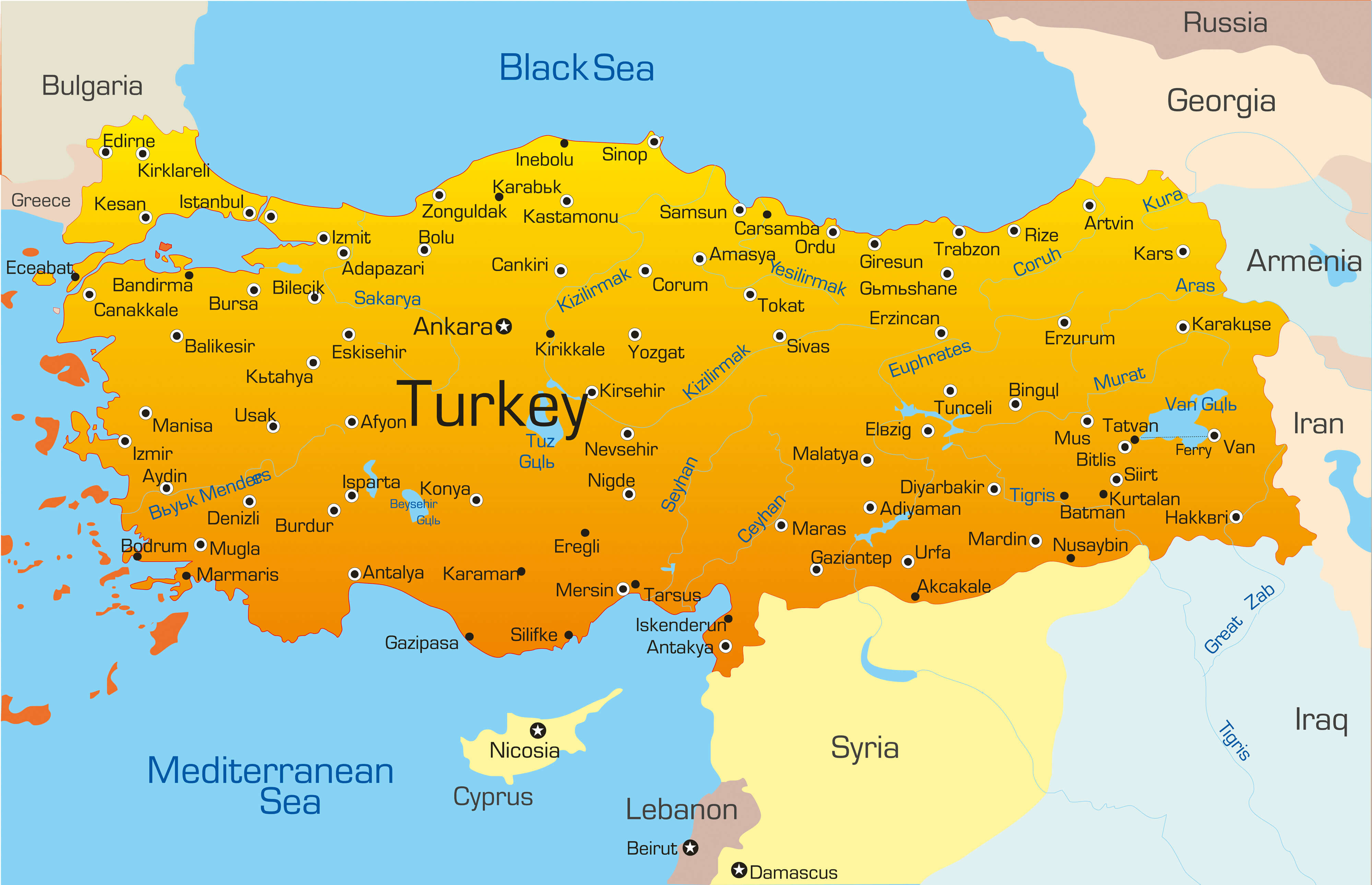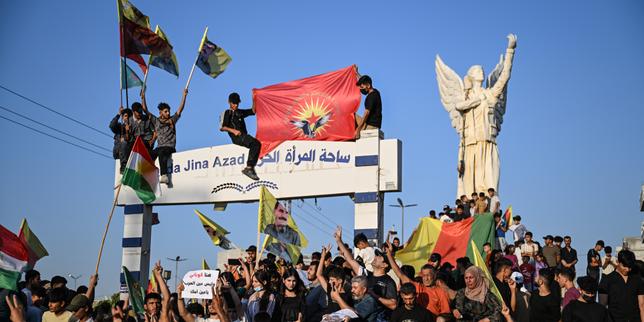
The political restructuring of post-transition Syria under Ahmed al-Sharaa rests on a fundamental institutional contradiction: the drive toward hyper-centralized state sovereignty colliding with entrenched de facto autonomy in the northeast. Observers tracking the geopolitical friction points in Kobane and the broader Jazira basin frequently misdiagnose the conflict as a simple ethnic binary. In operational terms, the friction is a classic state-building bottleneck. Central authorities in Damascus face a high transaction cost in absorbing non-state armed actors who control critical resource nodes, including hydrocarbon reserves, major hydroelectric infrastructure, and international border crossings.
Deconstructing the integration matrix reveals three distinct operational variables dictating whether peripheral regions submit to central authority or descend into prolonged insurgency: resource asymmetry, security architecture consolidation, and legal-constitutional harmonization.
The Resource Monopoly and Revenue Extraction
The Autonomous Administration of North and East Syria operated for over a decade as a self-sustaining fiscal unit. By retaining control over the Euphrates River dams, such as Tabqa, and key agricultural belts in Raqqa and Hasakah, the administration generated independent revenue streams that bypassed the central treasury in Damascus.
When central state forces launched military operations to reclaim these assets, the strategic objective was not merely territorial expansion, but fiscal consolidation. Modern state capacity depends on tax collection and resource centralization. Without control over the country's primary grain and oil producing sectors, the transitional government in Damascus cannot stabilize its currency, fund public sector payrolls, or project legitimate authority.
The integration agreement brokered under military pressure forces a transfer of these economic nodes to state ministries. However, the mechanical transfer of infrastructure does not guarantee administrative efficiency. Local administrative bodies accustomed to decentralized management now face bureaucratic subordination to a transitional government whose institutional priorities lean heavily toward centralized fiscal oversight.
Security Sector Consolidation and the Militia Dilemma
The primary structural hazard in any political transition involving non-state military factions is the disarmament, demobilization, and reintegration process. The Syrian Democratic Forces maintained a professionalized, combat-tested command structure backed by external coalition partners, numbering tens of thousands of active-duty personnel.
Damascus pursued a dual-track strategy combining targeted military coercion with nominal concessions regarding cultural rights. The integration framework dictates the individual absorption of militia members into regular state security forces rather than the preservation of bloc units. This design choice is intentional. Preserving autonomous military sub-factions within a unified state structure creates a fractured chain of command prone to internal coup risks or external proxy alignment.
Yet, individual integration carries high operational friction. Fighters accustomed to decentralized command under local councils resist subordination to a centralized Ministry of Defense, particularly given historical distrust rooted in ideological divergences and regional security dynamics. The security dilemma is acute: local populations fear punitive state interventions, while central planners view independent armed formations as an existential threat to unitary sovereignty.
Constitutional Recognition Versus Institutional Autonomy
To mitigate outright insurgency, the transitional administration issued presidential decrees recognizing Syrian Kurds as an essential component of the national fabric and granting formal status to the Kurdish language. From a strategic communication standpoint, these concessions decouple cultural identity from political autonomy.
The state offers linguistic and cultural preservation in exchange for the total dismantling of parallel governance structures. This creates a zero-sum political market. Regional leadership groups face a stark choice between accepting minority status within a centralized framework or maintaining resistance at the cost of total economic and military isolation.
While targeted outreach to local intellectuals and community figures in hubs like Kobane helps fracture unified regional opposition, it fails to resolve the institutional vacuum left by the retraction of local governance councils. Centralized appointments for provincial governors in Hasakah and Raqqa signal a return to pre-2011 administrative models, substituting local representation with executive fiat managed from the capital.
Strategic Execution for Complete Subordination
The trajectory of peripheral integration in northern Syria depends entirely on the central government's administrative bandwidth. Absorbing millions of citizens across restive governorates requires more than military victories or executive decrees; it demands institutional incentives that outweigh the perceived security risks of submission.
If Damascus fails to provide basic municipal services, security guarantees against external incursions, and equitable economic participation, the current ceasefire will degrade into a low-intensity asymmetric conflict. Central planners must prioritize the professionalization of local security cadres under state oversight while respecting administrative decentralization limits to prevent administrative gridlock. The structural imperative for Damascus remains clear: centralize the fiscal and security apparatus without triggering a permanent alienation of the demographic base.