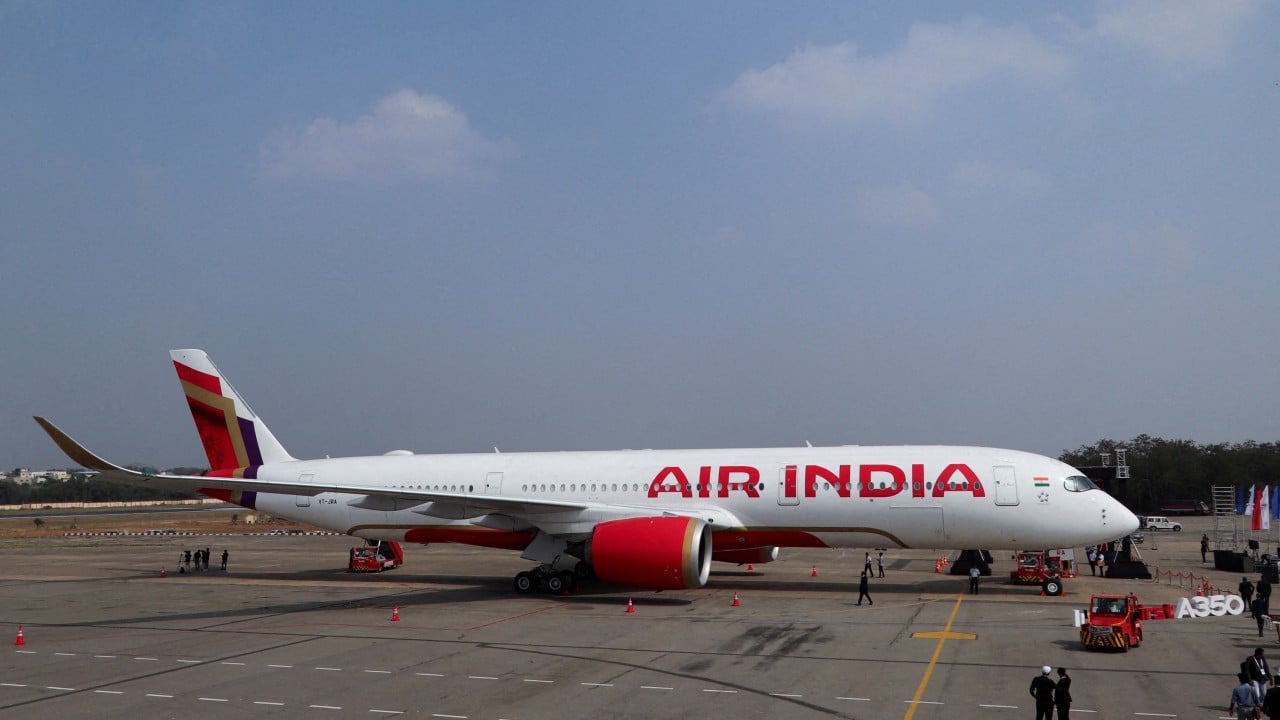
Capital allocation within state-linked conglomerates often strains the boundary between commercial enterprise and sovereign exposure. When Air India petitioned its primary stakeholders, Tata Sons and Singapore Airlines, for an equity injection totaling $1.5 billion, the request triggered an immediate legislative confrontation inside Singapore's parliament. Kenneth Tiong Boon Kiat, a member of parliament representing the opposition Workers' Party, formally challenged the utilization of state-owned investment capital to absorb foreign carrier losses. This friction exposes the underlying mechanics of multi-tier ownership models, where state-backed holding entities maintain stakes in commercial flag carriers that subsequently take on high-risk international joint ventures.
The structural architecture of this investment relies on a cascading ownership chain. Temasek Holdings acts as the majority shareholder of Singapore Airlines, which in turn holds a 25.1 percent equity stake in Air India. While corporate governance principles dictate that operating entities manage their own balance sheets, sovereign-linked investment funds introduce a complex risk transfer mechanism. When Air India and its subsidiary, Air India Express, report combined annual losses exceeding $2.3 billion, the financial degradation transmits upward through the equity tiers. The core economic debate centers on whether capital provisions to foreign turnaround targets compromise the parent entity's primary mandate of maintaining domestic transport infrastructure and delivering risk-adjusted returns to the state. Meanwhile, you can find similar developments here: Why Your Fanta Has Triple the Sugar Depending on Where You Buy It.
The Cost Function of Multi-Hub Expansion
Singapore Airlines justified its initial 2024 entry into the Air India ecosystem—accelerated by the consolidation of Vistara—as a strategic necessity to secure a foothold in one of the world's fastest-growing aviation markets. Traditional network carrier logic dictates that single-hub models face terminal constraints dictated by local population size and geographic boundaries. To scale beyond these limits, legacy carriers deploy equity investments to establish multi-hub operations, capturing feed traffic from high-growth hinterlands like India.
However, the cost function of this strategy has dramatically shifted due to operational headwinds. Air India's operational turnaround faces severe friction points: To see the full picture, check out the recent article by Investopedia.
- External geopolitical shocks, including airspace restrictions over specific regional corridors.
- Escalating maintenance and fleet renewal expenses required to overhaul an aging inherited asset base.
- Structural labor and integration costs stemming from the absorption of multiple legacy entities under the Tata umbrella.
These variables combine to extend the break-even timeline well beyond initial projections. Market analysts project that meaningful earnings contributions from the Indian carrier remain several years away, rendering the asset a persistent capital sink.
The Governance and Fiduciary Dilemma
The parliamentary challenge scheduled for the September 8 session introduces a distinct layer of regulatory oversight. The inquiry forces transport authorities to evaluate whether foreign associate losses impair Singapore Airlines' statutory capacity to deliver essential transport services. Under the framework of the Civil Aviation Authority of Singapore Act, designated flag carriers carry specific operational duties that take precedence over speculative foreign expansions.
Private shareholders operate under a risk-reward matrix where capital loss is an accepted outcome of strategic betting. Conversely, sovereign wealth vehicles operate under a public trust doctrine. When public-linked investment capital flows into foreign restructuring projects characterized by compounding liabilities, public scrutiny intensifies. The legislative pushback questions the validity of risk-sharing models where minority foreign partners are expected to underwrite capital calls driven by systemic domestic market transformations in the target country.
Strategic Capital Allocation Priorities
The ongoing deliberation over the $1.5 billion funding request forces corporate leadership at Singapore Airlines to weigh the opportunity cost of continued capital injections. Every dollar committed to servicing Air India's cash burn is a dollar diverted from core fleet modernization, digital infrastructure enhancement, or yield management optimization at the primary Singapore hub.
Management must establish rigid capital allocation guardrails that decouple the parent company's balance sheet from unconstrained foreign liabilities. If the turnaround trajectory of the Indian carrier requires perpetual equity infusions without a definitive path to operational self-sufficiency, minority stakeholders face a classic sunk cost trap. The structural remedy requires transitioning from open-ended equity support to performance-linked debt or staged milestone funding, insulating the domestic balance sheet from external restructuring shocks.