Economic statecraft fails when the target possesses an asymmetric exit vector. The United States Treasury's maximum pressure campaign against Iran relies on a foundational structural premise: that secondary sanctions exert total gravity over international trade networks by forcing foreign entities to choose between access to the United States dollar clearing system or commerce with a sanctioned state. This logic holds relative efficacy within compliant jurisdictions or vulnerable middle-income economies. Against the People's Republic of China, however, the mechanism encounters severe architectural friction. China absorbs the vast majority of exported Iranian petroleum through decentralized channels, neutralizing Washington's capacity to induce complete fiscal starvation without triggering systemic bilateral retaliation.
To understand why the new economic squeeze hits a structural ceiling, one must deconstruct the tripartite architecture of the Sino-Iranian energy corridor.
The Three Structural Pillars of the Shadow Energy Corridor
The trade route linking Iranian oil fields to Chinese processing plants operates entirely outside mainstream western financial architecture. This network persists through specific operational components designed to absorb external shocks.
- The Independent Refiner Absorber Layer: Major Chinese state-owned energy enterprises strictly avoid Iranian crude to protect their exposure to dollar-denominated assets. The trade relies instead on independent domestic refiners, commonly designated as teapot refineries. These localized processing units operate with narrow margins, process heavy sour crude efficiently, and maintain negligible exposure to western capital markets, rendering traditional asset freezes functionally inert.
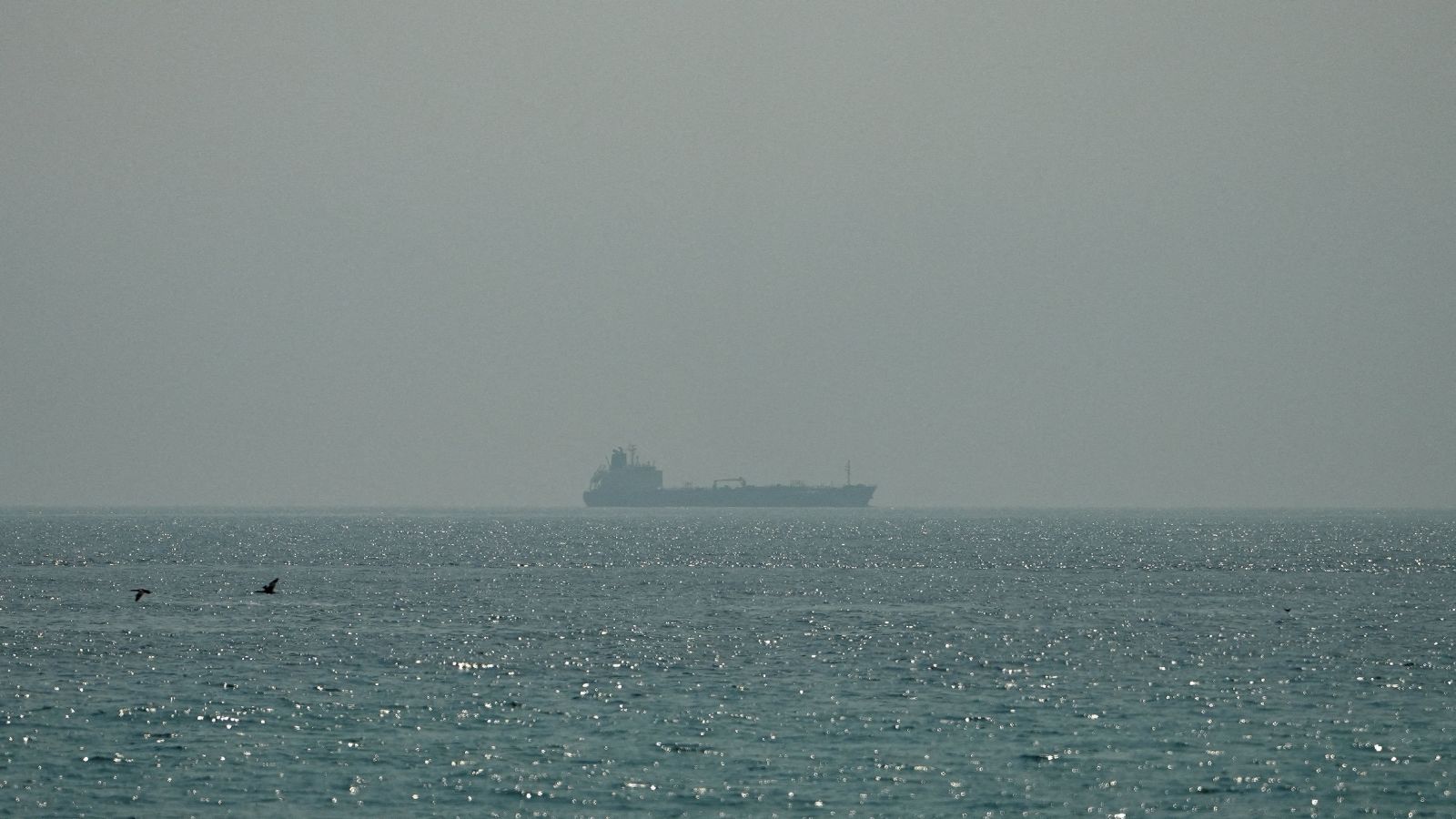
- The Jurisdictional Laundering Matrix: Iranian crude does not move directly from Kharg Island to Shandong ports. Cargoes undergo multiple ship-to-ship transfers in international waters, where document scrubbing rebrands the origin as Malaysian or Indonesian. Financial settlement bypasses the Society for Worldwide Interbank Financial Telecommunication network entirely, clearing instead through localized bilateral currency loops, clearing houses, and intermediary brokerages in Hong Kong and the United Arab Emirates.
- The Strategic State Insurance Policy: Beijing views the energy trade through the lens of macro-resource security and geopolitical hedging. While state-level actors prefer diplomatic insulation, ministries provide tacit protection to the logistics chain, instructing domestic entities to disregard unilateral western edicts that violate multilateral norms.
The Cost Function of Secondary Enforcement
When the Office of Foreign Assets Control targets individual shipping registries, shadow fleet tankers, or localized teapot refineries, it imposes localized friction rather than systemic collapse. The economic calculus governing this interaction reveals the limitations of the enforcement mechanism.
$$C_{enforcement} > V_{compliance}$$
When the marginal cost of enforcing blanket prohibitions on a superpower's sovereign trade network outweighs the diplomatic and inflationary cost to the sanctioning state, enforcement scales down. Washington faces an acute optimization problem. Aggressively blacklisting major Chinese financial institutions or systemically important banks would rupture bilateral trade stability ahead of planned presidential summits. Consequently, the United States Treasury restricts its punitive actions to the periphery of the network—sanctioning single-purpose shell companies, isolated chemical plants, and fragmented maritime operators.
This creates a high-turnover substitution market. For every shadow tanker detained or teapot refinery penalized, capital and logistics providers spin up alternative corporate shells within days. The structural elasticity of the shadow fleet absorbs the regulatory blow, allowing crude to flow at a slightly wider discount.
The Macroeconomic Ceiling on Tehran
While China insulates Tehran from total fiscal extinction, the domestic Iranian economy remains under immense structural stress. The efficacy of the pressure campaign is not binary; it operates on a sliding scale of degradation.
Domestic inflation inside Iran exceeds extreme historical thresholds, driven by the collapse of rial purchasing power and the constriction of traditional regional trade routes through the Persian Gulf. Secondary financial nodes in the UAE and Iraq, once utilized to repatriate and convert oil proceeds, face tightening compliance standards. Iran is forced to accept heavily discounted pricing for its barrels, routing revenues into illiquid local currencies, gold-for-oil barter agreements, and restricted bilateral trade credits with Beijing.
This dynamic establishes a distinct operational ceiling. The pressure campaign successfully restricts Iran's access to high-value hard currency, crippling state budgets and forcing systemic domestic austerity. Yet, it stops short of inducing regime collapse or complete cessation of hostilities, because the marginal barrel of oil continues to find a home inside China's independent refining sector. Beijing calibrates its compliance precisely: deep enough to avoid a direct retaliatory confrontation with Washington, but broad enough to keep Tehran solvent.
The Strategic Allocation Play
To bypass the structural impasse imposed by Chinese sovereign non-compliance, federal enforcement must abandon broad territorial threats and pivot toward targeted asset interception at choke points. The operational play requires shifting focus from downstream financial institutions in Beijing to upstream logistics nodes within maritime transit corridors. Interdicting physical vessel transfers, seizing documented shell company accounts at the point of maritime insurance underwriting, and penalizing specific port services in intermediary transshipment hubs will compress margins further. Unless enforcement targets the physical maritime insurance and flag-state registries operating out of compliant third-party jurisdictions, the corridor will continue to clear transactions through the noise of the shadow economy.