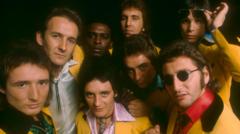
The death of Paul Dixon signifies more than the passing of a regional musician; it marks the erosion of a specific mid-to-late 20th-century commercial music model defined by high-frequency touring and the curation of nostalgia as a primary revenue stream. While mainstream music analysis often focuses on the creative disruption of the 1970s, the economic and cultural staying power of Showaddywaddy—a band that secured 23 Top 40 singles—relied on a rigid adherence to aesthetic consistency and a rigorous live performance schedule. Dixon’s role as a guitarist in the later iterations of this ensemble highlights the mechanics of "legacy brand maintenance" within the UK entertainment industry.
The Economic Architecture of Revivalism
Showaddywaddy did not function as a standard rock entity focused on iterative creative evolution. Instead, the band operated as a high-fidelity recreation of the 1950s rock-and-roll ethos, filtered through the production values of the 1970s. This created a dual-layer nostalgia trap that ensured long-term viability.
- The Primary Value Proposition: Delivering a standardized, high-energy interpretation of rockabilly and doo-wop that appealed to a demographic seeking refuge from the experimentalism of prog-rock and the aggression of punk.
- The Revenue Engine: A commitment to the "endless tour" model. For musicians like Dixon, joining such an established brand meant stepping into a refined operational machine where the setlist, choreography, and visual identity (the iconic teddy boy drapes) were non-negotiable assets.
The band’s ability to remain "the hardest working band in Britain" was not a marketing slogan but a logistical necessity. In the absence of contemporary chart dominance, the cash flow shifted entirely to ticket sales and merchandise within the provincial theater circuit. This circuit requires musicians who possess not just technical proficiency, but the physical stamina to sustain 100+ dates annually.
Technical Integration and the Dixon Tenure
Paul Dixon joined Showaddywaddy during a phase of institutionalization. By the time he transitioned into the lineup, the band had already moved from being a chart-topping pop sensation to a heritage act. His contribution was defined by technical stability.
In a legacy act, the lead guitarist's function is not to reinvent the sonic profile but to preserve the "acoustic signature" of the original hits. This involves:
- Tonal Fidelity: Replicating the specific slap-back delay and clean, twang-heavy guitar tones characteristic of 1950s records, while maintaining the volume levels required for modern venues.
- Choreographic Synchronization: Showaddywaddy’s live appeal is inextricably linked to synchronized movement. A guitarist in this context is a visual performer as much as a rhythmic one. The failure to maintain the physical "theatre" of the performance would result in a direct degradation of the brand value.
Dixon’s tenure represented the professionalization of the "replacement member" role. In the lifecycle of a long-running band, there is a point of inflection where the brand outgrows the individual founders. Dixon’s integration proved that the Showaddywaddy intellectual property (IP) could survive personnel shifts if the new hires met a specific threshold of technical competence and cultural fit.
The Geography of the Fanbase
The tributes following Dixon's death reveal a hyper-localized concentration of support, primarily within the East Midlands and the UK’s coastal resort towns. This geographic data point is critical. Showaddywaddy’s longevity was underpinned by a deep penetration of the "working men’s club" circuit and municipal theaters—venues that are often overlooked by metropolitan critics but serve as the backbone of the UK’s domestic entertainment economy.
This circuit operates on a "trust-based" attendance model. Audiences return to see Showaddywaddy because the brand guarantees a specific emotional ROI (return on investment). Dixon was a steward of this guarantee. When a member of such a band passes, the loss is felt as a rupture in a community ritual rather than just the end of a musical career.
Casualties of the Touring Model
The physical toll of maintaining a legacy act is a variable rarely quantified in music journalism. The "show must go on" ethos necessitates a grueling lifestyle of constant travel, irregular sleep cycles, and high-pressure performance environments.
For a guitarist like Dixon, the "cost function" of this career includes:
- Mechanical Stress: The repetitive strain of performing high-tempo rock-and-roll night after night.
- Institutional Pressure: The burden of representing a band with 50 years of history. Any lapse in performance quality doesn't just reflect on the individual; it tarnishes a decades-old legacy.
The transition from the "glam-rock" era of the 1970s to the modern era saw many of Dixon’s contemporaries struggle with the shift from celebrity to working-class musician. Dixon, however, appeared to navigate this by embracing the role of the "professional practitioner." He was a component in a larger mechanism that provided a specific service to a specific demographic.
The Durability of the Teddy Boy Aesthetic
The visual branding of Showaddywaddy—creepers, drainpipe trousers, and vibrant drapes—serves as a semiotic shorthand for a specific era of British rebellion that has since been sanitized into family-friendly entertainment. This transformation is a masterclass in brand pivot.
By the time Dixon was performing, the "Teddy Boy" look was no longer a signifier of juvenile delinquency but a costume of comfort. The band effectively commodified a subculture. Dixon’s role was to inhabit this costume with enough authenticity to satisfy the "purists" while remaining accessible enough for the general theater-going public.
The mechanism of this success relies on Consistency over Innovation. In the entertainment industry, innovation often carries a high risk of alienating the core user base. Showaddywaddy’s refusal to innovate was their greatest strategic strength, and Dixon was a vital operative in maintaining that stasis.
Structural Challenges for the Heritage Circuit
Dixon's death occurs at a time when the UK heritage touring circuit is facing significant headwinds.
- Rising Operational Costs: The logistics of touring (fuel, venue hire, insurance) are increasing at a rate that outpaces ticket price elasticity for their core demographic.
- Demographic Thinning: The original audience that grew up with the 1970s revival of the 1950s is aging out of the live music market.
- Talent Attrition: As original and long-term members like Dixon pass away, the "authenticity" of the brand faces diminishing returns.
The question for the remaining management of such acts is whether the brand can eventually become a "ship of Theseus"—an entity where every original part has been replaced, yet it still claims to be the same object. Dixon was a crucial bridge in this transition, providing a link between the founding members and the future of the ensemble.
Strategic Position of the Professional Sideman
The industry often ignores the "professional sideman" in favor of the "frontman." However, the viability of the UK music industry depends on the technical class of musicians like Dixon. These are the individuals who ensure that the intellectual property of the 1970s remains a living, breathing, revenue-generating asset.
Dixon’s career trajectory serves as a blueprint for the "middle-class musician." He did not seek the volatile highs of global superstardom, but rather the stable, recurring revenue of a specialized performer within a niche but high-volume market.
The tributes from his peers highlight a "reliability index" that is the gold standard in the touring world. In a high-stakes environment where a single missed show can result in five-figure losses for the promoter and the band, Dixon’s presence represented a stabilized asset.
The Future of the Showaddywaddy IP
With the loss of Dixon, the band faces a tactical decision: do they seek a replacement who can replicate his specific performance style, or do they use this as an opportunity to recalibrate the show’s technical direction?
Given the band's history, the likely path is the "direct replacement" strategy. The Showaddywaddy brand is built on the illusion of timelessness. To change the formula now would be to admit the passage of time—something their audience pays to forget.
The legacy of Paul Dixon is ultimately tied to the preservation of a specific sound that, while derivative of the 1950s, became an original British institution in its own right. His work was not about creative expression in the traditional sense, but about the rigorous maintenance of a cultural touchstone.
To honor this legacy, industry stakeholders must recognize the specialized skills required to sustain a "nostalgia asset" over multiple decades. This involves a combination of technical precision, physical endurance, and a deep understanding of the audience's psychological needs. The "Showaddywaddy Model" remains a potent example of how to manage a music brand long after its chart relevance has faded, provided it is staffed by professionals of Dixon's caliber.
Assess the current roster of legacy acts within your portfolio and determine if they possess the "Dixon-standard" of technical and visual consistency; if not, initiate a recruitment strategy focused on session-grade reliability rather than creative flair to ensure the long-term protection of the brand's touring revenue.