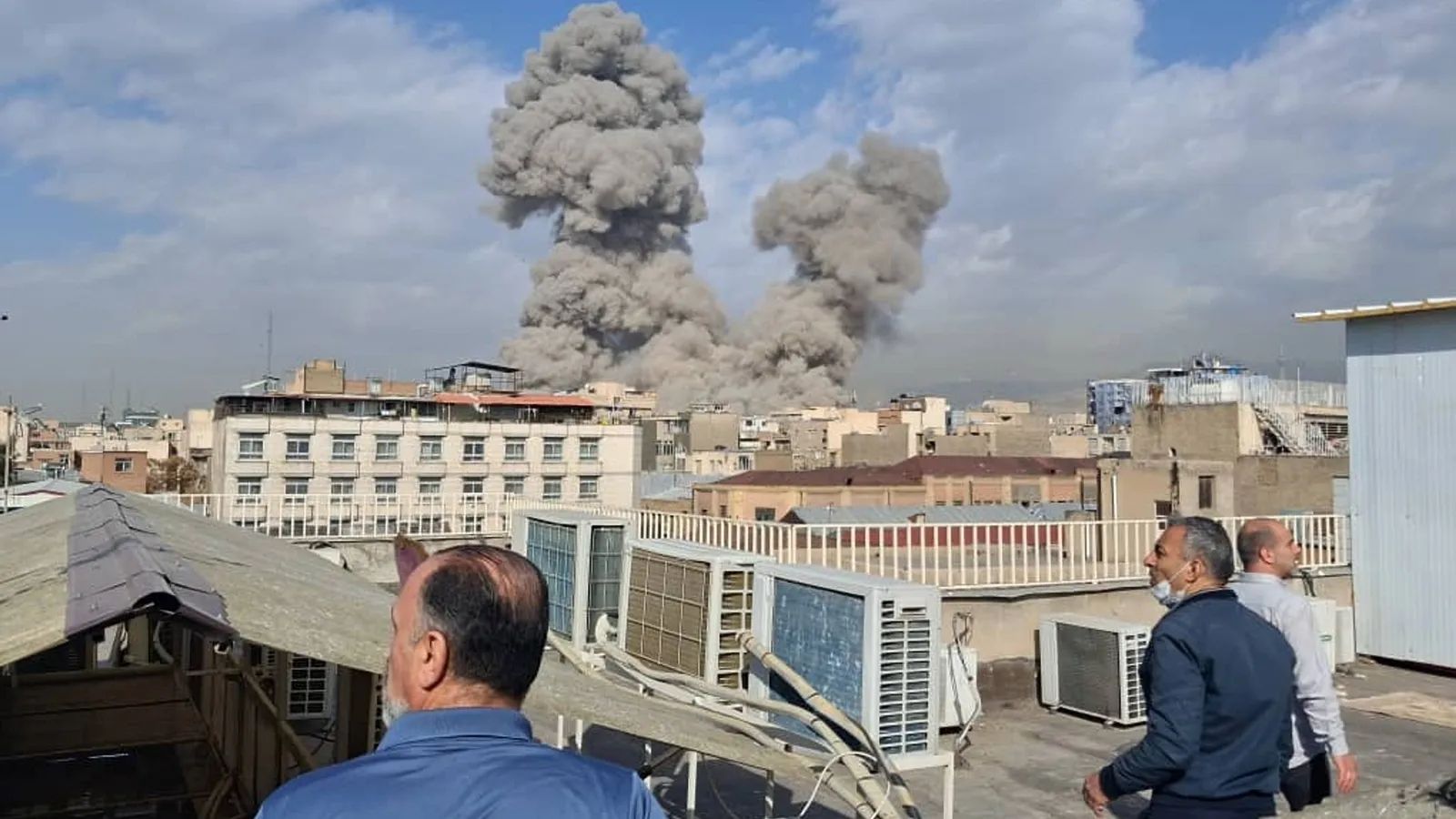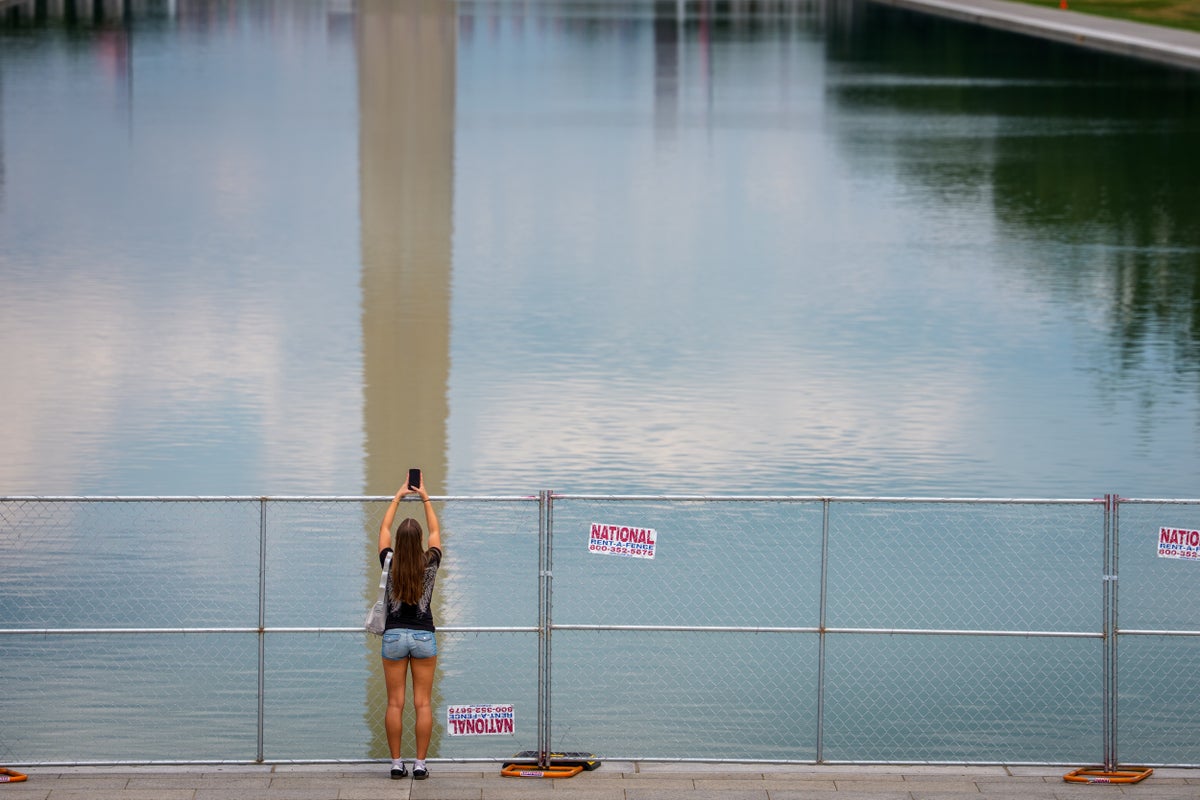
Compressing a multi-year civil engineering project into a two-week political timeline creates an unavoidable compounding failure mode. The recent closure and containment of the Lincoln Memorial Reflecting Pool—now ringed by security fencing following extensive material delamination and severe biological blooms—is not an isolated incident of vandalism, but the predictable output of systemic compressed-schedule risk. When industrial coatings are applied without adequate curing windows, structural degradation occurs regardless of subsequent intervention strategies.
An evaluation of the $16 million capital campaign reveals how compressed procurement, material incompatibility, and flawed ecological mitigation combined to force an indefinite operational shutdown of one of the nation's most high-profile public spaces.
The Triad of Accelerated Project Cascades
The operational failure of the Reflecting Pool makeover stems from three interconnected engineering bottlenecks that were bypassed to meet arbitrary calendar deadlines.
1. The Curing and Adhesion Deficit
Industrial sealants and epoxy-based coatings applied to massive concrete hydraulic structures require highly specific environmental conditions and strict outgassing windows to achieve maximum cross-linking density.
- The Shortcut: The project shifted from a standard multi-month rehabilitation schedule to a rapid-application directive.
- The Mechanism: Applying a dense coating, designated as "American flag blue," over an aged, porous concrete slab trapped moisture within the substrate. As solar radiation heated the pool base, vapor pressure built beneath the impermeable membrane, causing osmotic blistering and sheet delamination.
- The Result: Large sheets of the polymer liner detached and floated to the surface. This mechanical failure was initially attributed to external sabotage, but physical material diagnostics point directly to adhesion loss from substrate moisture.
2. Accelerated Biological Proliferation
Shallow, stagnant bodies of water function as massive solar collectors. Painting the dark grey concrete a vibrant blue altered the thermal absorption and light-reflection dynamics of the water column.
- The Inoculation Myth: While administrative statements blamed external actors for intentionally introducing agricultural fertilizers to spark cyanobacteria blooms, the actual mechanism is thermodynamic.
- The Kinetic Chain: The combination of intense summer sunlight, high dissolved oxygen disruption from un-cured chemical components, and a lack of functional bio-filtration created an ideal incubation chamber for toxic blue-green algae. The introduction of hydrogen peroxide as an emergency shock treatment oxidized the organic matter but simultaneously accelerated the breakdown of the already weak chemical bonds holding the liner to the concrete.
3. Procurement and Quality Control Compression
The utilization of emergency no-bid contracting exemptions bypassed standard federal procurement vetting protocols.
[Compressed Timeline] ──> [No-Bid Contract Emergency Exemption] ──> [Vetting Bypass] ──> [Systemic Material Failure]
By awarding contracts directly to specialized boutique entities—such as the rapid deployment of proprietary nanobubble ozone systems—the project lost the technical redundancy and oversight inherent in multi-stage civil engineering reviews. When the temporary mitigation infrastructure failed or went offline, the system possessed zero buffer capacity, causing an immediate regression to ecological stagnation.
The Cost Function of Rapid Remediation
The original public projections claimed the infrastructure updates would require less than $2 million and conclude within 14 days. The real-world cost curve of hydraulic engineering projects demonstrates a non-linear scale when initial phases are executed improperly.
| Phase / Component | Stated Projection | Documented Expenditure / Realized Status |
|---|---|---|
| Initial Surface Prep & Coating | $1.8M – $2.0M | $13.1M – $16.0M (Contract Escalation) |
| Algae Mitigation Infrastructure | Standard Maintenance | $1.7M (No-Bid Supplemental Contract) |
| Operational Timeline | 2 Weeks | Indefinite Fencing / Rolling Closures into 2027 |
The financial trajectory expanded because remediation in civil engineering is always more capital-intensive than sequential execution. Stripping a failed, partially bonded industrial epoxy layer requires high-pressure hydro-demolition or abrasive sandblasting across the entire 340,000-square-foot footprint. This process damages the underlying historic concrete layer, driving up structural restoration costs before a secondary, properly spec'd coating can even be considered.
Security Enclosures as Project Mitigation Tools
The installation of heavy perimeter fencing around the asset serves a dual purpose that balances security with risk management. Ostensibly deployed to protect a crime scene from further "activist vandalism," the physical barrier fundamentally serves to manage public perception and legal liability.
As long as the asset remains open to the public, the peeling sheets of polymer liner and recurring cyanobacteria blooms present an immediate public relations vulnerability and a literal safety hazard. Isolating the perimeter removes the asset from public scrutiny, halts the citizen-led documentation of material degradation, and allows industrial maintenance vehicles to cycle through the site without navigating pedestrian traffic.
The primary limitation of this containment strategy is that it extends the asset's economic and cultural downtime. By cordoning off the central axis of the National Mall, the footprint transforms from an active civic space into a static industrial work site.
The Recommended Strategy
To salvage the structural integrity of the asset and eliminate the recurring cycle of draining, chemical shocking, and peeling, the management framework must shift from political expedience to rigorous asset management:
- Halt Short-Term Chemical Over-Dosing: Immediately cease the large-scale dumping of hydrogen peroxide and temporary deployment of unverified mechanical filtration loops, which are degrading the remaining substrate adhesion.
- Execute a Total Material Drawdown: Fully drain the pool and execute a comprehensive Forensic Engineering Analysis via independent third-party testing labs. Core samples must be taken to measure moisture vapor emission rates (MVER) within the concrete bed.
- Mandate a Structural Strip and Long-Cycle Cure: Strip the remaining "American flag blue" coating entirely via mechanical abrasion. Rather than rushing a re-application, allow the slab to undergo a natural multi-month outgassing and drying phase over the winter.
- Transition to Silane-Siloxane Breathable Sealants: Abandon solid, non-permeable polymer membranes in favor of penetrating, breathable waterproofing agents that protect the concrete structure while allowing deep vapor pressure to escape without causing cosmetic or structural delamination.