Monetary policy transmission in the Australian housing market operates under a fundamental design flaw: the assumption that altering the cost of capital will predictably depress asset prices. The Reserve Bank of Australia (RBA) enacted three sequential cash rate increases in early 2026, lifting the target to 4.35% following an inflation surge driven by capacity constraints and energy shocks. Despite this rapid contractionary cycle, home prices nationally have refused to undergo a corresponding downward correction. This decoupling highlights a structural resistance to conventional macroeconomic levers. The phenomenon is not an anomaly, but rather the logical outcome of a severely supply-constrained ecosystem insulated by shifting demographic baselines and recent legislative friction.
Understanding the failure of interest rate hikes to cool Australian real estate requires separating nominal borrowing capacity from the underlying structural drivers of value. When the RBA raises the cash rate, it directly compresses household borrowing limits. For an owner-occupier holding a standard $750,000 variable mortgage at a retail rate of 6%, monthly debt-servicing obligations expand by approximately $375. While standard economic theory dictates that a reduction in purchasing power should shift the demand curve downward and lower prices, the contemporary Australian market features two powerful countervailing forces that invalidate this mechanical relationship.
The Tri-Pillar Supply Bottleneck
The primary insulation against monetary tightening is an absolute deficit in housing volume. The structural floor under established dwelling prices is maintained by a compounding supply crisis that can be categorized into three distinct operational bottlenecks:
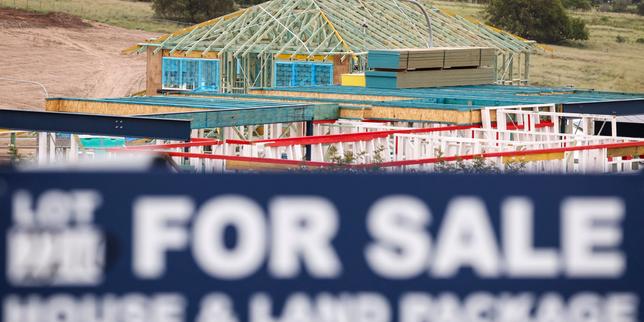
- The Insolvency Trap in Commercial Construction: Elevated input costs, persistent supply chain disruptions originating from geopolitical shocks, and acute shortages of skilled trade labor have compressed developer margins to near-zero. This margin compression has triggered a wave of corporate insolvencies across major construction firms, halting active pipelines and preventing new supply from reaching the market.
- The Regulatory and Infrastructure Deficit: Municipal zoning constraints and protracted local government approval timelines create an inelastic lag between capital allocation and dwelling completion. The federal target of building 1.2 million homes faces a structural shortfall, meaning new completions consistently trail nominal targets.
- The Replacement Cost Floor: The cost to construct a new dwelling has escalated so rapidly that the replacement cost of existing assets frequently exceeds their current market value. This paradigm shifts buyer demand back toward established properties, reinforcing a price floor independent of credit availability.
Because these supply constraints are structural rather than cyclical, they remain entirely immune to shifts in interest rates. A higher cash rate does not generate bricklayers or streamline zoning approvals; conversely, it increases the cost of financing for developers, further suppresses new housing starts, and inadvertently exacerbens the long-term scarcity.
Geographic Divergence and Wealth Concentration
The aggregate national data hides a profound geographical and socioeconomic divergence. The impact of the 4.35% cash rate is not uniform; it acts as a selective brake that partitions the market into distinct performance tiers.
In high-debt, interest-rate-sensitive metropolitan centers like Sydney and Melbourne, price momentum has slowed into a flat pattern or minor localized pullbacks. In these geographies, the ratio of median house prices to household income is highly leveraged, rendering buyers highly sensitive to changes in credit conditions.
In stark contrast, mid-tier and resource-adjacent markets like Perth and Brisbane continue to experience double-digit annualized growth, with Perth tracking gains above 12%. These regions benefit from a structural realigning of internal migration patterns and significantly lower entry points, meaning nominal debt burdens are lower relative to local incomes.
This divergence points to a wider macroeconomic trend: the rising dominance of equity-rich buyers over debt-dependent purchasers. As credit availability tightens for low-to-middle-income buyers, the market becomes increasingly driven by downsizers, cash buyers, and intergenerational wealth transfers. When a transaction is funded via existing capital rather than a bank loan, the transmission mechanism of RBA rate hikes is entirely bypassed.
Macro-Prudential and Fiscal Policy Collision
The friction between monetary policy and fiscal intervention further complicates market dynamics. While the central bank utilizes interest rates to depress aggregate demand, fiscal policy and macro-prudential frameworks frequently work in the opposite direction.
The Federal Budget's complex relationship with real estate demand is heavily illustrated by mid-2026 tax reforms targeting investor incentives. The legislation altered the tax treatment for new investor acquisitions of existing dwellings, removing negative gearing provisions and shifting capital gains tax calculations from a flat 50% discount to a CPI-indexed model. Crucially, the grandfathering of existing assets incentivizes current property holders to retain their portfolios indefinitely to preserve their tax advantages.
The strategic implications of this legislative design create an immediate market bottleneck:
[Negative Gearing Removal for New Buyers] ──> Sharp Pull-back in Active Investor Demand
                                                      │
                                                      ▼
[Grandfathering of Existing Portfolios]   ──> Disincentive for Existing Landlords to Sell
                                                      │
                                                      ▼
                                            [Simultaneous Drop in Demand and Supply]
                                                      │
                                                      ▼
                                         Market Velocity Contraction (~20% Volume Drop)
                                         with Flat/Anchored Asset Values
While the policy aims to redirect investor capital into new residential construction (which remains exempt from the restrictions), the immediate result is an illiquid secondary market. Sellers refuse to liquidate grandfathered assets, and buyers face compressed borrowing limits. Total transaction turnover contracts significantly, but prices remain anchored because supply drops in tandem with active demand.
Operational Constraints and Strategic Capital Allocation
For institutional investors, developers, and private capital firms navigating this high-rate, low-liquidity environment, relying on broad-based market growth is no longer a viable strategy. Mitigating systemic risk requires adjusting capital allocation models around several fixed limitations:
- Borrowing Capacity Attrition: Institutional underwriting must assume the RBA’s cash rate will remain restrictive for longer to combat sticky underlying inflation. Access to senior debt will remain constrained, increasing the cost of capital for highly leveraged acquisitions.
- Yield Compression Dynamics: Residential yields in major metropolitan centers remain compressed relative to risk-free treasury benchmarks. Capital appreciation can no longer be assumed to offset negative cash flow in the near term.
- The Inherent Failure of Speculative Development: Embarking on greenfield developments without secured fixed-price construction contracts carries extreme insolvency risk.
To achieve positive real returns under these parameters, capital must pivot toward asset classes and sub-markets insulated from credit contraction. This involves targeting structural undersupply via specialized build-to-rent models in tight rental catchments, or focusing acquisitions on high-growth regions where local economic inputs are detached from the Sydney-Melbourne debt cycle. Navigating the current cycle requires recognizing that the value of Australian real estate is no longer dictated by the cost of money, but by the physical absence of choice.