Marine energy commercialization has historically stalled due to prohibitive regulatory friction and capital expenditure risks rather than fundamental thermodynamic limits. The commissioning of the PacWave South facility off the coast of Newport, Oregon, establishes a controlled testing environment designed to isolate variables of mechanical durability and grid synchronization in open-ocean conditions. Understanding the viability of this infrastructure requires analyzing the cost structures, regulatory mechanics, and thermodynamic conversion efficiencies that govern wave energy extraction.
The Capital Expenditure Bottleneck In Wave Energy
Commercializing wave energy converters requires navigating a multi-year prototyping cycle. Historically, device developers faced a dual expenditure trap: securing fragmented environmental permits while simultaneously financing bespoke subsea electrical transmission infrastructure.
The primary cost drivers in early-stage marine hydrokinetic projects break down into distinct phases:
- Site Characterization and Environmental Baselines: Gathering multi-year benthic and acoustic data to satisfy federal oversight requirements.
- Permitting and Legal Compliance: Acquiring authorization from multiple agencies, including the Federal Energy Regulatory Commission and the Bureau of Ocean Energy Management.
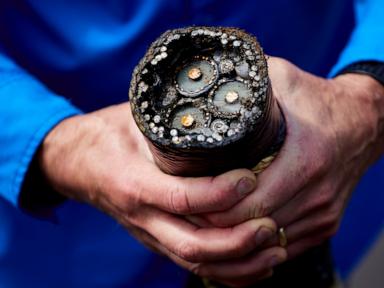
- Transmission Interconnection: Engineering subsea power and data cables capable of surviving high-energy marine environments while linking to onshore substations.
- Iterative Deployment: Absorbing the capital losses of mechanical failure without a pre-existing testing shell.
PacWave South addresses this structural failure by shifting the capital expenditure burden from private developers to a centralized research institution funded via Department of Energy allocations and institutional grants. By absorbing the initial outlay for a 25-year Federal Energy Regulatory Commission operating license and burying the offshore transmission cables, the facility removes the upfront regulatory barrier that bankrupts early-stage hardware firms.
Architectural Parameters And Grid Mechanics
The facility operates across two square nautical miles divided into four distinct test berths, supporting up to twenty wave energy converters simultaneously with a cumulative generation cap of twenty megawatts. Each berth features a dedicated subsea power and data cable rated for five megawatts, terminating at the Utility Connection and Monitoring Facility on shore.
The engineering topology supports three primary classes of wave energy conversion mechanisms:
- Point Absorbers: Buoyant structures that utilize the relative motion between a submerged component and a surface float to pressurize hydraulic fluids or drive linear generators.
- Oscillating Water Columns: Semi-submerged chambers where incoming wave fronts compress and decompress trapped air volumes, forcing airflow through bi-directional turbines.
- Attenuators: Articulated linear devices aligned parallel to wave propagation direction, converting continuous multi-hinge flexure into electrical energy via internal electromechanical or hydraulic linkages.
Because these device types impose distinct mechanical fatigue profiles on anchoring systems and subsea connectors, the pre-permitted status of the berths allows developers to bypass individual site-by-site environmental reviews. Developers plug directly into existing infrastructure, streaming high-frequency operational telemetry to onshore engineers while feeding power to the regional electrical grid.
Administrative Oversight And Policy Integration
The operational authorization of PacWave South coincides with shifting federal energy priorities under the executive branch. While broader federal directives have emphasized constraints on offshore wind deployment due to specific defense and maritime logistics concerns, marine hydrokinetic testing facilities have maintained federal backing through targeted agency exemptions and strategic classifications.
The Department of Energy categorizes wave energy conversion systems as uniquely valuable for specific remote power delivery scenarios, distinguishing them from large-scale regional wind installations. This policy carve-out enabled the project to pass internal administrative reviews, securing the necessary departmental sign-offs to complete grid integration.
However, funding constraints among private technology developers remain a limiting factor. Hardware developers navigating federal grant timelines often experience cash-flow bottlenecks that delay physical deployment, leaving newly minted berths temporarily unoccupied despite completed grid-side infrastructure.
Operational Scaling And Deployment Strategy
To transition from theoretical potential to a predictable baseload generation component, the industry must decouple mechanical survivability from short-term funding cycles. Wave climates off the Pacific Northwest exhibit severe sea states during winter quarters, demanding high structural safety factors that inflate capital costs per kilowatt-hour.
Engineering teams must prioritize standardized wet-mate subsea connectors and modular power take-off units to minimize offshore maintenance vessel hours. Future deployments should utilize real-time telemetry from the Utility Connection and Monitoring Facility to refine fatigue models, reducing the trial-and-error timeline that currently defines marine energy development.