The Chapter 11 bankruptcy filing of LIV Golf in the United States District Court for the District of New Jersey marks the definitive termination of sports’ most aggressive capital-allocation experiment. Having absorbed more than $5 billion in funding from Saudi Arabia’s Public Investment Fund (PIF) over a four-year operational window, the breakaway circuit has listed between $500 million and $1 billion in liabilities against $100 million to $500 million in assets. This restructuring event is not merely a legal maneuver; it represents the mathematical consequence of a cost structure that completely decoupled team valuations and media rights revenue from operating expenditures.
Understanding this failure requires evaluating three core financial vectors: the unsustainable burn rate of guaranteed player contracts, the abrupt cessation of sovereign subsidy, and the mechanics of the proposed BC Partners recapitalization.
The Anatomy of the Capital Burn
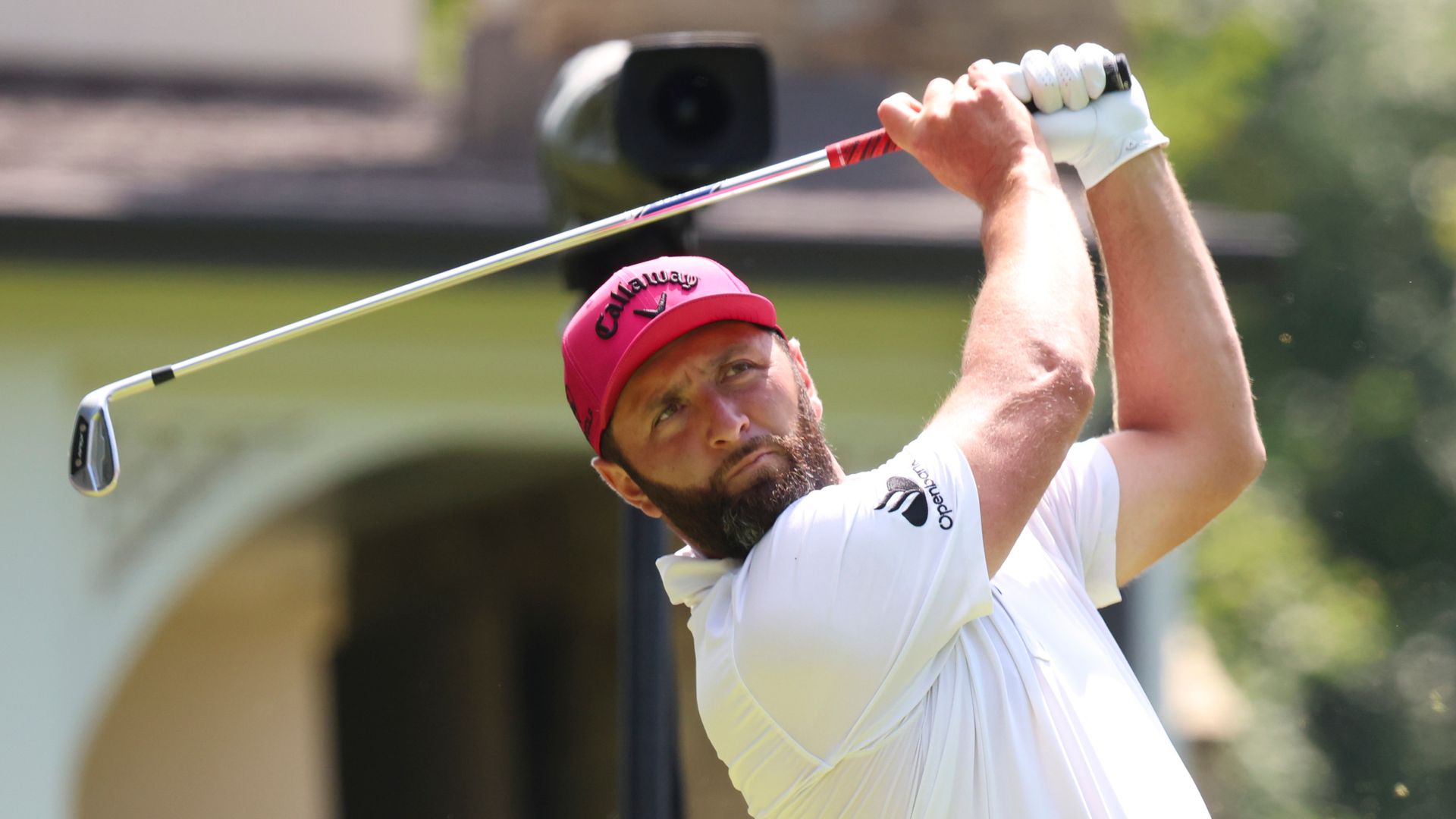
To deconstruct why the circuit entered court supervision, one must examine the balance sheet mechanics revealed in the New Jersey filing. The court documents list fourteen professional golfers among the top thirty unsecured creditors, holding millions in immediate third-quarter claims. Jon Rahm leads the unsecured creditor schedule with a claim of approximately $7.47 million, followed by Bryson DeChambeau at $5.77 million, Dustin Johnson at $5.49 million, and Cameron Smith at $4.84 million.
However, these figures understate the structural deficit. The court-listed numbers represent only short-term operational liabilities—specifically third-quarter 2026 obligations—rather than the remaining multi-year guaranteed contract valuations, which for elite talent extend well into nine figures. When the PIF abruptly halted its financial backing following the conclusion of the 2026 season, the enterprise faced an immediate liquidity vacuum. Without state-backed underwriting, operating a closed-ecosystem league with guaranteed contracts and minimal organic broadcast revenue created an insurmountable debt service ratio.
To fund the wind-down and court-supervised reorganization, the PIF executed a complete operational circle. The original benefactor has returned as a Debtor-in-Possession (DIP) lender, providing a $49.6 million financing package to keep the corporate shell functioning while the restructuring plays out. This DIP loan ensures that the entity can maintain basic administrative functions while its legal advisors attempt to transition the business to a leaner operational model.
The Player-Creditor Paradox
The most complex dynamic in the Chapter 11 proceeding is the dual role occupied by the league’s marquee talent. The athletes who serve as the primary revenue-generating assets of the league are simultaneously its largest unsecured creditors. This creates a severe strategic dilemma for the restructuring officers.
Under standard bankruptcy protocols, existing contracts can be rejected or renegotiated, which threatens to release elite players from their remaining exclusivity terms. If stars like Rahm and DeChambeau are legally freed from their agreements, the core intellectual property value of LIV Golf evaporates. Conversely, forcing the league to honor full historical contract values is mathematically impossible given the absence of sovereign cash injections.
To resolve this bottleneck, the leadership team—led by turnaround executives from AlixPartners—has partnered with London-based private equity firm BC Partners to architect a transition strategy dubbed "LIV 2.0". The proposed transaction relies on a shift from fixed-cost guaranteed contracts to a variable, equity-based participation model. Under this framework, the reorganized entity is slated to be majority-owned by the participating players, aligning athlete compensation directly with enterprise valuation rather than flat-rate appearance and performance fees.
The Mechanics of LIV 2.0
Transitioning from a state-subsidized disruptor to a private-equity-backed boutique league requires compressing the operational footprint. The 2026 season experienced severe contractions, including the cancellation of multiple events and the premature termination of the team championship in Detroit. The structural blueprint for the future relies on several distinct adjustments:
- Schedule Rationalization: Eliminating redundant events and high-cost operational hubs to lower the baseline cost of tournament production.
- Equity-Linked Compensation: Replacing guaranteed signing bonuses with equity stakes in the restructured league, effectively shifting financial risk from the ownership group to the talent.
- Ecosystem Integration: Repositioning the brand's market posture from a direct, aggressive competitor to the established professional golf ecosystem, thereby softening regulatory resistance and easing potential athlete crossover penalties.
Despite these proposed adjustments, the viability of the private equity rescue remains contingent on market acceptance. The PGA Tour has maintained strict reinstatement penalties for returning defectors, such as multi-million-dollar contributions to charity and prolonged exclusions from equity pools and bonus distribution. Elite players must now calculate whether accepting an equity stake in a leaner, post-bankruptcy circuit provides a superior risk-adjusted return compared to facing legal battles over unpaid claims or attempting to navigate the PGA Tour’s disciplinary frameworks.
The trajectory of this restructuring will be determined during the initial court-supervised hearings in New Jersey. If the debtor-in-possession financing successfully bridges the gap through early 2027, and if the proposed equity distributions satisfy top-tier talent enough to keep them on the roster, LIV Golf will re-emerge as a niche, private-equity-owned circuit. If the player-creditors reject the equity conversion in favor of forcing liquidation, the remaining asset value will be absorbed through asset sales, marking the final closure of the sovereign wealth era in professional golf.