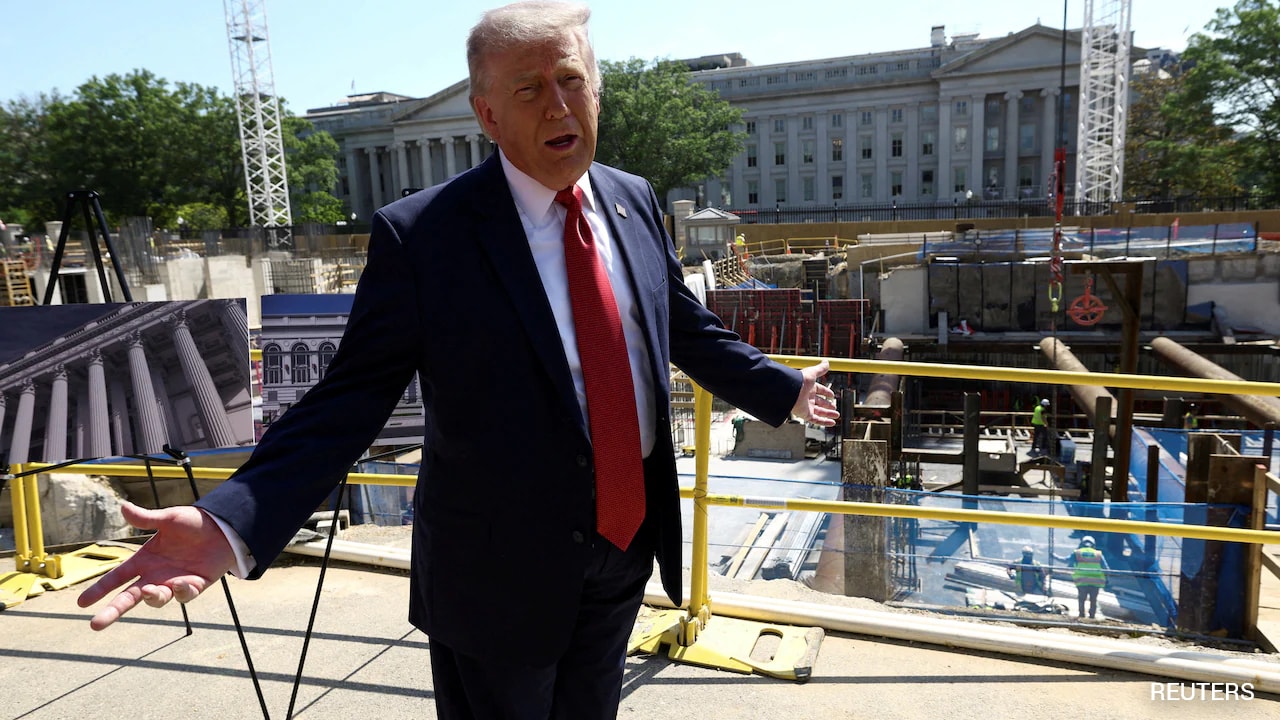
The architectural evolution of the executive mansion operates under strict statutory limitations, procurement channels, and historical precedents. Recent disclosures regarding a multi-hundred-million-dollar modernization drive at the White House necessitate a granular breakdown of how capital is allocated, how administrative oversight is structured, and why this initiative breaks historical capital expenditure models.
Evaluating a project of this magnitude requires stripping away political rhetoric to examine the raw mechanics of public infrastructure funding, architectural scaling, and executive asset management.
The Capital Allocation Mechanism
Traditional executive infrastructure alterations follow a predictable linear path. When past administrations sought physical modifications to the executive residence or grounds, standard operating procedure required formal budget requests submitted directly to Congress. Appropriations bills authorized specific sums, and designated federal agencies managed procurement, contractor selection, and public oversight disclosures.
The current modernization blueprint bypasses this conventional statutory route through financial pooling. Rather than relying solely on direct congressional appropriations, capital has been compiled by routing resources through maintenance and repair accounts traditionally reserved for baseline upkeep.
This creates a distinct funding architecture:
- Aggregation of discretionary capital from multiple federal agency budgets into unified project holding accounts.
- Integration of external private contributions intended to offset public expenditure burdens.
- Channelling expenditures through administrative offices shielded from standard public disclosure rules.
This mechanism accelerates project velocity by eliminating bureaucratic legislative friction. However, it simultaneously obscures real-time tracking of cost overhauls, shifting the primary financial exposure onto taxpayer-funded entities as scope expansions occur.
Architectural Scope and Cost Inflation
Infrastructure scale dictates cost growth. The initiative encompasses multiple distinct civil and architectural projects running concurrently across the executive compound. These include site security enhancements, perimeter modifications at Lafayette Square, aviation infrastructure upgrades via a dedicated helicopter landing pad, and the wholesale replacement of the East Wing to house a multi-thousand-square-foot state ballroom and subterranean infrastructure.
Cost escalation follows a predictable curve in large-scale government construction, driven by three core variables:
- Structural Complexity: Integrating subterranean spaces, such as bunker complexes beneath a historical footprint, multiplies engineering expenses compared to surface-level cosmetic renovations.
- Material and Security Standards: Executive complexes demand specialized blast mitigation, advanced communications hardening, and bespoke architectural finishes that elevate baseline commercial construction costs exponentially.
- Scope Creep: Initial project projections frequently isolate single components, such as the ballroom skeleton, while omitting site preparation, foundational structural reinforcement, and surrounding security integration.
As initial estimates expand from early multi-million-dollar baselines toward the threshold of nearly one billion dollars in cumulative contracts, the financial trajectory exemplifies the divergence between early private funding assurances and final public liability.
Historical Benchmarks in Capital Outlays
To contextualize the scale of a nine-figure-plus modernization effort, historical capital expenditures on the executive residence over the past century provide a reliable baseline. Historically, structural overhauls of this financial magnitude are generational anomalies.
| Era | Project Type | Funding Source | Approximate Scale (Adjusted) |
|---|---|---|---|
| Late 1940s | Structural Interior Reconstruction | Federal Appropriation | Moderate-High |
| Early 2000s | Wing Infrastructure Modernization | Federal Appropriation | High |
| Present | Comprehensive Modernization & Expansion | Blended (Private & Federal) | Unprecedented |
The structural gutting executed during the Truman presidency remains the structural benchmark for necessity, driven by catastrophic failure risks of the internal load-bearing framework. By contrast, current outlays prioritize expanded utility and operational capacity—specifically large-scale hosting and enhanced aviation and security infrastructure—rather than structural remediation alone.
Institutional Friction and Oversight Dynamics
The intersection of executive authority and legislative mandate generates predictable friction. When funding mechanisms sidestep traditional legislative approval, legal challenges emerge from co-equal branches of government or external judicial bodies.
The primary administrative friction points involve:
- Statutory Authority: The legal boundary between routine maintenance authorization and unauthorized capital construction.
- Transparency Disparities: The operational contrast between transparent congressional budget lines and internal Executive Residence accounting structures.
- Judicial Intervention: Federal court rulings attempting to halt specific structural phases pending legislative sign-off, countered by administrative appeals.
This dynamic ensures that large-scale asset modifications will remain contested legal territory, setting long-term precedents for how future chief executives utilize internal maintenance pools to execute capital projects.
Strategic Execution Path
To manage executive infrastructure initiatives without triggering legislative gridlock or prolonged judicial injunctions, future asset management strategies must adhere to strict transparency parameters:
- Mandate dual-track auditing where private philanthropic contributions and public agency transfers are segregated into publicly accessible ledgers.
- Establish explicit statutory caps on maintenance account reallocations to preserve the boundary between routine upkeep and major capital construction.
- Require independent architectural audits before ground-breaking to prevent recursive cost inflation from exceeding initial feasibility studies.