Sustained aerial saturation campaigns against metropolitan centers function on predictable economic and kinetic principles. When an attacking force deploys a mixed ordnance vector—incorporating ballistic platforms, cruise munitions, and high volumes of decoy drones—the objective extends beyond tactical infrastructure disruption. The primary systemic pressure point is the asymmetric burn rate of interceptor inventory versus low-cost propulsion platforms. Analyzing the architecture of recent multi-day aerial barrages targeting the Kyiv capital region reveals a calculated methodology designed to exhaust localized air defense architecture through sheer volume and kinetic saturation.
The mechanics of these large-scale operations rely on three distinct operational layers. First, low-cost loitering munitions and decoy systems act as clearance vectors, forcing defensive radar networks to active states and expending high-value surface-to-air missiles on low-value targets. Second, anti-radar and cruise missiles target counter-battery radar nodes and fixed battery positions to degrade response loops. Third, high-speed ballistic and jet-powered variants exploit the resulting windows of degraded radar coverage or depleted interceptor ready-racks. This tiered expenditure framework maximizes penetration probability while tilting the long-term economic balance heavily in favor of the offensive producer.
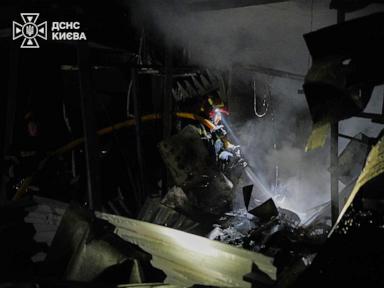
Urban population centers present a distinct structural vulnerability within this calculus. Unlike isolated military installations hardened through dispersal and subterranean fortification, metropolitan layouts contain fixed residential grids, municipal transit nodes, and civilian populations that cannot be repositioned rapidly. When saturation attacks saturate urban airspace, the density of defensive engagement zones guarantees that intercept debris will fall across populated sectors. Kinetic interception over a city removes the controlled trajectory of falling ordnance, transforming intercepted airframes and unspent propellant into indiscriminate surface hazards across multiple municipal districts.
Evaluating the systemic resilience of the targeted state requires analyzing intercept efficiency versus intercept saturation thresholds. When an air defense network claims suppression or destruction rates exceeding ninety percent of incoming vectors, standard tactical assessments label the performance a success. However, in absolute terms, a ten percent leakage rate from an initial volume of over two hundred projectiles translates into dozens of kinetic impacts across urban terrain. The resulting structural damage to residential blocks, transit hubs, and industrial support facilities indicates that high percentage interception metrics remain insufficient to insulate high-density urban geography from catastrophic collateral disruption during massed saturation events.
The logistical feedback loop of these campaigns governs their frequency and intensity. Offensive stockpiles built upon domestic manufacturing capacity and foreign component procurement allow for multi-day pacing schedules, where consecutive waves are launched to prevent air defense crews from executing maintenance cycles or reloading vertical launch systems. This operational tempo introduces cognitive and physical fatigue into the defensive chain, degrading response coordination and increasing reliance on automated or suboptimal engagement profiles.
Mitigating the structural vulnerabilities exposed by urban aerial saturation requires a shift from point-defense reliance to distributed, layered interception architectures coupled with deep-interdiction strikes against launch platforms at their points of origin. Until interceptor supply chains achieve cost parity with high-volume drone and decoy production, metropolitan regions will remain primary targets for kinetic attrition strategies designed to exhaust both physical munitions and civil endurance.