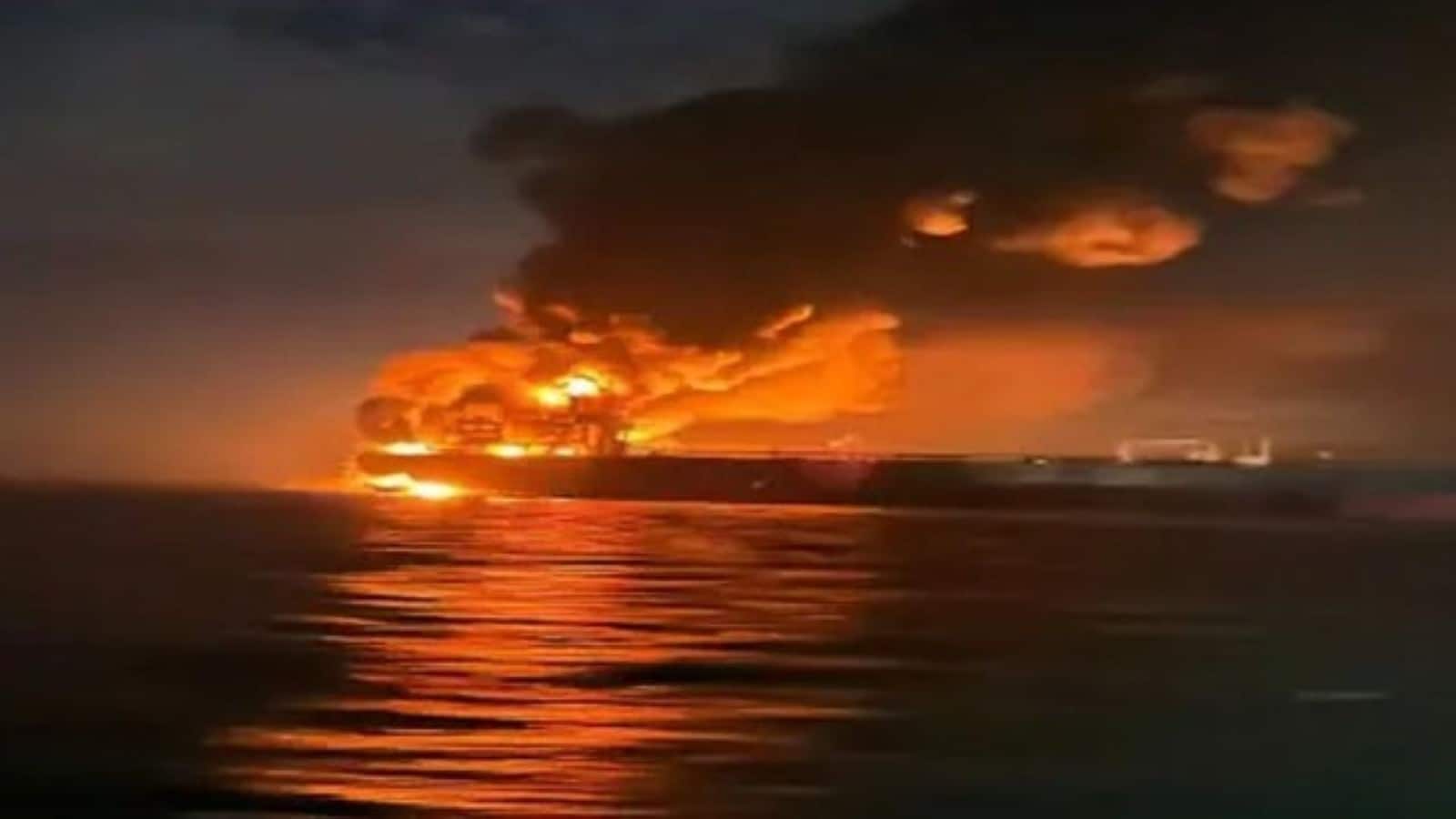
The recent Iranian missile strike on UAE tankers that killed an Indian sailor proves that the strategic waterways of the Middle East have become an active war zone. This was not a minor border skirmish or a simple warning shot. It was a direct, lethal cruise missile assault inside Omani territorial waters, slamming into the commercial tankers Mombasa and Al Bahiyah. The strike sent shockwaves through global energy markets and raised major questions about the safety of international seafarers. The human cost is mounting. Global trade is taking a massive hit.
People want to know if the Strait of Hormuz is officially closed and what this means for oil prices. The short answer is that while the channel is physically open, navigating it right now is a massive gamble. Insurance rates are skyrocketing. Fleets are rerouting. Iran's Islamic Revolutionary Guard Corps (IRGC) has made it clear that any ship following Western guidance will be treated as an enemy target.
The Fatal Volley in Omani Waters
The UAE Ministry of Defence confirmed that two cruise missiles hit the vessels while they were transiting the southern shipping lane. The Mombasa caught fire quickly. One Indian national onboard lost his life. Eight other crew members were injured, including six Indians and two Ukrainians. Four are currently fighting for their lives in serious condition.
Emergency teams eventually brought the fires under control, but the physical damage to the tankers is severe. The UAE called the strike a grave violation of international law. They explicitly stated they reserve the right to respond to the escalation. UAE armed forces have moved to the highest alert level.
Iran claims a different version of events. The IRGC openly admitted to hitting two supertankers. They claimed the ships had turned off their navigation systems and were deceived by the United States into entering an illegal, mined route. According to Tehran, the tankers simply ignored repeated warnings. They paid a heavy price.
Why the IRGC Targets Commercial Shipping
This incident did not happen in a vacuum. It is part of a rapid tit-for-tat escalation between Washington and Tehran. Just hours before the tankers were hit, the United States launched massive military strikes against 140 locations inside Iran. This was a response to an earlier Iranian attempt to block the strait.
US President Donald Trump announced that the American military would reinstate a strict naval blockade of Iranian ports. He also proposed a 20% cargo levy on foreign vessels seeking safe passage through the waterway, framing the US military as the official guardian of the strait. Iran reacted instantly. Iranian Foreign Minister Abbas Araghchi declared that Tehran remains the true guardian of the waterway forever.
Commercial ships are caught in the crossfire of this geopolitical standoff. The IRGC is using anti-ship cruise missiles to enforce their own rules. They want to show the world that the US cannot guarantee safety in the Gulf. If Washington squeezes Iranian oil exports, Iran will make sure no one else can export oil safely either.
What This Means for Global Energy Security
The economic fallout was instantaneous. Brent crude oil prices quickly surged past $103 per barrel as news of the burning tankers spread. The Strait of Hormuz is the world's most critical maritime chokepoint. Roughly 20% of the world's petroleum supply passes through this narrow body of water.
For countries like India, the crisis hits incredibly hard. India relies on the Gulf for the vast majority of its crude oil imports. This bottleneck is expected to add at least $2 to $3 per barrel to India's crude costs due to rising war-risk insurance premiums and freight charges. Shipping companies can no longer afford to treat this as a routine route.
The human toll for India is also rising. The seafarer killed on the Mombasa is not an isolated casualty. Eleven Indian nationals have died in the wider regional conflict so far, including three sailors killed last month on a separate vessel. India's Ministry of External Affairs has summoned Iranian diplomats to demand accountability, but diplomatic protests rarely stop incoming cruise missiles.
Immediate Safety Steps for Maritime Operators
If you manage logistics or operate commercial vessels in the region, continuing with business as usual is a recipe for disaster. The old guidelines do not work anymore. You must adapt immediately to protect your crew and your assets.
- Re-evaluate routing protocols: Do not rely blindly on Western military coordinates if they lead through contested southern lanes near Omani waters. Coordinate directly with regional maritime authorities.
- Mandatory AIS transparency: Turning off Automatic Identification System (AIS) transponders to hide from radar is backfiring. Iran is using disabled AIS systems as a pretext to declare ships hostile. Keep tracking systems online unless facing an immediate, verified piracy threat.
- Upgrade war-risk insurance coverage: Standard maritime insurance will not cover the losses from cruise missile strikes. Secure specialized coverage before entering the Gulf of Oman.
- Prepare for sudden port blockades: The US naval blockade of Iranian ports begins tonight. Expect severe delays, intense cargo inspections, and sudden changes in maritime law across the entire region.