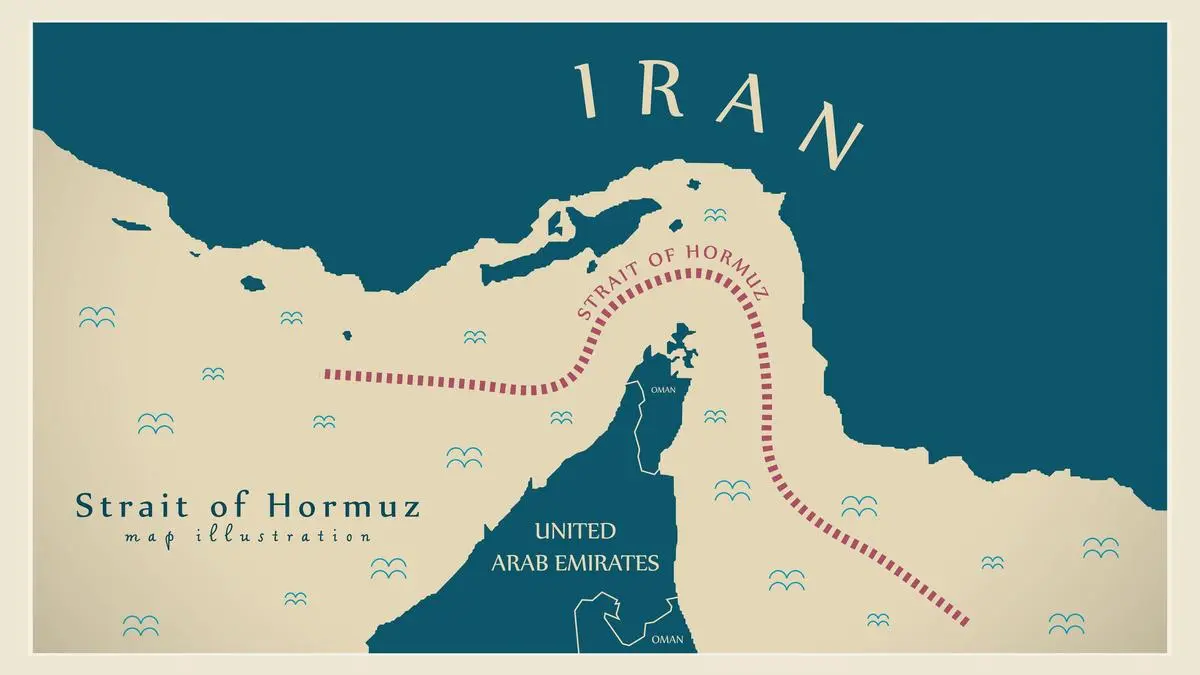
The United States and its Gulf Arab allies are currently circulating a draft resolution at the United Nations designed to tighten the noose around maritime interference in the Strait of Hormuz. While the public-facing narrative suggests a simple push for "freedom of navigation," the underlying reality is a high-stakes gamble to internationalize a regional shadow war. This move seeks to codify a legal framework that would allow for more aggressive interdiction of vessels suspected of smuggling or harassment, primarily targeting Iranian-linked operations. However, the proposal faces a steep climb in a fractured Security Council where veto-wielding powers like Russia and China view such measures as a Western pretext for escalation.
The Strait remains the world’s most sensitive oil chokepoint. Roughly 20 percent of the world’s liquid petroleum consumption passes through this narrow stretch of water daily. Any disruption doesn't just flicker the lights in Riyadh or Dubai; it shakes the foundations of the global economy. By drafting this resolution, Washington and its partners in the Gulf Cooperation Council (GCC) are attempting to move beyond the reactive "tit-for-tat" seizures that have defined the last decade and instead create a permanent international mandate for maritime security.
The Strategy of Legal Encirclement
For years, the U.S. Fifth Fleet has played a cat-and-mouse game with the Islamic Revolutionary Guard Corps (IRGC) Navy. These encounters are often handled through tactical maneuvers and radio warnings. The new resolution attempts to shift the battlefield from the water to the halls of the UN. By seeking a formal condemnation of non-state and state-sponsored interference with commercial shipping, the draft aims to provide a "veneer of legality" for future boarding actions and seizures.
The timing is not accidental. As regional tensions rise over broader Middle Eastern conflicts, the Gulf monarchies—specifically Saudi Arabia and the UAE—want a guarantee that their primary export artery will not become a bargaining chip. They are tired of being the collateral damage in the ongoing friction between Washington and Tehran. This resolution is their attempt to force the international community to take sides, or at least to go on the record regarding the sanctity of trade routes.
The Invisible Barriers to Consensus
The primary obstacle is the shifting geometry of global power. In the past, a resolution on maritime safety might have passed with minimal friction. That era is over. Moscow now views any U.S.-led initiative through the lens of the conflict in Ukraine, while Beijing is increasingly protective of its "no-limits" partnership with Iran. For China, the Strait of Hormuz is a vital energy lifeline; they want it secure, but they do not want it secured by a U.S.-dominated legal regime that could eventually be used against their own interests in the South China Sea.
There is also the matter of the United Nations Convention on the Law of the Sea (UNCLOS). Iran is not a party to UNCLOS, though it generally respects the principle of transit passage. However, Tehran maintains that the Strait consists of its territorial waters and that it has the right to police them. A UN resolution that ignores these claims will be viewed by Iran as a direct provocation.
A Failed Precedent of Sanctions
History suggests that maritime interdiction efforts often leak. We have seen this with the enforcement of sanctions on North Korea and the various "ghost fleets" transporting Iranian and Russian crude. Even with a UN mandate, the physical act of patrolling every square mile of the Persian Gulf is an impossible task. The IRGC has mastered the art of asymmetric naval warfare, using fast-attack boats, sea mines, and drones that are difficult to track and even harder to stop without risking a full-scale shooting war.
If the resolution passes, it might embolden Western navies to act more decisively. If it fails, or is watered down to the point of irrelevance, it will signal to Tehran that the international community is too divided to enforce the status quo. This "diplomatic gap" is where the danger lies.
The Economic Shadow War
Beyond the warships and the diplomats, there is a brutal economic calculation. Shipping insurance rates (War Risk Premiums) skyrocket every time a tanker is limpet-mined or a drone strikes a hull. These costs are eventually passed down to the consumer at the pump. The Gulf Arab nations understand that their "Vision 2030" style diversification plans require a stable environment for foreign investment. You cannot build a global tourism and tech hub if the waters a few miles away are a combat zone.
The draft resolution includes language targeting the "illicit transfer of ship-to-ship cargo." This is a direct hit at the methods used to bypass oil sanctions. By framing smuggling as a threat to maritime safety, the U.S. is trying to close the loopholes that allow "dark fleet" tankers to operate with impunity. It is an attempt to turn a trade dispute into a security emergency.
The Risk of Miscalculation
The greatest fear among veteran analysts is the "tripwire effect." When you increase the legal and physical pressure on a narrow waterway, you decrease the margin for error. A nervous captain or a misidentified radar blip could trigger a chain reaction that no one in the room actually wants.
The GCC nations are walking a tightrope. On one hand, they want the security umbrella that only the U.S. military can provide. On the other, they are actively pursuing a policy of de-escalation with Iran to protect their internal development. This resolution is a test of whether they can have both. They are essentially asking the UN to be the "bad cop" so they don't have to burn their own diplomatic bridges.
The Logistics of Enforcement
Suppose the resolution passes. What happens the next morning? The U.S. and its allies would likely stand up a more robust version of the International Maritime Security Construct (IMSC). This would involve more frequent patrols, shared intelligence feeds, and a more aggressive posture toward "vessels of interest."
- Expanded Boarding Rights: Giving naval commanders more authority to stop ships based on "reasonable suspicion."
- Technological Surveillance: Using persistent drone swarms to monitor the entire length of the Strait.
- Increased GCC Participation: Forcing regional navies to take a more active role in the physical policing of the waters, rather than just providing port access.
The problem remains the sheer volume of traffic. Thousands of vessels move through the Strait every month. To truly "secure" it would require a level of militarization that might actually make the area less safe for commercial transit.
Why This Isn't Just Another Resolution
In the past, these UN maneuvers were often symbolic. This feels different. The language being leaked suggests a move toward "Chapter VII" authority, which would make the mandates legally binding and enforceable through military action. While a Chapter VII resolution is unlikely to survive a Russian or Chinese veto, even a move toward it indicates how desperate the situation has become.
The "freedom of navigation" argument is a powerful one because it underpins the entire global trading system. If the Strait of Hormuz becomes a place where international law no longer applies, every other maritime chokepoint—from the Bab el-Mandeb to the Malacca Strait—is at risk. This isn't just a regional squabble; it is a fight over who writes the rules for the world's oceans in the 21st century.
The Reality of the Shadow Fleet
We must acknowledge the role of the "dark fleet"—the aging, poorly maintained tankers that operate without standard insurance or oversight. These vessels are the primary tools for moving sanctioned oil. They often turn off their AIS (Automatic Identification System) transponders, making them "ghosts" in the water. The draft resolution specifically calls out these practices as environmental and safety hazards. It is a clever pivot; if you can’t stop the oil for political reasons, you stop the ships for safety reasons.
However, the countries buying that oil—mostly in Asia—have little incentive to support a resolution that would cut off their supply or increase their costs. This creates a fundamental disconnect between the "security" goals of the West and the "energy" goals of the East.
The Looming Deadline
The diplomatic clock is ticking. As the U.S. enters a heated election cycle, the current administration is under pressure to show that it can contain Iranian influence without starting another war in the Middle East. Simultaneously, the Gulf states are looking at a world that is slowly trying to transition away from hydrocarbons and realizing they need to maximize their stability now, while their leverage is at its peak.
The draft resolution is a gamble that the world is more afraid of an oil shock than it is of a localized naval conflict. It assumes that at the end of the day, even America's rivals will choose the flow of commerce over the support of a regional disruptor. It is a bold assumption, and one that may be proven wrong the moment the first vote is cast in New York.
The Strait of Hormuz has always been a barometer for global tension. If this resolution fails, the barometer will hit the red zone. The resulting vacuum will not be filled by "dialogue," but by the more primitive logic of force. Every tanker captain currently navigating those waters knows that the piece of paper being debated at the UN is the only thing standing between a standard transit and a generational crisis. If the diplomats cannot find a way to codify the security of these waters, the task will fall back to the navies, and history shows that when the navies take over, the talking has already failed.
Prepare for a summer of high-seas friction.