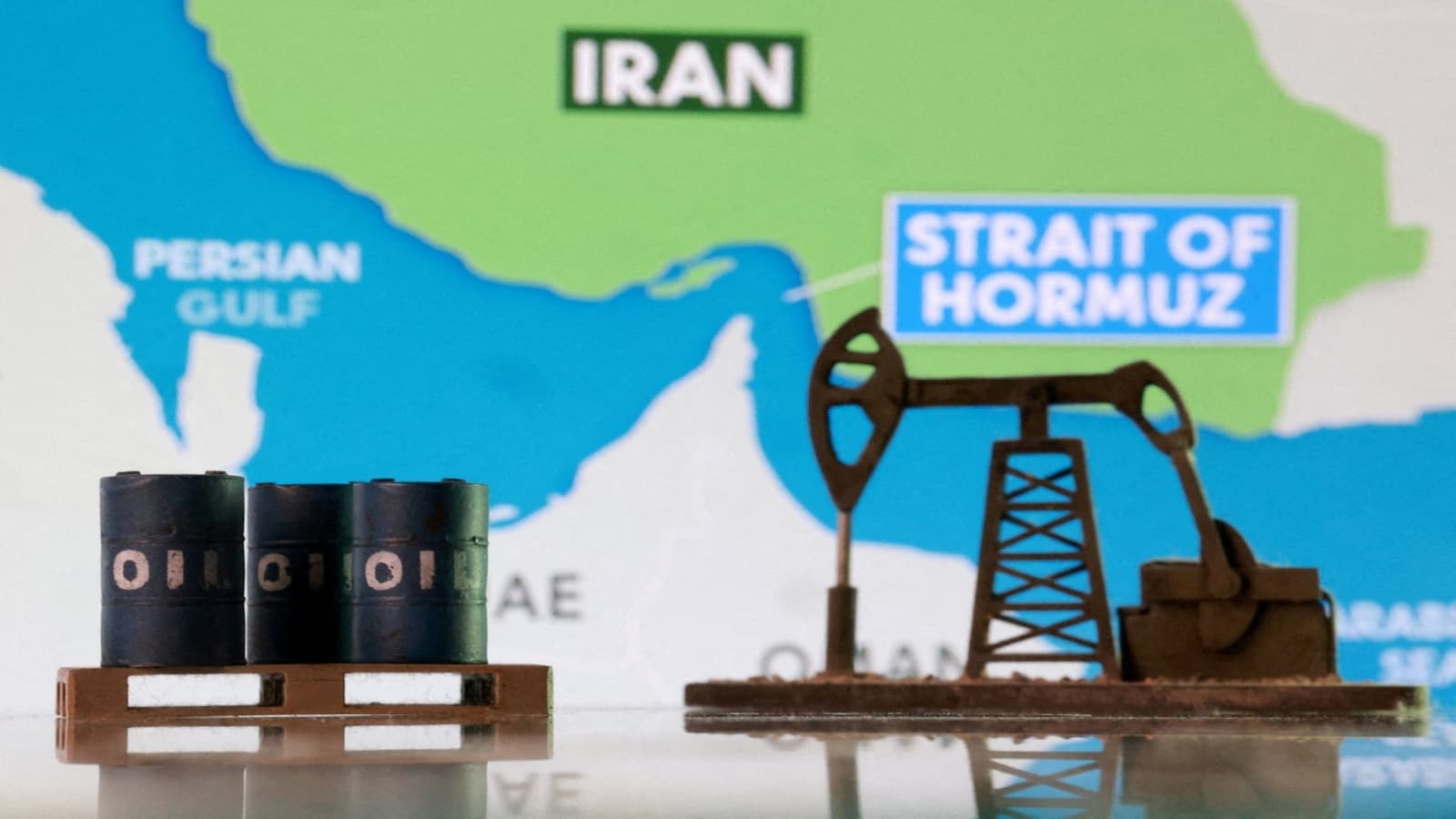
Geopolitical analysts love a good doomsday scenario, and there is no script they rehash more eagerly than Iran shutting down the Strait of Hormuz. The conventional narrative is practically a copy-paste job at this point: Washington tightens oil sanctions on Tehran, and in retaliation, the Islamic Revolutionary Guard Corps (IRGC) deploys sea mines, anti-ship missiles, and fast attack craft to choke off the 21-mile-wide passage. Global oil prices spike to $150 a barrel, inflation destroys Western economies, and the world plunges into chaos.
It is a terrifying, neat, and completely unhinged fantasy.
The lazy consensus dominating foreign policy op-eds mistakes theater for strategy. The threat of closing the Strait of Hormuz is Iran’s ultimate psychological weapon, but actually executing it would be an act of regime suicide. Tehran knows this. Washington knows this. Even the energy markets, which routinely ignore these recurring panic cycles, know this.
If you want to understand the actual mechanics of Persian Gulf coercion, you have to discard the sensationalist headlines and look at the brutal economic and military arithmetic that makes a total blockade an absolute impossibility.
The Self-Inflicted Noose: Iran’s Economic Dependence on the Strait
The foundational flaw in the "Hormuz blockade" theory is the assumption that Iran sits entirely outside the global energy trade, holding a knife to its throat. The reality is that Iran is trapped in the same room as everyone else.
Consider the raw logistics. Iran relies heavily on maritime trade passing through the exact chokepoint it supposedly threatens to close. While Tehran has spent years constructing the Goreh-Jask pipeline project—designed to bypass Hormuz by piping oil directly to the Gulf of Oman—its actual operational capacity remains severely limited and plagued by technical bottlenecks. The vast majority of Iran’s oil exports, which surged back toward 1.5 million barrels per day in recent years primarily feeding Chinese independent refineries, must still load from Kharg Island. Kharg Island sits deep inside the Persian Gulf, well behind the Hormuz gate.
Shutting the strait means Iran completely embargoes itself.
Furthermore, Iran imports a massive percentage of its refined gasoline, food staples, and industrial inputs through its primary ports like Bandar Abbas, positioned right on the strait. Having spent over a decade advising energy trading desks on geopolitical risk, I have watched analysts repeatedly model a blockade while ignoring the basic import-export ledger of the state doing the blocking. You do not lock the front door of your house from the outside when your kitchen is inside.
The China Factor: Tehran Cannot Afford to Enrage Its Only Lifeline
The standard talking point assumes Iran operates in a vacuum, driven solely by anti-Western ideological fervor. It completely ignores the entity that actually pays Iran's bills: Beijing.
China is the destination for roughly 90% of Iran's illicit oil exports, skirted through a labyrinth of "ghost fleets" and ship-to-ship transfers in the South China Sea. At the same time, China is the world's largest crude importer, pulling millions of barrels a day through the Strait of Hormuz from Saudi Arabia, Iraq, Kuwait, and the United Arab Emirates.
Imagine a scenario where the IRGC drops low-cost acoustic mines into the shipping lanes, successfully halting all commercial traffic. The Western economies would hurt, certainly. But China's manufacturing engine, which relies heavily on stable Gulf crude supplies, would suffer an immediate, catastrophic supply shock.
Tehran’s entire geopolitical survival strategy hinges on the diplomatic cover and economic lifeline provided by Beijing. The moment Iran cuts off China’s energy supply is the moment Beijing withdraws its veto protection at the UN Security Council and cuts off the financial networks keeping the Iranian rial on life support. Iran is a rational actor; it will not alienate its sole superpower patron to score a temporary tactical point against a U.S. administration.
The Fallacy of "Closing" a Body of Water
Let’s dismantle the tactical myth. Foreign policy pundits talk about "closing" the Strait of Hormuz as if it were a physical garage door. It is not. It is a stretch of water with a dual-lane shipping channel, where each lane is two miles wide, separated by a two-mile buffer zone.
Can Iran disrupt shipping? Absolutely. Can they close it? Not for more than 48 to 72 hours.
The conventional analysis treats the U.S. Fifth Fleet and its regional allies like passive observers. The reality of modern naval warfare is that any overt, sustained Iranian attempt to physically block the strait would trigger a combined-arms response that would systematically annihilate the IRGC Navy (NEDSA) within days.
- Sea Mines: The IRGC possesses thousands of mines, ranging from old Soviet-style contact mines to sophisticated smart mines. However, the U.S. Navy and regional partners maintain permanent, highly specialized mine countermeasures (MCM) assets in Bahrain, supplemented by autonomous underwater vehicles (AUVs) that scan the seabed continuously.
- Anti-Ship Cruise Missiles (ASCMs): Iran has a formidable arsenal of shore-based missiles like the Noor and Ghadir. But firing these positions means instantly revealing their locations to modern electronic warfare systems, inviting immediate counter-battery strikes from carrier-based aircraft and stealth platforms.
- Swarm Boats: Fast attack craft are highly effective for asymmetric harassment, but they lack air defense. Against modern rotary aviation armed with precision-guided munitions, a swarm becomes a target gallery.
The downside to analyzing this purely through a military lens is that it underestimates the asymmetric alternatives Iran actually prefers. Iran does not want a conventional war with the United States because it loses that war every single time.
The Brutal Truth Behind the "People Also Ask" Geopolitical Queries
When people search for information on this conflict, they consistently ask the wrong questions because they have been fed flawed premises. Let's correct the record on the three most common misunderstandings.
Can the US Navy protect every tanker in the Strait of Hormuz?
This question completely misunderstands the nature of maritime protection. The military does not need to ride shotgun on every single commercial vessel. Instead, they establish guarded transit corridors, implement convoy systems, and use advanced maritime domain awareness to track threats long before they reach weapons-range. During the "Tanker War" of the 1980s, commercial shipping suffered damage, but the total volume of oil flowing out of the Gulf never dropped below 75% of normal capacity. Modern defensive capabilities are lightyears ahead of where they were forty years ago.
How much would oil prices rise if Iran blocked the strait?
The standard answer is an immediate spike to $150 or $200 a barrel. This ignores the psychological nature of energy markets versus physical realities. Any sharp spike would be driven by panic, not an actual structural deficit, because global spare capacity—specifically inside Saudi Arabia and the UAE—can be redirected.
The UAE operates the Habshan–Fujairah pipeline, which can move 1.5 million barrels per day directly to the Indian Ocean, bypassing Hormuz entirely. Saudi Arabia has the East-West Pipeline, capable of shifting up to 5 million barrels per day to the Red Sea port of Yanbu. While these systems cannot replace every single drop of Gulf crude, they provide a massive strategic buffer that would blunt the impact of any short-term disruption. The market would correct itself far faster than the doom-mongers think.
Why doesn't the US just bomb Iran's oil infrastructure first?
This is the classic hawkish miscalculation. Preemptive strikes on Iranian export facilities would guarantee the exact asymmetric escalation the West wants to avoid. It would force Iran’s hand, giving them no choice but to launch full-scale proxy attacks via Hezbollah and the Houthis against regional infrastructure, turning a contained maritime issue into a total regional conflagration. Containment, cyber warfare, and financial strangulation are far more effective than kinetic fireworks that force an adversary into a corner.
The Real Strategy: Asymmetric Brinkmanship, Not Total Blockade
Iran will not block the Strait of Hormuz because the threat of doing so is infinitely more valuable than the execution.
What we will actually see when sanctions tighten is what we have seen during every previous period of high tension: low-intensity, deniable, asymmetric friction. Iran will use limpet mines to damage a handful of foreign-flagged tankers. They will seize a British or Greek vessel under the guise of a "maritime infraction." They will launch sophisticated cyberattacks against regional port infrastructure.
This calibrated escalation allows Tehran to signal its discontent, drive up war risk insurance premiums for global shipping, and force Western diplomats back to the negotiating table without ever crossing the red line that triggers a devastating conventional military response or alienates China.
Stop analyzing the Strait of Hormuz through the lens of a Hollywood war movie. It is a high-stakes poker game where Iran holds a weak hand but plays it with terrifying precision. They will never flip the table over, because they are eating from it.