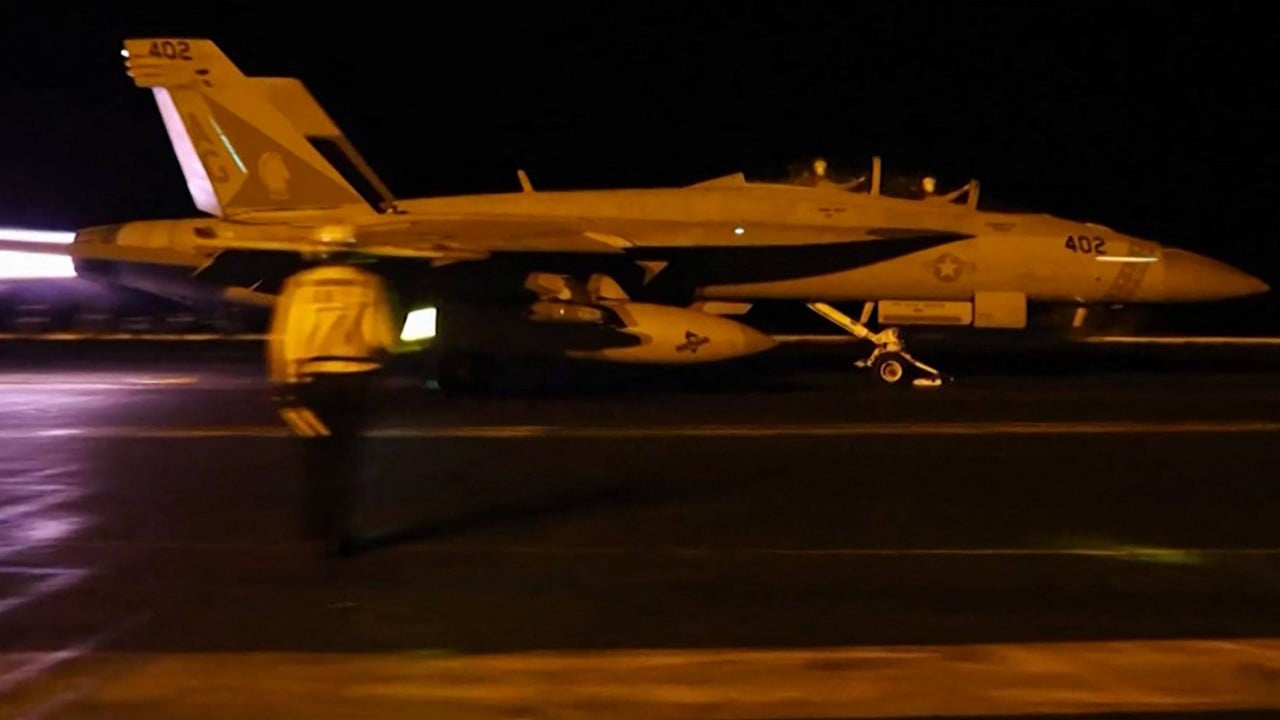
Beyond Rhetoric: The Reality of Escalation in the Gulf
When Washington insists that relentless air bombardment is bringing an adversary to its knees, history suggests taking a closer look at the map. Following consecutive nights of heavy strikes targeting military infrastructure, radar installations, and missile batteries across Iran, the official posture remains defiant. The operational objective is framed around restoring freedom of navigation through the Strait of Hormuz and compelling Tehran into unconditional compliance.
Yet, beneath the aggressive public messaging lies a harsher strategic reality. The conflict in the Middle East has spiraled far past its initial framing as a swift, targeted pressure campaign. The tactical trade-offs of this attrition strategy are becoming dangerously clear. Naval blockades, retaliatory drone surges, and escalating casualties on both sides demonstrate that tactical dominance does not automatically translate into strategic victory.
       STORM IN THE STRAIT: CHOKEPOINT ECONOMICS

[ Persian Gulf ] ----> (Strait of Hormuz) ----> [ Gulf of Oman ]
                            |
                     (Chokepoint)
             21% of Global Petroleum Supply
             30% of Seaborne Liquefied Natural Gas
                            |
                   +--------+--------+
                   |                 |
             [Oil > $90/bbl]   [Insurance +300%]
The Anatomy of an Escalate-to-De-escalate Strategy
To understand how the current standoff began, one must look at the structural assumptions driving Pentagon planning. The governing theory was simple. Sustained standoff strikes against command infrastructure and anti-ship missile sites would degrade the Islamic Revolutionary Guard Corps (IRGC) to the point where maritime harassment became unsustainable.
That theory encountered immediate resistance. Instead of retreating, regional forces adapted by dispersing assets and employing asymmetrical warfare.
- Asymmetric Saturation: Rather than engaging naval groups in open water, opposition forces rely on low-cost kamikaze drones and anti-ship cruise missiles launched from hidden mobile units along rugged coastline geography.
- Chokepoint Economics: By targeting commercial tankers rather than military vessels, the IRGC forces global shipping conglomerates to self-blockade due to skyrocketing war-risk insurance premiums.
- Regional Dispersal: Retaliatory strikes have shifted outward to forward bases in neighboring territories, spreading defensive networks thin.
The math behind this posture is inherently asymmetrical. Intercepting a drone costs anywhere from $1 million to $4 million per missile. The drone itself costs less than a compact sedan. Sustaining this dynamic over months depletes high-end precision munitions faster than defense supply chains can replenish them.
| Operational Factor | Standard Naval Operations | Active Chokepoint Conflict |
|---|---|---|
| Global Crude Impact | Baseline ($70 - $75 / barrel) | Spikes above $90 - $110 / barrel |
| Maritime Insurance Rate | Standard Hull & Machinery | Up to +300% War Risk Surcharge |
| Chokepoint Daily Volume | ~21 Million Barrels / Day | Reduced to trickle / escorted convoys |
| Interception Cost Ratio | N/A | Defensive effort costs ~10x to 50x target |
The Broken Promise of Maritime Blockades
Enforcing a maritime blockade sounds decisive on paper, but executing one inside narrow maritime corridors is an operational nightmare. The Strait of Hormuz measures just 21 miles wide at its narrowest point, with shipping lanes running merely two miles wide in each direction.
Naval forces attempting to police this corridor face extreme proximity hazards. A commercial vessel disabled by a single drone strike effectively chokes traffic for days, panicking global energy markets regardless of how many defensive batteries are active in the area.
         THE COST INEQUALITY OF ASYMMETRIC WARFARE

   US / Allied Air Defense             IRGC / Proxy Strike
  +-----------------------+           +--------------------+
  | Standard Missile      |           | Loitering Drone    |
  | Cost: $1M - $4M       |  vs.      | Cost: $20,000      |
  +-----------------------+           +--------------------+
             |                                  |
             +-------------[ COST RATIO ]-------+
                         50:1 to 200:1
                       In Favor of Attacker
When crude oil prices break above $90 a barrel, global supply chains feel the strain almost instantly. Refineries recalibrate, freight surcharges stack up, and central banks find their anti-inflation efforts completely derailed. The economic pressure does not fall solely on the nation under blockade. It radiates across Western economies, converting a regional confrontation into a global cost-of-living driver.
Overlooked Vulnerabilities and the Stockpile Trap
The most critical factor overlooked in mainstream political commentary is military readiness and stockpile sustainability. Standoff strikes depend heavily on air-launched cruise missiles, precision-guided munitions, and naval air defense interceptors. These weapons systems require years to manufacture.
"A campaign of attrition against a adversary operating on home terrain is a fundamental miscalculation of supply chain realities. You cannot out-produce cheap hardware using expensive, slow-to-build interceptors indefinitely."
If conflict expansion forces a prolonged campaign, military planners face a uncomfortable choice:
- Divert Munitions: Pull high-end air defense assets from other crucial theaters, weakening deterrence in secondary regions.
- Accept Higher Risk: Force naval vessels closer to shore-based anti-ship batteries to rely on short-range point defense systems.
- Escalate to Ground Interdiction: Consider amphibious landing or targeted ground incursions to neutralize missile sites directly, a move that guarantees prolonged entanglement.
None of these options offer a clean exit. The assumption that airpower alone can force a sovereign nation to submit without inducing a wider regional firestorm ignores decades of strategic precedent.
The Friction Between Rhetoric and Reality
Politicians often characterize military campaigns using terms of absolute dominance, describing strikes as heavy, decisive, and punitive. Yet military history demonstrates that sustained tactical pressure frequently unites internal political factions rather than fracturing them. External bombardment tends to consolidate authority, muting domestic dissent and emboldening hardliners within the defense establishment.
At the same time, maintaining a massive carrier strike group deployment in hostile waters introduces compounding operational fatigue. Hardware degrades under continuous sea-time. Flight crews face physical exhaustion. Defensive systems operate under constant alarm conditions, increasing the likelihood of target misidentification or catastrophic defense failure.
The conflict has crossed the threshold where simple show-of-force operations yield diplomatic leverage. Every strike launched creates a obligation for retaliatory response, locking both sides into an escalating feedback loop where neither can afford to step back without signaling weakness.
The immediate challenge for leadership is not finding the next target list to strike. It is calculating the true long-term price of a war that neither side can afford to lose, but neither knows how to end.