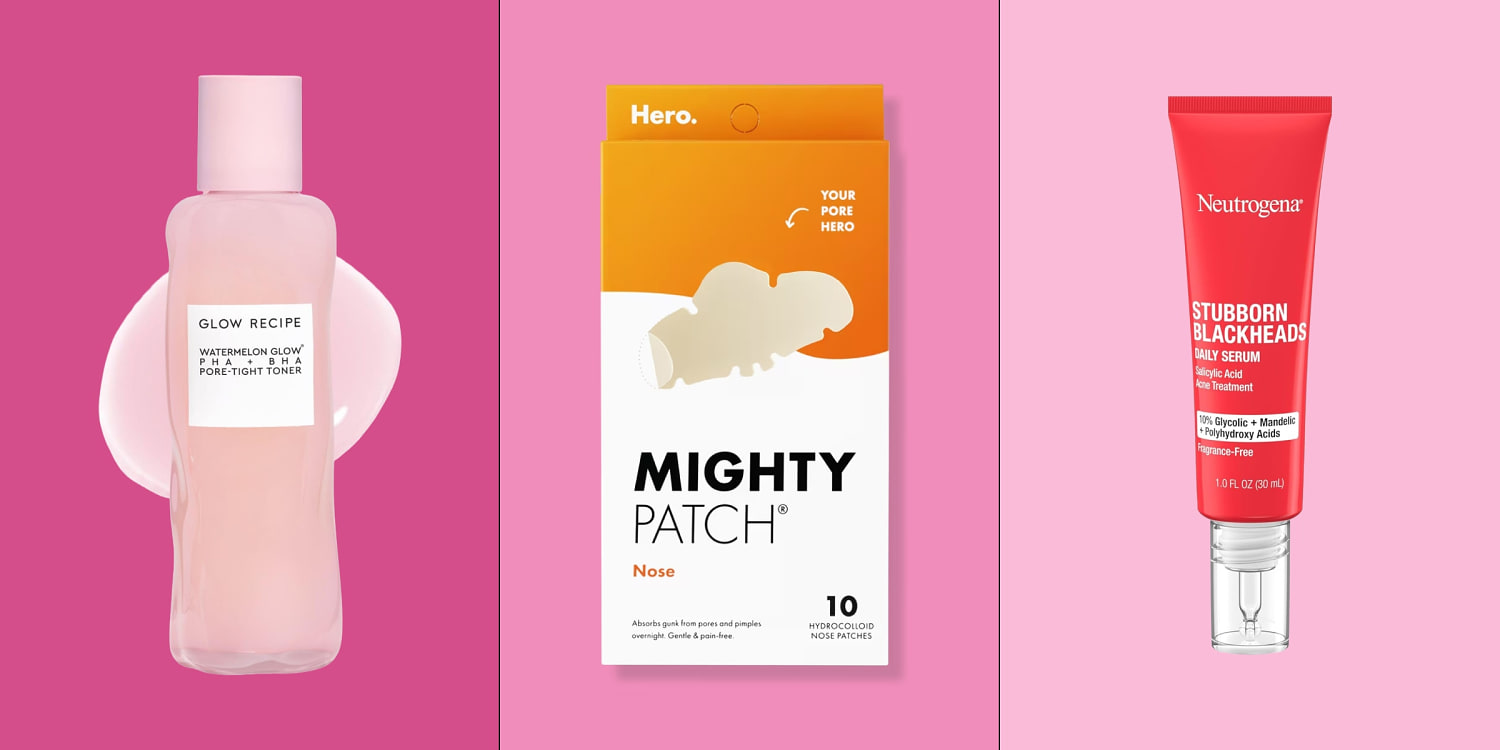
The internet’s favorite skincare advice is a multi-million dollar lie.
Open any mainstream beauty publication and you will find the same derivative, copy-pasted guide on how to clear your pores at home. They tell you to steam your face. They tell you to buy charcoal peel-off masks. They instruct you to use metal extraction tools, or worse, those viral pore vacuums that look like miniature shop vacs for your face.
It is a comforting narrative: you see a dark speck, you apply force or adhesion, you rip it out, and you win.
Except you don't.
Ninety percent of what people think are blackheads are actually sebaceous filaments. They are completely normal, permanent structures required to route oil to your skin's surface. When you aggressively strip them out, your skin panics, goes into overdrive, and floods the empty pore with even more sebum. Within 48 hours, the dark spot is back, often larger and more inflamed than before.
I have spent a decade evaluating cosmetic formulations and watching consumers destroy their skin barriers by chasing a photoshopped, poreless reality. The entire "pore-clearing" industry relies on you failing so you keep buying their strips, scrubs, and tools.
Let's dismantle the consensus advice and look at the actual physiology of your skin.
The Sticky Physics of a Clogged Pore
To understand why your current routine is failing, you have to understand what a genuine blackhead (an open comedone) actually is. It is not a speck of dirt trapped in a hole.
A blackhead is a oxidized plug of hardened sebum and dead skin cells (keratinocytes) trapped inside the hair follicle. The dark color is not dirt; it is melanin and oxidized lipids that turn black when exposed to the air, much like an apple turning brown after you take a bite.
The lazy consensus tells you to treat this like a mechanical problem. They want you to physically extract it. Here is why that fails:
- The Pore Vacuum Myth: These devices use localized negative pressure to yank material from the pore. Because sebum is viscous and anchored deep within the dermis, the suction required to pull out a true hardened plug is high enough to burst the superficial capillaries in your skin. You exchange a temporary blackhead for permanent telangiectasia (broken blood vessels) that require expensive vascular lasers to fix.
- The Pore Strip Fallacy: Pore strips use a strong adhesive that binds to the very surface of the skin plug. When you rip it off, you are only shearing off the top layer of the oxidized sebum. The root of the plug remains intact. More importantly, the adhesive tears away the top layer of your stratum corneum, your skin's protective barrier.
- The Metal Extractor Trap: Applying downward pressure with a metal loop compresses the tissue around the pore. If the plug does not immediately pop upward, the pressure forces the plug downward and outward through the follicular wall. This ruptures the pore beneath the surface, leading to deep, cystic acne and permanent ice-pick scarring.
Imagine a scenario where you try to remove a stubborn weed from your garden by grabbing a few leaves and pulling sideways. The root stays, the plant snaps, and the soil is ruined. That is exactly what you are doing to your face with at-home extractions.
Why Salicylic Acid is Overhyped and Used Wrong
If you ask a standard dermatologist or beauty editor how to fix a blackhead chemically, they will instantly yell: "Salicylic acid!"
Salicylic acid is a beta-hydroxy acid (BHA). It is lipid-soluble, meaning it can penetrate oil to get inside the pore. This is true chemical fact. However, the commercial execution of BHA is broken.
Most people use salicylic acid in a face wash. Think about the mechanics of this: you apply a 2% BHA cleanser to your face, foam it up for 15 seconds, and wash it down the drain. You are expecting a chemical compound to penetrate a dense, hardened plug of sebum and dead skin cells in less time than it takes to brush your teeth. It does not work.
Even leave-on BHA liquids often fail because users layer them incorrectly or use formulations with the wrong pH. For a BHA to effectively exfoliate within the pore, the formulation needs a pH between 3.0 and 4.0. Most commercial brands raise the pH closer to 5.0 to minimize irritation, rendering the free acid percentage practically useless for dissolving tough plugs.
The Counter-Intuitive Counter-Attack: Oil and Retinoids
If you want to actually clear your skin, you have to stop stripping it and start manipulating its chemistry.
1. The Chemistry of "Like Dissolves Like"
The most effective way to dislodge a hardened plug of sebum is not to yank it, but to liquefy it. Hardened sebum is composed heavily of wax esters and squalene that have oxidized and solidified.
Instead of an aggressive scrub, you use a high-linoleic plant oil or a pure mineral oil as a pre-cleanser on dry skin. Massage it gently into the target areas for three to five minutes. Over several days, the liquid oil penetrates the pore, softens the hardened plug, and allows it to rinse away naturally during your regular cleansing step without triggering an inflammatory response.
2. Force Upregulation, Not Eviction
The long-term solution to blackheads is not extraction; it is changing how your skin cells shed.
True blackheads happen because of a process called retention hyperkeratosis. Your skin cells are shedding too fast and sticking together instead of sloughing off. This is where topical retinoids (like over-the-counter adapalene or prescription tretinoin) come in.
Retinoids do not exfoliate the surface. They bind to nuclear receptors in your skin cells to normalize the cellular turnover rate inside the follicle. They essentially teach your skin how to stop creating the plugs in the first place.
The downside? Retinoids take six to twelve weeks to show results, and they will cause dryness and flaking initially. Most people quit during week three because they want the instant gratification of a pore strip. If you cannot tolerate the adjustment period, you will never have clear pores.
The Blueprint for Real Elimination
If you are ready to ditch the mainstream routine that keeps you trapped in a cycle of irritation and re-clogging, here is the exact protocol to follow.
| Step | Action | Frequency | Why It Works |
|---|---|---|---|
| 1. Soften | Massage a hydrophilic cleansing oil onto dry skin for 3 minutes. | Every evening | Emulsifies and liquefies hardened sebum plugs without damaging the skin barrier. |
| 2. Cleanse | Follow with a gentle, non-foaming water-based cleanser. | Every evening | Removes the dissolved oil and debris cleanly without stripping lipids. |
| 3. Dissolve | Apply a leave-on 2% Salicylic Acid liquid (pH 3.5) to completely dry skin. Leave it for 20 minutes before adding other products. | 3 times a week | Gives the BHA time to work at its optimal pH to break down cellular debris inside the pore. |
| 4. Train | Apply a pea-sized amount of Adapalene (0.1%) across the entire zone. | Every night (build up slowly) | Normalizes cell turnover inside the follicle, stopping the creation of new plugs. |
The Brutal Truth About Your Pores
You need to accept a harsh physiological reality: your skin is not a sheet of plastic. It is a living, breathing organ with texture.
Those tiny grey dots on your nose that bother you when you stand two inches from a bathroom mirror? No one else can see them. They are your sebaceous filaments doing their job. If you continue to use clay masks, harsh scrubs, and metal tools to obliterate them, you will permanently stretch the elastin surrounding the pore wall. Once that elastin stretches out, the pore loses its structural integrity and remains permanently gaped, making it even easier to collect debris.
Stop treating your face like a dirty kitchen counter that needs to be scrubbed with bleach. Stop buying tools designed to gouge your skin. Put down the magnifying mirror, throw away the pore strips, and let chemistry do the work your hands were never meant to do.